📚 Exam by Category
▾
Objective Questions

Latest HP SET Economics Exam Question (Objective Questions), MCQ in English

Subjects : Economics

Question Bank HP SET Economics Exam Paper 2 - English
Back to Exam

Economics

Question 1Single Answer
Which is called Gossen’s second Law ?
  1. A
    Law of equi-marginal utility
  2. B
    Law of Diminishing marginal utility
  3. C
    Revealed Preference Theory
  4. D
    Indifference Curav approach                         
Question 2Single Answer
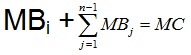
Which of the condition support long run equilibrium in monopolistic competition  ?
  1. A
    MR = MC, AR = AC
  2. B
    P = MC, AR = AC
  3. C
    MR = MC = AR = AC
  4. D
    AR = MC = AC
Question 3Single Answer
Who explained importance of time element in price determination, for the first time ?
  1. A
    Chamberlin
  2. B
    Stigler
  3. C
    Mrs. Joan Robinson
  4. D
    Marshall
Question 4Single Answer
Law of diminishing returns begins to operate when :
  1. A
    Total product begins to rise
  2. B
    Total product begins to fall
  3. C
    Marginal Product begins to rise
  4. D
    Marginal product begins to fall
Question 5Single Answer
Consider the following statements regarding Edgeworth Duopoly model :
I.      It takes as given output decision of rival.
II.    It takes as given price decision of rival
III.   It is an explanation of price rigidity of thease , the correct answer is :
  1. A
    Only Statement I is true
  2. B
    Both I & II are true
  3. C
    Both II & III  are true
  4. D
    Only III is true
Question 6Single Answer
Public goods are charactertised by :
1. Collective consumption
2. Divisibility
3. Non – exclusion
4. Rival consumption
Select the correct answer from the code given below  :
  1. A
    1 & 2 are correct
  2. B
    1 & 3 are correct
  3. C
    1 & 4 are correct
  4. D
    2 & 4 are correct
Question 7Single Answer
Among the following what causes market failure ?
1. Externality
2. Asymmetry of information
3. Perfact competition
Choose the correct answer from the code given below :
  1. A
    Codes :
    1,2 & 3 are correct
  2. B
    Only 1 is correct
  3. C
    1 & 2 are correct
  4. D
    2 & 3 are correct 
Question 8Single Answer
Assuming wages – price flexibility , the classical economists asserted that a decline in money wages And price would lead to :
  1. A
    Unemployment
  2. B
    Deflation
  3. C
    High level of employment and output
  4. D
    Unemployment and  decline in output
Question 9Single Answer
Who distinguished between value in use and value in exchange and gave the famous example of diamonds and water ?
  1. A
    Adam smith 
  2. B
    David Ricardo
  3. C
    Alfred Marshall
  4. D
    Karl Marx
Question 10Single Answer
When income effect becomes stronger than substitution effect, the labour supply curve will :
  1. A
    Slope positively 
  2. B
    Negatively sloped
  3. C
    Bend backward 
  4. D
    Slope upwards
Question 11Single Answer
Assertion (A)   : The concept  of supply curve is meaningless for the monopolist.
Reason   (R)   : Monopolists are price setters ; it does not make reuse to ask what output they will produce at various prices.
  1. A
    Codes :
    Both (A) and (R) are correct and (R) is the correct explanation of (A)
  2. B
    (A) is correct , but (R)  is not correct 
  3. C
    Both (A) and (R) are correct , but (R) is not correct explanation of (A)
  4. D
    (R) is correct, but (A) is incorrect 
Question 12Single Answer
Predatory pricing policy is designed to :
  1. A
    drive competitors out of business
  2. B
    maximum profits
  3. C
    encourage entrants into the market
  4. D
    atain least cost output
Question 13Single Answer
Match items in List-I with items in List-II and select the correct answer from the code given below :
            List-I                                               List-II
a. The screening Hypothesis             1. George  A. Akerlof
b. Job Market signaling                     2. K. J  Arrow
c. The problem of moral                    3. M. Spencer
 hazard in the case  
 of medical insura
d. The market for lemons                4. Paul W. Miller and Paul A.
                                                       Vplcker 
  1. A
    Codes :
    (a)           (b)          (c)           (d)
    3              2              4              1
  2. B
    2              3              4              1
  3. C
    4              3              2              1
  4. D
    2              4              3              1
Question 14Single Answer
An industry whose long run supply curve is horizontal is called :
  1. A
    Constant cost industry
  2. B
    Increasing cost industry
  3. C
    Decreasing Cost Industry
  4. D
    Effisient  Industry
Question 15Single Answer
The practice of charging each consumer the reservation price is called :
  1. A
    Peak load pricing
  2. B
    Inter –tem poral  price discrimination
  3. C
    Third degree price discrimination
  4. D
    None if these
Question 16Single Answer
Frictional unemployment is also known as :
  1. A
    Disguised unemployed
  2. B
    Turnover unemployed
  3. C
    Cyclical unemployed
  4. D
    Structural  unemployment 
Question 17Single Answer
The cost incurred by the firm in hiring labour is called as :
  1. A
    Explicit cost   
  2. B
    Implicit Cost
  3. C
    Marginal Cost
  4. D
    Total Cost
Question 18Single Answer
The locus of Pareto optimality in production and consumption is given by :
  1. A
    The social Welfare Function
  2. B
    The Utility Possibility Curve
  3. C
    The Transformation Curve
  4. D
    The Grand Utility possibility Curve 
Question 19Single Answer
Match items given in List-1 with those in List-II :
    List-I                                      List_II
a. Tea and coffee           1. Veblen goods
b. Car and petrol            2. Substitutes
c. Gold and               3. Giffen goods
    Diamonds              
d. Ragi and Bajra       4. Complementary
  1. A
    Codes  :
    a              b             c              d
    2              1              3              4
  2. B
    2              4              1              3
  3. C
    4              1              2              3
  4. D
    4              3              1              2
Question 20Single Answer
Assertion (A)  : In the short run under perfect competition, given the market demand and market supply the industry is in equilibrium at that price which clears the market.
Reason (R)        : In the long run all the firms in the industry earn profit .
  1. A
    Codes :
    Both (A) and (R) are true and (R) is the correct explanations of (A)
  2. B
    Both (A) and (R) are true , but (R) is not correct explanation of (A)
  3. C
    (A) is true , but (R) is false
  4. D
    (A) is false , but (R) is true 
Question 21Single Answer
Put the following in chronological order on the basis of development :
I. Law of demand
II.Revealed Preference Analysis
III. IIndifference Curve Analysis
IV. Law of Diminishing Marginal Utility
  1. A
    I, II, III, IV 
  2. B
    I, IV, III, II
  3. C
    I, II, IV,III  
  4. D
    I, III, IV, II
Question 22Single Answer
If the monopolist incurs loss in the short run , then in the long run :
a. he will go out of business.
b. he will stay in business
c. he will break even
d. any of the above is possible
  1. A
    (A) and (B) 
  2. B
    (A) and (C)
  3. C
    (A) only    
  4. D
    (D) only
Question 23Single Answer
The condition of Pareto Optimality holds correct under.
  1. A
    Perfect Competition
  2. B
    Monopolistic Competition
  3. C
    Oligopoly
  4. D
    Monopoly
Question 24Single Answer
Assertion (A)  : Compared to the individual supply curve is more elastic .
Reason (R)      : There is the possibility of moving between being out of the labour force and being in the labour force.
Choose amongst the following  the correct answer .
  1. A
    Codes :
    (A) is correct , but (R) I not the correct explanation of (A)
  2. B
    (A) is correct and (R)  is the correct explanation of (A)
  3. C
    (A) is correct , but (R) is incorrect
  4. D
    (A) is incorrect , but (R) Is correct 
Question 25Single Answer
Fiscal deficit less interest payments is called
  1. A
    Net fiscal deficit
  2. B
    Monetised deficit
  3. C
    Primary deficit
  4. D
    Budgetary deficit
Question 26Single Answer
How many countries are the members of European Union ?
  1. A
    25 
  2. B
    28
  3. C
    26   
  4. D
    15
Question 27Single Answer
If the mean and variance of a given distribution is 8 and 0.25, then the coefficient of variation will be
  1. A
    4 percent
  2. B
    8 percent
  3. C
    12 percent
  4. D
    16 percent
Question 28Single Answer
The doctrine of unbalanced growth was propounded by
I. Hirschman
II. Robert Solow
III. Singer
IV. Ragnar Nurkse
Codes :
  1. A
    I and II are correct
  2. B
    II and III are correct
  3. C
    III and IV are correct
  4. D
    I and III are correct
Question 29Single Answer
Match List-I with List-II and show the relation between trade cycle and profit by selecting correct codes given below
         List-I                      List-II
a. Recession                   I. Low
b. Boom                           II. Positive
c. Recovery                     III. Highest level
d. Depression                IV. Negative
  1. A
    Codes :
    a              b             c              d
    III            IV            I               II
  2. B
    I               III            II             IV
  3. C
    IV            III            II             I
  4. D
    I               II             III            IV
Question 30Single Answer
The sequencing process of Schumpeter model of development is
  1. A
    Swarm like Clusters, Innovation, Bank credit, Breaking circular flow
  2. B
    Breaking circular flow, Innovation, Bank credit, Swarm like Clusters
  3. C
    Innovation, Bank credit, Breaking circular flow, Swarm like Clusters
  4. D
    Bank credit, Innovation, Swarm like Clusters, Breaking circular flow
Question 31Single Answer
Harrod-Domar model of economic growth is based upon
I. Warranted growth rate
II. Investment growth rate
III. Productivity growth rate
IV. Natural growth rate
Codes :
  1. A
    I and II are correct
  2. B
    II and III are correct
  3. C
    III and IV are correct
  4. D
    I and IV are correct
Question 32Single Answer
Endogenous technological change is not caused by
  1. A
    FDI
  2. B
    Population size
  3. C
    Population density
  4. D
    Educational level
Question 33Single Answer
Under Cournot Model of Duopoly, each duopolist will produce :
  1. A
    half the output
  2. B
    one-fourth of the output
  3. C
    one-six of the output
  4. D
    one-third of the total output
Question 34Single Answer
As long as the substitution effect dominates the income effect, the labour supply curve is :
  1. A
    negatively sloped
  2. B
    positively sloped
  3. C
    bend backward
  4. D
    shifting towards left 
Question 35Single Answer
Assertion (A)     :  Monopoly is Pareto inefficient .
Reason (R)         :  It would be possible to change the allocation of resources to make the amount of Income he would be prepared to pay in exchange of the reduction in price
  1. A
    Codes:
    Both (A) and (R) are correct and (R) is the correct explanation of (A)
  2. B
    (A) is correct, but (R) is not correct
  3. C
    Both (A) and (R) are correct, but (R) is incorrect explanation of (A)
  4. D
    (R) is correct, but (A) is incorrect 
Question 36Single Answer
If MPk/MPk does not change with any proportionate change in labour and capital then the production function  is :
  1. A
    Linear
  2. B
    Non-Linear
  3. C
    Homogeneous
  4. D
    Homothetic
Question 37Single Answer
Match the items in the List-I with items in List-II select the correct answer from the code given below :
  List-I                                      List-II
I. Agency Theory of        1. O.E. Williamson 
   Firm
II. X-inefficiency              2. M.C. Jenson and W. J. Meckling
III. The Utility                 3. Wilfredo Pareto
    Maximisation
     Model
IV. Edgeworth box         4. Harvey Leibenstein
      Diagram first
      Used by
  1. A
    Codes:
    I               II             III            IV
    3              2              1              4
  2. B
    2              4              1              3      
  3. C
    2              3              4              1
  4. D
    3              4              1              2
Question 38Single Answer
At the point of tangency between short-run average total cost and long-run average cost, the short-run average cost, the short-run marginal cost :
  1. A
    greater than long-run cost
  2. B
    less than long-run marginal cost
  3. C
    is far above long-run marginal cost
  4. D
    equals long-run marginal cost 
Question 39Single Answer
The equilibrium in a market is incomplete with increasing returns to scale only in the case of :
  1. A
    imperfectly competitive market
  2. B
    monopolistic market
  3. C
    perfectly competitive market
  4. D
    none of the above 
Question 40Single Answer
If 1 = Involuntary unemployment
2 = Disguised   unemployment
3 = Frictional unemployment; and
4 = Structural unemployment, then full
Employment is consistent with
  1. A
    1 & 2
  2. B
    2 & 3
  3. C
    3 & 4
  4. D
    1 & 4
Question 41Single Answer
The revealed preference theory of consumer’s behavior is based on :
  1. A
    Consistency
  2. B
    Strong ordering 
  3. C
    Positive income elasticity of demand
  4. D
    All of the above 
Question 42Single Answer
An individual’s supply curve for labour will bend backwards when : 
  1. A
    The substitution effect of wage rate increases is higher than income effect
  2. B
    The income effect of wage rate increases is negative and higher than the substitution effect 
  3. C
    Leisure is Giffen good
  4. D
    The substitution and income effect of wage rate increases reinforce each other
Question 43Single Answer
The short run supply curve of a firm under perfect competition is the same as the :
  1. A
    Marginal cost curve
  2. B
    marginal cost curve above the average variable cost curve
  3. C
    average variable cost curve
  4. D
    Average total cost curve
Question 44Single Answer
Match List-I with List-II and select the correct answer from the codes given below :
         List-I                                 List-II
 a. Quasi rent                          1. Hicks
 b. Elasticity of substitution     2. Chamberlin
 c. Monopolistic                      3. Neumann and Morgenstern
 d. Theory of Games              4. Marshall
Codes :
  1. A
    A          b          c          d
    4          1          3          2
  2. B
    2          1          4          3
  3. C
    2          1          3          4
  4. D
    4         1          2          3 
Question 45Single Answer
The difference between the value of marginal product and the marginal revenue product arises only if : 
  1. A
    Average revenue is not equal to marginal revenue
  2. B
    Average cost is not equal to marginal revenue 
  3. C
    Total revenue is not equal to total cost
  4. D
    Average cost is not equal to average revenu. 
Question 46Single Answer
Assertion (A) : In the short run, a producer operates in only stage II of the law of diminishingreturns where average product of the variable factor is decline
Reason (R)  In stage I and Stage III the marginal products of the fixed and the variable factors respectively are negative
codes :
  1. A
    (A) is true and (R) is false
  2. B
    Both (A) and (R) are true and (R) is the correct explanation of (A)
  3. C
    Both (A) and (R) are true and (R) is not the correct explanation of (A)
  4. D
    (A) is false and (R) is true
Question 47Single Answer
Assertion (A) : In monopolistic competition a firm earns only normal profit in the long run
Reason  (R)    A firm in monopolistic competition produces a commodity which has no closesubstitutes
 Codes :
  1. A
    Both (A) and (R) are true and (R) is the correct explanation of (A)
  2. B
    Both (A) and (R) are true and (R) is not the correct explanation of (A)
  3. C
    (A) is true and (R) is false
  4. D
    (A) is false and (R) is true
Question 48Single Answer
Assertion (A) : Devaluation in general is resorted to increase the exports
Reason (R)  It makes exports cheaper
Codes:
  1. A
    Both (A) and (R) are correct
  2. B
    (A) is correct, but (R) is not correct
  3. C
    Both (A) and (R) are incorrect
  4. D
    (A) is incorrect, but (R) is correct 
Question 49Single Answer
The Opportunity Cost Curve assumes that 
  1. A
    Labour is the only factor of production
  2. B
    The price or a cost of a commodity can be inferred from its labour content
  3. C
    Labour is homogeneous
  4. D
    None of the above
Question 50Single Answer
Hedging refers to ; 
  1. A
    the acceptance of a foreign exchange risk 
  2. B
    covering of a foreign exchange risk
  3. C
    foreign exchange speculation
  4. D
    foreign exchange arbitrage
Important Questions Package

HP SET Economics Exam Online Question Bank Package

Buy HP SET Economics Important Questions, MCQ, question answer in Hindi & English. It will help you to score high marks in HP SET Economics question bank 2026 in Online, PDF & Print study material.

+ Free Monthly Current Affairs, GK & more PDF Download
Sr.Package NameAmount
1.HP SET Economics Exam Paper 2 - Hindi
Description : 1000 Question with Answer
₹101 [₹500]
2.HP SET Economics Exam Paper 2 - Hindi
Description : 1500 Question with Answer
₹131 [₹500]
3.HP SET Economics Exam Paper 2 - English
Description : 1000 Question with Answer
₹101 [₹500]
4.HP SET Economics Exam Paper 2 - English
Description : 2000 Question with Answer
₹151 [₹500]
5.HP SET Economics Exam Paper 2 - Hindi
Description : 1000 Question & Answer Download in PDF (Send by Email)
₹151 [₹450]
6.HP SET Economics Exam Paper 2 - English
Description : 1000 Question & Answer Download in PDF (Send by Email)
₹151 [₹450]
7.HP SET Economics Exam Paper 2 Question Bank Book - Hindi
Description : 1000 Question with Answer (Printed Material)
₹450 [₹800]
8.HP SET Economics Exam Paper 2 Question Bank Book - English
Description : 1000 Question with Answer (Printed Material)
₹390 [₹600]
Back to Exam