📚 Exam by Category
▾
Objective Questions

Latest MPPKVVCL Manager Exam Question (Objective Questions), MCQ in English

Subjects : Technical Ability, General Awareness & Aptitude

Question Bank MPPKVVCL Manager Exam - English
Back to Exam

Technical Ability

Question 1Single Answer
Match the following
Thinker                                      Management Principle                             
(a)F.W. Taylor                     (i) uthority & Responsibility
(b)Henri Fayol                      (ii) Hierarchy
(c)Weber                            (iii) Separation of planning from doing
(d)Elton Mayo                     (iv) Human relation approach
  1. A
    Codes : 
    (a)       (b)        (c)      (d)
    (iii)       (i)         (iv)     (ii)
  2. B
    (iii)       (iv)       (i)       (ii)
  3. C
    (iii)       (i)         (ii)       (iv)
  4. D
    (iii)       (ii)        (i)        (iv)
Question 2Single Answer
Which of the following is the major element of planning process
  1. A
    Developing leadership abilities
  2. B
    Selecting right people
  3. C
    Perception of opportunities
  4. D
    Motivating people
Question 3Single Answer
Which principle of management is violated by matrix organisation  structure?
  1. A
    Division of Labour
  2. B
    Unity of direction
  3. C
    Unity of command
  4. D
    None of  the above
Question 4Single Answer
Which of the following involves careful analysis of inputs and corrective actions before operation is completed?
  1. A
    Feed forward control
  2. B
    Concurrent control
  3. C
    Feedback control
  4. D
    All the above 
Question 5Single Answer
Which of the following is not a semantic barrier of communication ?
  1. A
    Faulty translation
  2. B
    Ambiguous words
  3. C
    Specialist’s language
  4. D
     Inattention
Question 6Single Answer
Match the following       
Thinker                                Principles

a.Mary Parker Follett           i. Co-ordination
b.Henry Fayol                        ii. Elements of Management
c.F. W. Taylor                        iii. Scientific methods
d.Gilbreth and Taylor          iv. Quantitative measurement
  1. A
    Codes :
    a    b    c     d
    i      ii    iii    iv
  2. B
    iv     iii   ii      i
  3. C
    iv     ii    i      iii
  4. D
    ii      iv   iii    i
Question 7Single Answer
Which one of the following is not the characteristic of planning ?
  1. A
    It deals with future
  2. B
    It involves selection of particular course of action
  3. C
    It is pervasive
  4. D
    It is not strategic
Question 8Single Answer
Premature evaluation is a type of
  1. A
    Semantic barrier
  2. B
    Psychological barrier
  3. C
    organizational barrier
  4. D
    personal barrier
Question 9Single Answer
Which of the following is not a feature of systems approach?
  1. A
    A system is a combination of parts
  2. B
    Parts and sub-parts are related to one another
  3. C
    It is not necessary for a system to have a boundary
  4. D
    System transforms input in to outputs 
Question 10Single Answer
Which of the following organizations is a two-dimensional structure ?
  1. A
    Functional structure
  2. B
    Matrix structure
  3. C
    Line structure
  4. D
    Divisional structure
Question 11Single Answer
Who identified the basic element of work known as ‘therbligs’
  1. A
    Henry L. Gantt
  2. B
    Frank B. Gilberth
  3. C
    F.W. Taylor
  4. D
    All of the above 
Question 12Single Answer
Who among the following conclude that the factory was a social system and informal groups at work place play a vital role in industrial affairs ?
  1. A
    Elton Mayo
  2. B
    Henry Fayol
  3. C
    Blake and Mouton
  4. D
    Herzberg 
Question 13Single Answer
Arrange the steps of decision making process in the correct sequence:
a. analysis of alternatives
b. identification of decision criteria
c. implementation of alternative
d. identification of problem
e. selection of alternative
  1. A
    d,b,a,e,c
  2. B
    d,a,b,e,c
  3. C
    d,a,b,c,e
  4. D
    d,a,e,b,c
Question 14Single Answer
Departmentation is
a. structuring work to complementation
b. visual display of organisation structure
c. grouping jobs on some basic
d. arranging jobs in hierarchy
  1. A
    a and b only
  2. B
    b and c only
  3. C
    a only
  4. D
    c only
Question 15Single Answer
The tendency of peoples to expends less efforts when work collectively that when working collectively than when working individually is called
  1. A
    Social loafing
  2. B
    socializing
  3. C
    Adjourning
  4. D
    Social Action
Question 16Single Answer
Match the following :
 Statement                                                                 Approach
(a) Organisation has interconnected                    (i) Decision theory approach
And interrelated elements.
(b) Organisations work through                            (ii)Systems approach
Motivation leadership communication
And participative management .
(c) Management is essentially decision                (iii) Human Behaviour approach
Making
(d) Appropriate managerial action depends           (iv) Contingency approach
On external environment internal states and needs.
  1. A
    Codes :
    (a)             (b)            (c)         (d)
    (ii)           (III)              (IV)         (I)
  2. B
    (II)              (III)              (I)             (IV)
  3. C
    (I)              (II)               (III)           (IV)
  4. D
    (II)             (IV)             (I)               (III) 
Question 17Single Answer
 Which of the following are the principle of co-ordination  according to  Mary parker  Follett?
(a)  principle of direct contact
(b) principle of reciprocal  relationship
(c) principle of timing
(d) principle of dynamise
(e) principle of countinuity
(f) principle of co-ordination at early stages
  1. A
    Codes:
    (a), (c) , (e) and (f)
  2. B
    (a), (b), (c), and (d)
  3. C
    (a) ,(c) , (d) and (e)
  4. D
    (a), (d) ,(e) and  (f) 
Question 18Single Answer
Which of the following methods of forecasting is based on the principle that decisions from a structured group of indivuals are more accurate than those from unstructured groups ?
  1. A
    Opinion poll
  2. B
    Delphi Technique
  3. C
    Extrapolation
  4. D
    Input – Output analysis 
Question 19Single Answer
Which of the following is not an element of planning ?
  1. A
    Establishing leadership qualities
  2. B
    Finlising objectives
  3. C
    Evaluating alternatives
  4. D
    Establishing sequence of action 
Question 20Single Answer
Which of the following is / are not the method(s) of financial control ?
(a) Break – even analysis
(b) ABC analysis
(c) Internal audit
(d) Quality circles
  1. A
    Codes:
    (d) only    
  2. B
    Both (b) and (d)
  3. C
    (a), (d) and (c)     
  4. D
    (a), (b) and (d)  
Question 21Single Answer
Which of the following statements are true about Herbert A. Simon ‘s decision making process?
a. Decision making process involves intelligence design and choice activities
b. Decision –making involves choice between alternative plans of action.
c. Bounded rationality has no significance in decision making process.
d. Satisficing model brings about a balance between individual and organisational value judgement in decision making process.
  1. A
    a and b are only true.
  2. B
    a and d are only true.
  3. C
    a, b and c are true .
  4. D
    a, b and d are true.
Question 22Single Answer
Which of the following statements about communication is /are either true or false ?
a. Gang plank theory of Henry Fayol is an example of vertical communication .
b. Encoded messages are not always decoded effectively because of different fields of organism .
c. Filtering is not an intervention which vitiates communication .
d. Grapevine communication moves faster than formal communication .
  1. A
    a and c are true b and d are false.
  2. B
    a and d are true b and c are false.
  3. C
    b and d are true a and c are false.
  4. D
    a, b and c are true and d is false.
Question 23Single Answer
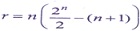
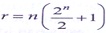
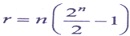
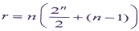
Which of the following is the correct formula for calculating the direct group relations of span of control as given by V. A. Garicuna ?
  1. A
  2. B
  3. C
  4. D
Question 24Single Answer
Which of the following pair is correctly matched ?
  1. A
    F. W. Taylor- Human Relations Approach
  2. B
    Henry Fayol- Universality og Management
  3. C
    Elton Mayo- Pyschological Approach
  4. D
    M. Parker Follet – Scientific Management 
Question 25Single Answer
Read the following and mark your answer according to the answer code given below:
Wage incentive plans the following objects:
(a) Increasing workers morale
(b) Lowering unit cost
(c) Lowering capital cost
(d) Lowering depreciation charges
  1. A
    Codes:
    a & d are correct.
  2. B
    a & c are correct.
  3. C
    a & b are correct .
  4. D
    c & d are correct .
Question 26Single Answer
Who is regarded as the father of Scientific Management ?
  1. A
    Albert Bandura
  2. B
    Louis D. Brandies
  3. C
    Frederick Winslow Taylor
  4. D
    Elton Mayo  
Question 27Single Answer
The principle of Equifinality  operates
  1. A
    within the internal environment
  2. B
    within the external environment
  3. C
    without environment
  4. D
    hostile environment  
Question 28Single Answer
Max Weber developed a theory of
  1. A
    Autocratic Management
  2. B
    Democratic Management
  3. C
    Bureaucratic Management
  4. D
    Free Style Management
Question 29Single Answer
Grapevine is a type of
  1. A
    Formal Communication
  2. B
    Written Communication
  3. C
    Lateral Communication
  4. D
    Informal Communication
Question 30Single Answer
Decision making process is guided by
  1. A
    Policy           
  2. B
    Procedure
  3. C
    Programme  
  4. D
    Strategy
Question 31Single Answer
Which of the following is/are not a part of classical approach to management?
  1. A
    Scientific Management
  2. B
    Administrative Management
  3. C
    Decision Theory
  4. D
    Bureaucratic Organization 
Question 32Single Answer
Match the following.
Thinker                                            Principal 
(a) Henryl Fayol                 i. Careful design of jobs with ten efficient 
                                               Work methods
(b) Elton Mayo                   ii. Unity of direction
(c) F.W. Taylor                  iii. Organizational equilibrium
(d) Chester I. Barnard       iv. Social factors and group norms
  1. A
    Codes:
    (a)       (b)       (c)       (d)
    ii         iv           i          iii
  2. B
    ii         iv           iii         i
  3. C
    i          ii           iii         iv
  4. D
    i          iii           ii         iv
Question 33Single Answer
Which of the following is not a barrier to to effective planning?
  1. A
    Difficulty of accurate permissing
  2. B
    Environmental changes
  3. C
    Flexibilities in management
  4. D
    Time and Cost factors 
Question 34Single Answer
Gracicuna’s formula suggest that
  1. A
    the number of subordinates and relations both increase in arithmetic progression.
  2. B
    the number of subordinates increases in geometric progression ad number of relations increase in arithmetic progression
  3. C
    The number of the subordinates and relation increase in geometric progression
  4. D
    the number of the subordinates increases in arithmetic progression while the number of the relations increase in geometric progression 
Question 35Single Answer
The first step in control process is to
  1. A
    measure actual performance.
  2. B
    establish objective and standards.
  3. C
    compare results with objectives.
  4. D
    take corrective action. 
Question 36Single Answer
Match the List-I With List-II.
        List-I                                             List-II
(a) Henry L. Gnatt                     (i) Theory of bureaucracy
(b)Max Weber                           (ii) Father of modern/ administrative
                                                          Management theory
(c)Alex F.  Osborm                     (iii) Graphic methods of describing plans
                                                           and harmonious cooperation
(d) Henri Fayol                            (iv) Father of brain storming
  1. A
    Codes:
    (a)     (b)    (c)     (d)
    (iv)     (iii)    (ii)    (i)
  2. B
    (iii)     (i)     (iv)   (ii)
  3. C
    (iv)   (i)    (iii)    (ii)
  4. D
    (i)     (ii)   (iv)    (iii)
Question 37Single Answer
In which year the book entitled Principles of Scientific Management was Published ?
  1. A
    1901        
  2. B
    1903
  3. C
    1911           
  4. D
    1912
Question 38Single Answer
Which method of training utilises equipments that closely the actual ones used on the job?
  1. A
    Role Playing
  2. B
    Vestibule  Training
  3. C
    Sensitivity Training
  4. D
    Programmed Training
Question 39Single Answer
The basic objective of Manpower Planning in organisation is :
  1. A
    to ensure the skilled manpower.
  2. B
    to ensure the supply of manpower for future requirement.
  3. C
    to ensure the supply of right number and right type of manpower at the right time.
  4. D
    to ensure the increased productivity of manpower.
Question 40Single Answer
Which one of the following is an immediate Product of Job analysis?
  1. A
    Job description  
  2. B
    Job rotation
  3. C
    Job enrichment  
  4. D
    Job enlargement
Question 41Single Answer
Which of the following principles of man – agement was not given by Fayol 
  1. A
    Unity of direction
  2. B
    Subordination of individual interest to common interest
  3. C
    Stability of tenure
  4. D
    Standardisation
Question 42Single Answer
Arrange different phases of Hawthoren ex- periments in their right sequence
a.Relay assembly test room experiments
b.Bank wiring observation test
c.Illumination experiment
d.Personal counseling
e.Mass interviewing programme
  1. A
    a,b,c,d,e       
  2. B
    c,a,e,b,d
  3. C
    c,b,e,a,d         
  4. D
    e,d,c,b,a
Question 43Single Answer
Delphi technique is used in
  1. A
    Organising        
  2. B
    Operating
  3. C
    Staffing        
  4. D
    Forecasting
Question 44Single Answer
Narrow span of control results into
  1. A
    Tall structure
  2. B
    Flat structure
  3. C
    Mechanistic structure
  4. D
    All the above 
Question 45Single Answer
Which of the following is correct about Grapevine ?
  1. A
    It tends to exist when members of for – mal group know one – another well
  2. B
    It is the result of social forces at work place .
  3. C
    It is more common in times of high organizational excitement
  4. D
    All of the anove 
Question 46Single Answer
Human Resource Management is a management function that helps managers to:
  1. A
    Ignore employee development
  2. B
    Focus only on financial aspects
  3. C
    Plan, recruit, select, train, develop, remunerate, and maintain employees
  4. D
    Handle only legal issues
Question 47Single Answer
The meaning of the acronym HRM stands for:
  1. A
    Human Relations Management
  2. B
    Human Resource Management
  3. C
    Hierarchical Resource Management
  4. D
    Human Rights Management
Question 48Single Answer
HRM is considered a:
  1. A
    Line function only
  2. B
    Staff function
  3. C
    Production function
  4. D
    Marketing function
Question 49Single Answer
Who defined personnel management as a field of management which has to do with planning and controlling various operative functions of procuring, developing, maintaining, and utilising labour force?
  1. A
    Edwin Flippo
  2. B
    Flippo
  3. C
    Peter Drucker
  4. D
    None of the above
Question 50Single Answer
The planning function of HRM includes:
  1. A
    Performance appraisal
  2. B
    Only recruitment
  3. C
    Identifying future human resource requirements and forecasting personnel needs
  4. D
    Compensation
Important Questions Package

MPPKVVCL Manager Exam Online Question Bank Package

Buy MPPKVVCL Manager Important Questions, MCQ, question answer in Hindi & English. It will help you to score high marks in MPPKVVCL Manager question bank 2026 in Online, PDF & Print study material.

+ Free Monthly Current Affairs, GK & more PDF Download
Sr.Package NameAmount
1.MPPKVVCL Manager Exam - Hindi
Description : 1000 Question with Answer.
₹101 [₹500]
2.MPPKVVCL Manager Exam - Hindi
Description : 2000 Question with Answer.
₹151 [₹500]
3.MPPKVVCL Manager Exam - Hindi
Description : 3000 Question with Answer.
₹181 [₹500]
4.MPPKVVCL Manager Exam - Hindi
Description : 4000 Question with Answer.
₹201 [₹500]
5.MPPKVVCL Manager Exam - Hindi
Description : 5000 Question with Answer.
₹221 [₹500]
6.MPPKVVCL Manager Exam - English
Description : 1000 Question with Answer.
₹101 [₹500]
7.MPPKVVCL Manager Exam - English
Description : 2000 Question with Answer.
₹151 [₹500]
8.MPPKVVCL Manager Exam - English
Description : 3000 Question with Answer.
₹181 [₹500]
9.MPPKVVCL Manager Exam - English
Description : 4000 Question with Answer.
₹201 [₹500]
10.MPPKVVCL Manager Exam - English
Description : 5000 Question with Answer.
₹221 [₹500]
11.MPPKVVCL Manager Exam - Hindi
Description : 1000 Question & Answer Download in PDF (Send by Email)
₹151 [₹450]
12.MPPKVVCL Manager Exam - English
Description : 1000 Question & Answer Download in PDF (Send by Email)
₹151 [₹450]
13.MPPKVVCL Manager Exam Question Bank Book - Hindi
Description : 1000 Question with Answer (Printed Material)
₹450 [₹800]
14.MPPKVVCL Manager Exam Question Bank Book - English
Description : 1000 Question with Answer (Printed Material)
₹390 [₹600]
Back to Exam
Question for MPPKVVCL Manager 2026 - Quiz / Questions / MCQ - Toppersexam