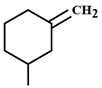
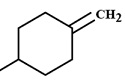
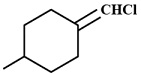
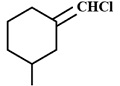
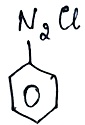
The correct value of the gas constant R is close to :
A
0.082 L- atm K-1 mo-1
B
0.082 L- atm-1 K mol
C
0.082 L- atm K mol
D
0.082 L- atm-1 K mol
Question 2Single Answer
A colloidal solution is kept in dark and is illuminated by a beam of light then brightness appears at the right angle of direction of light. This effect is called
A
Tyndall effect
B
Brownian effect
C
Hardy-Schulze effect
D
None of these
Question 3Single Answer
It is possible to obtain oxygen from air by fractional distillation because :
A
oxygen has lower density than nitrogen
B
oxygen is in different group of periodic table from nitrogen
C
oxygen is more active than nitrogen
D
oxygen has higher boiling point than nitrogen
Question 4Single Answer
The rise in the boiling point of a solution containing 1.8 g of glucose in 100 g of a solvent is 0.1°C. The molal elevation constant of the liquid is :
A
0.01 K/m
B
0.1 K/m
C
1 K/m
D
10 K/m
Question 5Single Answer
Which of the following is a chiral compound ?
A
Hexane
B
n-Butane
C
Methane
D
2, 3, 4-Trimethylhexane.
Question 6Single Answer
If the enthalpy of vaporisation of water is 186.5 J/mol, the entropy of its vaporisation will be :
A
0.5 JK-1 mol-1
B
1.0 .JK-1 mol-1
C
1.5 JK-1 mol-1
D
2.0 JK-1 mol-1
Question 7Single Answer
Gibbs free energy G, enthalpy H, and entropy are related as :
A
G - TS = H
B
G = H + TS
C
S = H - G
D
G = H – TS
Question 8Single Answer
Which of the following is the correct statement for PH3?
A
It is less poisonous than NH3
B
It is less basic than NH3
C
Electronegativity of PH3 > NH3
D
It does not show reducing properties
Question 9Single Answer
The half-life period for a zero order reaction is :
A
Inversely proportonal to the concentration
B
Independent of the concentration
C
Directly proportional to the initial concentration
D
Directly proportional to the final concentration
Question 10Single Answer
Which one of the following statements is correct for a positive catalyst ?
A
It initiates the reaction
B
It changes the state of equilibrium in favour of formation of product
C
It provides an alternative reaction path of lower activation energy
D
It provides activation energy to the reactants
Question 11Single Answer
The IUPAC name of the compound : CH3CH2CH2 – C – CH3 based on latest nomenclature system is :
A
pentanone-2
B
pentan-2-one
C
2-pentanone
D
All of these
Question 12Single Answer
In the elimination reactions, the reactivity of alkyl halides follows the sequence :
A
R - F > R - I > R - Br > R - Cl
B
R - F > R - Cl > R - Br > R - I
C
R - I > R - Br > R - Cl > R - F
D
R - I > R - F > R - Br > R – Cl
Question 13Single Answer
If Si is doped with B,
A
n-type semiconductor is formed
B
p-type semiconductor is formed
C
insulator is formed
D
polymer is formed.
Question 14Single Answer
Which of the following has highest boiling point ?
A
(CH3)3N
B
C2H5NHCH3
C
CH3CH2CH2NH2
D
NH2CH2CH2NH2
Question 15Single Answer
When alkyl halide reacts with aqueous sodium hydroxide to give alcohol, the reaction is called :
A
electrophilic substitution
B
nucleophilic substitution
C
free radical substitution
D
None of the above
Question 16Single Answer
Threshold frequency of a metal is 5 × 10¹³ s–1 upon which 1 × 10¹⁴ s–1 frequency light is focused. Then the maximum kinetic energy of emitted electron is
A
3.3 × 10⁻²¹
B
3.3 × 10⁻²⁰
C
6.6 × 10⁻²¹
D
6.6 × 10⁻²⁰
Question 17Single Answer
The reaction between an alkyl halide and an alkoxide ion to give an ether is known as :
A
Williamson’s synthesis
B
Clemmensen’s reduction
C
Fittig reaction
D
Wurtz reaction
Question 18Single Answer
During bleaching of chlorine an antichlor is employed to :
A
eliminate last traces of bleaching agent
B
remove greases from the fibre
C
liberate oxygen
D
enhance bleaching action
Question 19Single Answer
The proper name for [Co(NH3)6]Cl3 :
A
hexamine cobalt trichloride
B
hexamine cobalt (III) chloride
C
hexamonia cobalt trichloride
D
cobalt hexamine chloride
Question 20Single Answer
Sequence of acidic character is :
A
N2O5 > SO2 > CO > CO2
B
N2O5 > SO2 > CO2 > CO
C
SO2 > CO2 > CO > N2O5
D
SO2 > N2O5 > CO > CO2
Question 21Single Answer
Which is a metalloid ?
A
Manganese
B
Phosphorus
C
Oxygen
D
Arsenic
Question 22Single Answer
The oxides, CrO3, MoO3 and WO3 are strongly :
A
neutral
B
acidic
C
basic
D
None of these
Question 23Single Answer
Which is the correct order of the first ionisation potential of N, O and C ?
A
C > N > O
B
O > N > C
C
C < N > O
D
C > N ~ O
Question 24Single Answer
Among the following statements the incorrect one is :
A
zinc blende and iron pyrites are sulphides
B
calamine and siderite are carbonates
C
malachite and azurite are ores of copper
D
argentite and cuprite are oxides
Question 25Single Answer
The oxidation number of chlorine in HClO4 is :
A
+7
B
+5
C
+3
D
-1
Question 26Single Answer
Nitrous acid reacts with H2SO4 to give :
A
NO + SO3
B
NO2 + SO2
C
NO + SO2
D
None of these
Question 27Single Answer
Pyrolusite is an ore of :
A
polonium
B
manganese
C
tin
D
lead
Question 28Single Answer
Turnbull’s blue is a compound :
A
ferri cyanide
B
ferrous ferri cyanide
C
ferrous cyanide
D
ferri ferro cyanide
Question 29Single Answer
What is the composition of tear gas?
A
KCl MgCl2 24H2O
B
Na2S2O3 - nH2O
C
Cl3CNO2
D
K4Fe (CN)6
Question 30Single Answer
Halogen having greatest electron affinity :
A
F
B
Cl
C
Br
D
I
Question 31Single Answer
Bragg’s law is given by the equation :
A
B
C
D
Question 32Single Answer
For a reaction to occur spontaneously :
A
must be negative
B
must be positive
C
must be negative
D
∆H must be negative
Question 33Single Answer
Consider the equilibrium : The maximum yield of ammonia is obtained by :
A
Decrease of temp and increase of pressure
B
Inecrease of temp and decrease of pressure
C
Decrease of both the temp and pressure
D
Inecrease of temp and pressure
Question 34Single Answer
A solid is formed from atom A and B and crystallizes into a face centred cubic lattice with A at the face centred position and B at the corners of the cube. Its molecular formula is represented by :
A
AB3
B
A3B
C
AB2
D
A2B
Question 35Single Answer
Which is not deflected by magnetic field ?
A
Proton
B
Neutron
C
Electron
D
Positron
Question 36Single Answer
Which of the following pairs are correctly matched ?
A
Isoelectronics N3-, O2-, Cr3-
B
Isotones 14Si30, 15P31, 16S32
C
Isotopes 20Ca40, 19K40
D
Isobars 80O16, 80O17, 8O18
Question 37Single Answer
The weight of 11.2 L of CO2 at STP would be :
A
22 g
B
32 g
C
44 g
D
88 g
Question 38Single Answer
Addition of conc. HCl to saturated BaCl2 solution precipitates BaCl2; because :
A
at constant temperature, the product [Ba2+] [Cl-]2 remains constant in a saturated solution
B
ionic product [Ba2+] [Cl-] remains constant in a saturated collection
C
the ionic product [Ba2+][Cl-]2 is greater than solubility product
D
it follows from Le-Chatelier’s principle
Question 39Single Answer
Which of the following will occur if a 0.1 M solution of a weak acid is diluted to 0.01 M at constant temperature ?
A
Ka will increase
B
pH will decrease
C
Percent ionisation increase
D
[H+] will decrease to 0.01 M
Question 40Single Answer
In the equilibrium AB(s) ⇌ A+ B, If the equilibrium concentration of A is doubled, the equilibrium concentration of B would become :
A
Twice
B
Half
C
1/4
D
1/8
Question 41Single Answer
The freezing points of equimolar solutions of glucose, KNO3 and AlCl3 are in the order of :
A
AlCl3 < glucose < KNO3
B
AlCl3 < KNO3 < glucose
C
glucose < KNO3 < AlCl3
D
glucose < AlCl3 < KNO3
Question 42Single Answer
What will be the molarity of a solution containing 5.0 g of NaOH in 250 mL solution ?
A
0.1 g
B
0.5
C
1.0
D
2.0
Question 43Single Answer
Which one of the following is the correct decreasing order of boiling point ?
A
H2Te > H2O > H2Se > H2S
B
H2O > H2S > H2Se> H2Te
C
H2Te > H2Se > H2S > H2O
D
H2O > H2Te > H2Se > H2S
Question 44Single Answer
van der Waals’ forces are applied to :
A
elementary gases only
B
mixture of gases
C
inert gases only
D
rare gases only
Question 45Single Answer
Among the following the most highly ionised in water is :
A
CH2(Cl)CH2CH2COOH
B
CH3CH2CCl2COOH
C
CH3CH(Cl)CH2COOH
D
CH3CH2CH(Cl)COOH
Question 46Single Answer
Sanger's reagent is used for the identification of:
A
N-thermal of peptide chain
B
C-thermal of peptide chain
C
Side chian of amino acids
D
number of amino acids in peptide chain
Question 47Single Answer
Geometrical isomerism is shown by :
A
B
C
D
Question 48Single Answer
Acetophenone is prepared from
A
Rosenmund Reaction
B
Sandmayer reaction
C
Wurtz reaction
D
Freiedel craft reaction
Question 49Single Answer
The energy of hydrogen atom in its ground state is – 13.6 eV. The energy of the level corresponding to the quantum number n = 5 is
A
– 5.40 eV
B
– 0.54 eV
C
– 2.72 eV
D
– 0.85 eV
Question 50Single Answer
Which of the following species is diamagnetic?
A
O2
B
O22–
C
O2-
D
O2+
Important Questions Package
MPPSC Lecturer Exam Online Question Bank Package
Buy MPPSC Lecturer Important Questions, MCQ, question answer in Hindi & English. It will help you to score high marks in MPPSC Lecturer question bank 2026 in Online, PDF & Print study material.
+ Free Monthly Current Affairs, GK & more PDF Download
Sr.
Package Name
Amount
1.
MPPSC Lecturer Exam Paper I - English
Description : 1750 Question With Answer
₹231[₹500]
2.
MPPSC Lecturer Exam Paper I - Hindi
Description : 1750 Question With Answer
₹231[₹500]
3.
MPPSC Lecturer Exam Paper II (Chemistry) - English
Description : 1600 Question With Answer
₹231[₹500]
4.
MPPSC Lecturer Exam Paper II (Chemistry) - Hindi
Description : 1100 Question With Answer
₹181[₹500]
Chemistry
Question 51Single Answer
The rate of diffusion of a gas is :
A
directly proportional to its density
B
directly proportional to its molecular weight
C
directly proportional to the square root of its molecular weight
D
inversaly proportional to the sqaure root of its molecular weight
Question 52Single Answer
Which of the following hydrides is electron deficient molecule?
A
NaH
B
CH4
C
CaH2
D
B2H6
Question 53Single Answer
Oxidation number of Cr in CrO5 is
A
+ 8
B
+ 6
C
+ 4
D
+ 10
Question 54Single Answer
Which of the following solution boils at the highest temperature?
A
0.1 M NaCl
B
0.1 M urea
C
0.1 M BaCl2
D
0.1 M glucose
Question 55Single Answer
Which one of the following acids will undergo easy thermal decarboxylation?
A
CH3. CH2COOH
B
HOOCCH2COOH
C
CH3COOH
D
C6H5COOH
Question 56Single Answer
For treatment of cancerous tumours, the radio isotope used was
A
U – 235
B
Co – 60
C
P – 32
D
Pu – 239
Question 57Single Answer
The main structural feature of protein is
A
The ester linkage
B
The ether linkage
C
The peptide linkage
D
All of the above
Question 58Single Answer
The gas which combine with haemoglobin to damage its oxygen carrying capacity is
A
CO2 (g)
B
O2 (g)
C
CO (g)
D
N2 (g)
Question 59Single Answer
Which one of the following is obtained when acetone is treated with bleaching powder?
A
CH3Cl
B
CH2Cl2
C
CHCl3
D
CCl4
Question 60Single Answer
Which one of the following acids exhibits optical activity?
A
Lactic acid
B
Benzoic acid
C
Oxalic acid
D
Acetic acid
Question 61Single Answer
Benzyl alcohol is obtained from benzaldehyde by
A
Fitting reaction
B
Reduction with LiAlH4
C
Cannizaro’s reaction
D
Both b and c
Question 62Single Answer
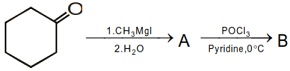
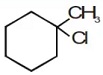
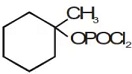
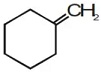
Consider the following reaction sequence.The product (B) is:
A
B
C
D
Question 63Single Answer
An isocyanide on hydrolysis gives
A
An amide
B
A craboxylic acid and ammonia
C
A N-subsituted amide
D
Ethyl amine and fromic acid
Question 64Single Answer
CH3CH = CHCHO is oxidized to CH3CH = CHCOOH using
A
Osmium tetraoxide
B
Selenium dioxide
C
Ammoniacal silver nitrate
D
Alkaline permanganate
Question 65Single Answer
The reagent with which both acetaldehyde and acetone react easily is
A
Schiff’s reagent
B
Tollen’s reagent
C
Grignard reagent
D
Fehling solution
Question 66Single Answer
When phenol is heated with KOH and chloroform, it forms
A
Salicylaldehyde
B
Benzoic acid
C
Potassium phenolate
D
Salicyclic acid
Question 67Single Answer
3 – methyl – 2 – butanol on treatment with HCl gives predominantly
A
2 – chloro – 3 – methyl butane
B
2,2 – dimethyl pentane
C
2 – chloro – 2 – methyl butane
D
None of the above
Question 68Single Answer
Percentage composition of an organic compound is as follows C = 10.06, H = 0.84, Cl = 89.10 Which of the following correspond to its molecular formula if the vapour density is 60.0?
A
CH3Cl
B
CHCl3
C
CH2Cl2
D
None of these
Question 69Single Answer
In the second group of qualitative analysis, H2S is passed through a solution acidified with HCl in order to
A
Increase the concentration of S2- ions
B
Limit the concentration of S2- ions
C
Add the Cl- ions
D
Increase the solubility of H2S
Question 70Single Answer
Synthetic detergents are more effective in hard water than soaps because
A
They are non – ionic
B
Their Ca2+ and Mg2+ salts are insoluble in water
C
Their Ca2+ and Mg2+ salts are water soluble
D
They are highly soluble in water
Question 71Single Answer
Which is the best-suited method for the separation of para and ortho-nitrophenols from 1:1 mixture ?
A
Crystallisation
B
Chromatography
C
Sublimation
D
Steam distillation
Question 72Single Answer
Atoms or ion missing from normal lattice point creating a vacancy due to
A
Frenkel defect
B
Mass defect
C
Schottky defect
D
Interstitial defect
Question 73Single Answer
Which of the following statements is correct for the reaction, at constant temperature and pressure ?
A
∆H = ∆U
B
∆H < ∆U
C
∆H > ∆U
D
None of these
Question 74Single Answer
A gas occupies 2 L at STP. It is provided 300 J heat so that its volume becomes 2.5 L at 1 atm. Calculate the change in internal energy
A
352.49 J
B
849.35 J
C
249.35 J
D
302.98 J
Question 75Single Answer
The half life period of a radioactive element is 50 days. The activity of the substance gets reduced to 1/8 of the original value in :
A
50 days
B
100 days
C
25 days
D
150 days
Question 76Single Answer
If the equilibrium concentration of A is doubled in the following equilibrium AB2(s) ⇌ A (g) + B2 (g) The equilibrium concentration of B2 would be
A
One fourth of initial concentration
B
Half of the initial concentration
C
Doubled
D
Same as initial concentration
Question 77Single Answer
The half- life of a radioactive isotope is 3 h. if the initial mass of the isotope was 300 g, the mass which remains undecayed in 18 h would be
A
2.34 g
B
1.17 g
C
9.36 g
D
4.68 g
Question 78Single Answer
Which one of the following statements concerning lanthanides elements is false?
A
Most characteristics oxidation state of lanthanides elements is + 3
B
All lanthanides are metals
C
The ionic radii of trivalent lanthanides steadily increase with increase in atomic number
D
Lanthanides are separated from one another by ion exchange methods
Question 79Single Answer
Which has maximum paramagnetic nature?
A
[Fe(CN)6]4-
B
[Cu(H2O)4]2+
C
[Zn(NH3)4]2+
D
[Mn(H2O)6]2+
Question 80Single Answer
At 2980 K standard reduction potential of half reduction reaction are given below which of the following is the best suited to be used as anode?
A
2H1+ + 2e- → H2 (g) (+ 0.000)
B
Zn2+ + 2e- → Zn (s) (-0.762)
C
Fe3+ + e- → Fe2+ (s) (-0.44)
D
Cr2+ + 2e- → Cr (s) (-0.540)
Question 81Single Answer
Which of the following reaction occurs at the cathode ?
A
B
Ag -> Ag2 +e-
C
Fe2+ -> Fe3+ + e-
D
Cu2+ + 2e- -> Cu
Question 82Single Answer
To deposit 0.634 g of copper by electrolysis of aqueous cupric sulphate solution, the amount of electricity required (in coulombs) ids
A
1930
B
3960
C
4825
D
9650
Question 83Single Answer
The oxidation state of Ni in Ni (CO)4 is
A
Zero
B
– 2
C
+ 2
D
+ 4
Question 84Single Answer
The number of moles of KMnO4 that will be needed to react completely with one mole of ferrous oxalate in acidic solution is
A
4/5
B
3/5
C
2/5
D
1
Question 85Single Answer
Bronze is an alloy of
A
copper, zinc and nickel
B
Copper, zinc
C
Copper, zinc and tin
D
Copper and tin
Question 86Single Answer
Some of the polar crystal when heated produce electric current. This phenomena is termed as
A
Piezoelectric effect
B
Anti – ferroelectric effect
C
Ferroelectric effect
D
Pyroelectric effect
Question 87Single Answer
Pick the correct name of [Co(NH3)5Cl]Cl2
A
Chloropentammine cobalt (II) chloride
B
Pentammine chloro cobalt (III) chloride
C
Chloropentammine cobalt (III)
D
Pentammine cobalt (III) chloride
Question 88Single Answer
Aluminium hydroxide is soluble in excess of sodium hydroxide forming the ion
A
AlO3-
B
AlO23+
C
AlO23-
D
AlO2-
Question 89Single Answer
Find the incorrect statement for a nucleophile
A
A nucleophile is a Lewis acid
B
Nucleophiles do not seek electron
C
Ammonia is a nucleophile
D
Nucleophiles attack low electron density sites
Question 90Single Answer
In the qualitative analysis of nitrate in ring test a brown ring is formed due to the formation of
A
N2O.FeSO4
B
FeSO4N2O
C
NO2
D
FeSO4NO2
Question 91Single Answer
An element having electronic configuration 1s2, 2s2, 2p6, 3s2, 3p1 will form
A
Neutral oxide
B
Acidic oxide
C
Basic oxide
D
Amphoteric oxide
Question 92Single Answer
Allylic bromination is carried out by
A
n – bromosuccinimide
B
Br2/CS2
C
HBr/H2O2
D
HOBr
Question 93Single Answer
The most stable carbonium ion among the following is:
A
B
C
D
Question 94Single Answer
Which of the following has maximum number of unpaired electrons?
A
Cu+
B
Zn
C
Fe2+
D
Ni3+
Question 95Single Answer
The quantum number which is responsible for the size of electron cloud is
A
Spin
B
Azimuthal
C
Principal
D
Magnetic
Question 96Single Answer
If the pH of an aqueous solution is 4.7, then its H+ concentration will be
A
3 × 10⁻⁶
B
3 × 10⁻⁵
C
2 × 10⁻⁵
D
5 × 10⁻⁵
Question 97Single Answer
To deposit one equivalent weight of silver at cathode the charge required will be
A
9.65 × 10⁴ C
B
9.65 × 10³ C
C
9.65 × 10⁵ C
D
9.65 × 10⁷ C
Question 98Single Answer
Conjugated double bond is present in
A
Butylene
B
Butadiene
C
Isobutylene
D
Propylene
Question 99Single Answer
A radioactive element has a half-life of 10 yr. what percentage of the original amount of it would you expect to remain after 20 yr?
A
12.5
B
8
C
0
D
25
Question 100Single Answer
Which of the following reaction is correct ?
A
B
C
D
All of these
Question 101Single Answer
Electrons are filled in energy orbitals, in increasing order of energy. This statement is related to
A
Planck’s rule
B
Hund’s rule
C
Pauli’s rule
D
Aufbau principle
Question 102Single Answer
Ascorbic acid is a
A
Enzyme
B
Vitamin
C
Protein
D
None of these
Question 103Single Answer
The outer electronic configuration of transitional elements is
A
(n – 1) s2nd1-5
B
(n + 1)s2nd1-5
C
(n – 1)s2p6 (n – 1)d1-10, ns0-2
D
ns2 (n + 1) d1-10
Question 104Single Answer
strongest base is
A
RbOH
B
LiOH
C
KOH
D
NaOH
Question 105Single Answer
Alkaline dilute KMnO4 solution is called
A
Etard reagent
B
Benedict reagent
C
Mullikan’s reagent
D
Baeyer’s reagent
Question 106Single Answer
2 moles of PCl5 is heated in one litre vessel. At equilibrium 0.4 mole Cl2 is formed. The value of equilibrium constant will be
A
1 × 10⁻³
B
1 × 10⁻²
C
2 × 10⁻¹
D
1 × 10⁻¹
Question 107Single Answer
If 9 is the atomic number of an element, then this element will be
A
A metal with + 3 oxidation state
B
A metal with + 1 oxidation state
C
An inert gas
D
A metal with – 3 oxidation state
Question 108Single Answer
At 250 C the solubility of sparingly soluble binary salt AgCl is 1.25 × 10⁻⁵ mol/L. What will be the value of Ksp at the same temperature?
A
1.25 × 10⁻⁵
B
1.56 × 10⁻¹⁰
C
1 × 10⁻¹⁰
D
1.44 × 10⁻¹⁰
Question 109Single Answer
Nessler’s reagent is used to detect
A
PO43-
B
MnO4-
C
NH4+
D
CrO42-
Question 110Single Answer
The oxidation number of Cr in CrO2Cl2 is
A
+ 2
B
+ 3
C
+ 4
D
+ 6
Question 111Single Answer
Ionisation energy is highest in
A
[Ne] 3s1
B
[Ne] 3s23p3
C
[Ne] 3d10, 4s2, 4p3
D
[Ne] 3s23p4
Question 112Single Answer
Nitrobenzene, on reaction with fuming nitric acid at 900 C, the product is
A
B
C
D
Question 113Single Answer
The oxidation number of C in CH4, CH3Cl, CH2Cl2, CHCl3 and CCl4 is respectively
A
– 4, - 2, 0, + 2, + 4
B
+ 2, 4, 0, - 2, - 4
C
4, 2, 0, - 2, - 4
D
0, 2, - 2, 4, 4
Question 114Single Answer
The correct increasing order of electron affinity is
A
Be, B, N, C
B
C, N, B, Be
C
Be, N, B, C
D
Be, B, C, N
Question 115Single Answer
The oxidation number of chlorine in HClO4 is :
A
+7
B
+5
C
+3
D
-1
Question 116Single Answer
the IUPAC name of (CH3)3C – CH = CH2 is
A
vinyl trimethyl methane
B
2,2-dimethyl-3-butene
C
Tertiary butyl ethene
D
3,3-dimethyl-1-butene
Question 117Single Answer
The number of σ and π bonds in
CH2 = CH – CH = CH2
A
7 and 3
B
6 and 2
C
4 and 3
D
All are sigma bond
Question 118Single Answer
Latent heat of vaporization of a liquid at 500 K and 1 atm pressure is 10.0 kcal/mol. What will be the change in internal energy of 3 moles of liquid at same temperature?
A
– 13.0 kcal
B
– 27.0 kcal
C
27.0 kcal
D
10.0 kcal
Question 119Single Answer
If LPG cylinder contains mixture of butane and isobutane then the amount of oxygen that would be required for combustion of 1 kg of it will be
A
2.7 kg
B
1.8 kg
C
3.58 kg
D
4.5 kg
Question 120Single Answer
CuSO4 dissolves in NH3 due to formation of
A
Cu(OH)2
B
[Cu(NH3)4 (OH)2]
C
[Cu(NH3)4]SO4
D
CuO
Question 121Single Answer
Phenacetin is used as
A
Antiseptic
B
Analgesic
C
Antipyretic
D
Antimalarial
Question 122Single Answer
The highest magnetic moment will be shown by
A
Ni
B
Co
C
Fe
D
Zn
Question 123Single Answer
Gypsum is
A
CaSO4. 2H2O
B
CaCO3. 2H2O
C
CaSO4. 1/2H2O
D
SiO2
Question 124Single Answer
The compound B formed in the following sequences of reactions is:
A
Propyne
B
propene
C
propanol
D
propane
Question 125Single Answer
Which is characteristic of a catalyst?
A
It changes the equilibrium point
B
It initiates the reaction
C
It alters the rate of a reaction
D
It increases the average kinetic energy of the molecules
Question 126Single Answer
Under the Same Conditions, Nitrogen and Oxygen are Taken in the Same Mass. The Ratio of Their Volumes will be _____
A
7 : 8
B
9 : 2
C
5 : 6
D
3 : 5
Question 127Single Answer
Which of the following is a buffer?
A
NH4OH + NH4Cl
B
NaOH + Na2SO4
C
NaOH + CH3COONa
D
K2SO4 + H2SO4
Question 128Single Answer
The most electronegative element in periodic table is
A
Fr
B
F
C
He
D
N
Question 129Single Answer
Cryolite is the ore of
A
Fe
B
Cu
C
Ag
D
Al
Question 130Single Answer
Which of the following is not a member of 3d – transition series?
A
Fe
B
Co
C
Au
D
Cu
Question 131Single Answer
Which of the following is an electrophile?
A
H2O
B
NH3
C
AlCl3
D
C2H3NH2
Question 132Single Answer
The solubility of Ca3(PO4)2 is ‘s’ mol/L. its solubility product is
A
72s5
B
108s5
C
9s2
D
8s3
Question 133Single Answer
A sample of radioactive substance with a t1/2 = 3 days was found to contain 3 g of it, when received exactly after 12 days. The amount of radioactive substance when it was sealed
A
48 g
B
12 g
C
24 g
D
6 g
Question 134Single Answer
The correct electronic configuration of Cu (29) is
A
1s2, 2s22p6, 3s23p63d10, 4s1
B
1s2, 2s22p6, 3s23p53d11, 4s1
C
1s2, 2s22p6, 3s23p63d9, 4s1
D
1s2, 2s22p6, 3s23p53d10, 4s2
Question 135Single Answer
A group 16 element exists in the monoatomic state in the metallic lattice. It also exists in two crystalline forms. The metal is
A
S
B
Po
C
Se
D
Te
Question 136Single Answer
The bond energies of F2, Cl2, Br2 and I2 are 155, 244, 193 and 151 kJ/mol. The weakest bond will be
A
Cl2
B
Br2
C
I2
D
F2
Question 137Single Answer
The process of converting hydrated alumina into anhydrous alumina is called
A
Smelting
B
Roasting
C
Calcination
D
Dressing
Question 138Single Answer
If the hydrogen ion concentration in an acid is 10-8 mol/L then the pH
A
9
B
7
C
< 7
D
> 8
Question 139Single Answer
Tischenko reaction proceeds in the presence of
A
Zn and ZnCl2
B
Al powder
C
Al(OC2H5)3 and anhydrous AlCl3
D
FeCl3
Question 140Single Answer
Which is most soluble in water?
A
AgBr
B
AgCl
C
AgF
D
AgI
Question 141Single Answer
Blue vitriol is
A
MgSO4. 7H2O
B
CuSO4. 5H2O
C
FeSO4. 7H2O
D
CaSO4. 2H2O
Question 142Single Answer
The silver is extracted by Parke’s process. The basis of this method is
A
Silver is immiscible in molten Zn
B
Ag is miscible in NaCN
C
Ag is more miscible in molten Zn that in molten Pb
D
Ag is more miscible in molten Pb in comparison to molten Zn
Question 143Single Answer
The Eo values of the following reduction reactions are given:
What will be the free energy change for the reaction?
A
+ 18.5 kJ mol – 1
B
+ 11.87 kJ mol – 1
C
– 8.10 kJ mol – 1
D
– 10.41 kJ mol – 1
Question 144Single Answer
Which is the product of the following reaction?
A
B
C
D
Question 145Single Answer
The acid which do not contain carboxylic acid group is
A
Glutaric acid
B
Picric acid
C
Stearic acid
D
Terephthalic acid
Question 146Single Answer
The aldol condensation reaction is given by
A
Acetophenone
B
Benzaldehyde
C
Benzophenone
D
Trichloroacetaldehyde
Question 147Single Answer
Consider the cell Pt | H2 (g, 1 atm) | H+ (aq, 1 M) ||Fe3+ (aq), Fe2+ (aq) | Pt(s)
Given that E0Fe3+/Fe2+ = 0.771 V, the ratio of concentration of Fe2+ (aq) to Fe3+ (aq) is, when the cell potential is 0.830 V.
A
0.101
B
0.924
C
0.120
D
None of these
Question 148Single Answer
The main product of the reaction is
A
B
C
D
Question 149Single Answer
The following molecule has a linear shape
A
H3+
B
LiH
C
NH2
D
OH2
Question 150Single Answer
The gas that is adsorbed to a larger extent on charcoal is




 must be negative
 must be positive
 must be negative
 The maximum yield of ammonia is obtained by :