information given below and answer the question that follow.
The result of an exam is given below. Out of 1000 students who appeared
(i) 658 failed in Physics
(ii) 166 failed in Physics and Chemistry
(iii) 372 failed in Chemistry, 434 failed in Physics and Maths
(iv) 590 failed in Maths, 126 failed in Maths & Chemistry
Find the number of people who failed in (assuming that none is passed in all subjects.
We have the following equations:
a+ b + c + d + e + f + g = 1000
a + b + d + e = 658, b + d = 166
b + d + c + f = 372
d + e = 434 as in the figure.
d + e + f + g = 590, d + f = 126. Find the values
Chemistry but not in Physics.
A
318
B
198
C
213
D
206
Question 2Single Answer
Passage :
Direction: information given below and answer the question that follow.
The result of an exam is given below. Out of 1000 students who appeared
(i) 658 failed in Physics
(ii) 166 failed in Physics and Chemistry
(iii) 372 failed in Chemistry, 434 failed in Physics and Maths
(iv) 590 failed in Maths, 126 failed in Maths & Chemistry
Find the number of people who failed in (assuming that none is passed in all subjects.
We have the following equations:
a+ b + c + d + e + f + g = 1000
a + b + d + e = 658, b + d = 166
b + d + c + f = 372
d + e = 434 as in the figure.
d + e + f + g = 590, d + f = 126. Find the values
Physics or Maths but not in Chemistry.
A
558
B
718
C
628
D
None of these
Question 3Single Answer
Passage :
For the next four question that follow:
In a city, three daily newspapers A, B, C are published, 42% read A; 51% read B; 68% read C; 30% read A and B; 28% read B and C; 36% read A and C; 8% do not read any of the three newspapers.
Let x% people read all the three newspapers.
Since 8% people do not read any newspapers.
(x – 24) + (x – 7) + (x + 4) + (30 – x) + (36 – x) + (28 – x) + x = 92
→ x + 98 – 31 = 92
→ x = 92 – 67 = 25
What is the percentage of persons who read all the three papers ?
A
20%
B
25%
C
30%
D
40%
Question 4Single Answer
Passage :
For the next four : question that follow :
In a city, three daily newspapers A, B, C are published, 42% read A; 51% read B; 68% read C; 30% read A and B; 28% read B and C; 36% read A and C; 8% do not read any of the three newspapers.
Let x% people read all the three newspapers.
Since 8% people do not read any newspapers.
(x – 24) + (x – 7) + (x + 4) + (30 – x) + (36 – x) + (28 – x) + x = 92
→ x + 98 – 31 = 92
→ x = 92 – 67 = 25
What is the percentage of persons who read only two papers?
A
19%
B
31%
C
44%
D
None of these
Question 5Single Answer
Passage :
For the next four : question that follow :
In a city, three daily newspapers A, B, C are published, 42% read A; 51% read B; 68% read C; 30% read A and B; 28% read B and C; 36% read A and C; 8% do not read any of the three newspapers.
Let x% people read all the three newspapers.
Since 8% people do not read any newspapers.
(x – 24) + (x – 7) + (x + 4) + (30 – x) + (36 – x) + (28 – x) + x = 92
→ x + 98 – 31 = 92
→ x = 92 – 67 = 25
What is the percentage of persons who read only one paper ?
A
38%
B
48%
C
51%
D
None of these
Question 6Single Answer
Passage :
For the next four : question that follow:
In a city, three daily newspapers A, B, C are published, 42% read A; 51% read B; 68% read C; 30% read A and B; 28% read B and C; 36% read A and C; 8% do not read any of the three newspapers.
Let x% people read all the three newspapers.
Since 8% people do not read any newspapers.
(x – 24) + (x – 7) + (x + 4) + (30 – x) + (36 – x) + (28 – x) + x = 92
→ x + 98 – 31 = 92
→ x = 92 – 67 = 25
What is the percentage of persons who read only A but neither B nor C ?
A
4%
B
3%
C
1%
D
None of these
Question 7Single Answer
Passage :
For the next four : question that follow:
In a city, three daily newspapers A, B, C are published, 42% read A; 51% read B; 68% read C; 30% read A and B; 28% read B and C; 36% read A and C; 8% do not read any of the three newspapers.
Let x% people read all the three newspapers.
Since 8% people do not read any newspapers.
(x – 24) + (x – 7) + (x + 4) + (30 – x) + (36 – x) + (28 – x) + x = 92
→ x + 98 – 31 = 92
→ x = 92 – 67 = 25
If A and B are any two sets, then what is A ᴖ (A ᴗ B) equal to ?
A
Complement of A
B
Complement of B
C
B
D
A
Question 8Single Answer
Passage :
For the next four : question that follow:
In a city, three daily newspapers A, B, C are published, 42% read A; 51% read B; 68% read C; 30% read A and B; 28% read B and C; 36% read A and C; 8% do not read any of the three newspapers.
Let x% people read all the three newspapers.
Since 8% people do not read any newspapers.
(x – 24) + (x – 7) + (x + 4) + (30 – x) + (36 – x) + (28 – x) + x = 92
→ x + 98 – 31 = 92
→ x = 92 – 67 = 25
40% of the people read newspaper X, 50% read newspaper Y and 10% read both the papers. What percentage of the people read neither newspaper ?
A
10%
B
15%
C
20%
D
25%
Question 9Single Answer
Passage :
Read the passage below and solve the question based on it.
5% of the passengers do not like coffee, tea and lassi and 10% like all the three, 20% like coffee and tea, 25% like lassi and coffee and 25% like lassi and tea. 55% like coffee, 50% like tea, and 50% like lassi.
Where C = Coffee, T = Tea and L =Lassi
The passengers who like only coffee is greater than the passengers who like only lassi by
A
25%
B
100%
C
75%
D
0%
Question 10Single Answer
Passage :
Read the passage below and solve the question based on it.
5% of the passengers do not like coffee, tea and lassi and 10% like all the three, 20% like coffee and tea, 25% like lassi and coffee and 25% like lassi and tea. 55% like coffee, 50% like tea, and 50% like lassi.
Where C = Coffee, T = Tea and L =Lassi
The percentage of passengers who like both tea and lassi but not coffee, is
A
15
B
25
C
40
D
75
Question 11Single Answer
Passage :
Read the passage below and solve the question based on it.
5% of the passengers do not like coffee, tea and lassi and 10% like all the three, 20% like coffee and tea, 25% like lassi and coffee and 25% like lassi and tea. 55% like coffee, 50% like tea, and 50% like lassi.
Where C = Coffee, T = Tea and L =Lassi
The percentage passengers who like at least 2 of the coffee, tea and lassi, is
A
30
B
45
C
50
D
60
Question 12Single Answer
Passage :
Read the passage below and solve the question based on it.
5% of the passengers do not like coffee, tea and lassi and 10% like all the three, 20% like coffee and tea, 25% like lassi and coffee and 25% like lassi and tea. 55% like coffee, 50% like tea, and 50% like lassi.
Where C = Coffee, T = Tea and L =Lassi
If the number of passengers is 180, then the number of passengers who like lassi only, is
A
10
B
18
C
27
D
36
Question 13Single Answer
Passage :
Read the passage below and solve the question based on it.
5% of the passengers do not like coffee, tea and lassi and 10% like all the three, 20% like coffee and tea, 25% like lassi and coffee and 25% like lassi and tea. 55% like coffee, 50% like tea, and 50% like lassi.
Where C = Coffee, T = Tea and L =Lassi
In a town three newspapers A, B and C are published. 42% of the people in that town read A, 68% read B, 51% read C, 30% read A and B, 28% read B and C, 36% A and C and 18% do not read any paper. Find the % of the population of town that reads all the three.
A
15%
B
25%
C
20%
D
35%
Question 14Single Answer
Passage :
In the adjoining figure, I and II are circles with ceners P and Q respectively. The two circle touch each other and have a common tangent that touches them at points R and S respectively. This common tangent meets the line joining P and Q at O. The diameters of I and II are in the ratio 4 : 3. It is also known that the length of PO is 28 cm.
What is the ratio of the length of PQ to that of QO?
A
1 : 4
B
1 : 3
C
3 : 8
D
3 : 4
Question 15Single Answer
Passage :
A committee of five members is to be formed out of 5 Males, 6 Females and 3 Children. In how many different ways can it be done if ?
The committee should consist of 2 Males, 2 Females and 1 child ?
A
450
B
225
C
55
D
90
Question 16Single Answer
Passage :
A committee of five members is to be formed out of 5 Males, 6 Females and 3 Children. In how many different ways can it be done if ?
The committee should include all the 3 Childs?
A
90
B
180
C
21
D
55
Question 17Single Answer
Passage :
A committee of five members is to be formed out of 5 Males, 6 Females and 3 Children. In how many different ways can it be done if ?
In how many different ways can 4 boys and 3 girls be arranged in a row such that all the boys stand together and all the girls stand together ?
A
75
B
576
C
288
D
24
Question 18Single Answer
Passage :
An urn contains 4 green, 5 blue, 2 red and 3 yellow marbles.
If four marbles are drawn at random, what is the probability that two are blue and two are red ?
A
B
C
D
Question 19Single Answer
Passage :
An urn contains 4 green, 5 blue, 2 red and 3 yellow marbles.
If eight marbles are drawn at random, what is the probability that there are equal number of marbles of each other ?
A
B
C
D
Question 20Single Answer
Passage :
An urn contains 4 green, 5 blue, 2 red and 3 yellow marbles.
If two marbles are drawn at random, what is the probability that both are red or at least one is red ?
A
B
C
D
E
None of these
Question 21Single Answer
Passage :
There are three bags A, B and C. In each bag there are three types of colored balls Yellow, Green and Black. In bag A, no. of Yellow colored balls are y and no. of green colored balls are g. Number of green colored balls are 4 more than the number of yellow colored balls. When one ball is picked at random then the probability of getting black color ball is The value of y is less than g. In bag B, number of yellow colored balls is more than that of bag A. If two balls are picked at random from bag B then the probability of getting both green color ball is . Total number of balls in bag B is 75.
In bag C, the ratio of number of green colored balls and number of black colored balls is 7 : 5. Total number of green and black colored balls is 36. If one ball is picked at random then the probability of getting one yellow ball is
If x number of yellow balls from bag B are taken and placed into bag A and 20% of black balls from bag A are taken and placed into in bag B. If we pick one ball from bag B then the probability that the ball is of black color is . Then find the value of x ?
A
5
B
6
C
3
D
2
Question 22Single Answer
Passage :
There are three bags A, B and C. In each bag there are three types of colored balls Yellow, Green and Black. In bag A, no. of Yellow colored balls are y and no. of green colored balls are g. Number of green colored balls are 4 more than the number of yellow colored balls. When one ball is picked at random then the probability of getting black color ball is The value of y is less than g. In bag B, number of yellow colored balls is more than that of bag A. If two balls are picked at random from bag B then the probability of getting both green color ball is . Total number of balls in bag B is 75.
In bag C, the ratio of number of green colored balls and number of black colored balls is 7 : 5. Total number of green and black colored balls is 36. If one ball is picked at random then the probability of getting one yellow ball is
If one ball picked at random from each of the bag A and bag B then find the probability that both of the balls are of the same color ?
A
B
C
D
Can’t be determined
Question 23Single Answer
Passage :
There are three bags A, B and C. In each bag there are three types of colored balls Yellow, Green and Black. In bag A, no. of Yellow colored balls are y and no. of green colored balls are g. Number of green colored balls are 4 more than the number of yellow colored balls. When one ball is picked at random then the probability of getting black color ball is The value of y is less than g. In bag B, number of yellow colored balls is more than that of bag A. If two balls are picked at random from bag B then the probability of getting both green color ball is . Total number of balls in bag B is 75.
In bag C, the ratio of number of green colored balls and number of black colored balls is 7 : 5. Total number of green and black colored balls is 36. If one ball is picked at random then the probability of getting one yellow ball is
Difference between the number of green balls in bag A and bag C is how much percent more/less than the sum of the number of black balls in bag A and bag C together ?
A
100%
B
95%
C
97.5%
D
102.5%
Question 24Single Answer
Passage :
There are three bags A, B and C. In each bag there are three types of colored balls Yellow, Green and Black. In bag A, no. of Yellow colored balls are y and no. of green colored balls are g. Number of green colored balls are 4 more than the number of yellow colored balls. When one ball is picked at random then the probability of getting black color ball is The value of y is less than g. In bag B, number of yellow colored balls is more than that of bag A. If two balls are picked at random from bag B then the probability of getting both green color ball is . Total number of balls in bag B is 75.
In bag C, the ratio of number of green colored balls and number of black colored balls is 7 : 5. Total number of green and black colored balls is 36. If one ball is picked at random then the probability of getting one yellow ball is
Panas has 15 yellow, pink and white balls in his bag. Number of each balls is different in the bag. Difference between yellow ball and pink ball is same as difference between pink ball and white ball. Probability of selecting one while ball from the bag is greater than 0.2, then number of while balls in the bag can be
(A) 3 (B) 4
(C) 5 (D) 7
(E) 9
A
Only B, C, D and E
B
Only B, D, E
C
All A, B, C, D and E
D
Only C, D, E
Question 25Single Answer
Passage :
There are three bags A, B and C. In each bag there are three types of colored balls Yellow, Green and Black. In bag A, no. of Yellow colored balls are y and no. of green colored balls are g. Number of green colored balls are 4 more than the number of yellow colored balls. When one ball is picked at random then the probability of getting black color ball is The value of y is less than g. In bag B, number of yellow colored balls is more than that of bag A. If two balls are picked at random from bag B then the probability of getting both green color ball is . Total number of balls in bag B is 75.
In bag C, the ratio of number of green colored balls and number of black colored balls is 7 : 5. Total number of green and black colored balls is 36. If one ball is picked at random then the probability of getting one yellow ball is
In a bag which contains 60 pens, there are 27 blue pens and some black and red pens. If two pens are picked up from the bag without replacement, then the probability of the first pen being blue and second being black is 9/59. Find the number of red pens in the bag.
A
16
B
13
C
10
D
14
Question 26Single Answer
Passage :
Percentage of marks obtained by seven students in six subjects
Subject (Max Marks I Students
Eng
(100)
His
(100)
Com
100
Maths
(100)
Science
(100)
Econ
(100)
Meera
100
80
50
90
90
60
Subodh
80
70
80
100
80
40
Kunal
90
70
60
90
70
70
Soni
60
60
65
80
80
80
Richu
50
90
62
80
85
95
Irne
40
60
64
70
65
85
Vijay
80
80
35
65
50
75
What is the total marks obtained by Meera in all the subject ?
A
448
B
580
C
470
D
74.67
E
None of these
Question 27Single Answer
Passage :
Percent profit earned by two companies over the given years.
If the income of Company A in 2002 was Rs. 600 crores, what was its expenditure?
A
Rs.360 crores
B
Rs. 480 crores
C
Rs. 375 crores
D
Cannot be deterrmined
E
None of these
Question 28Single Answer
Passage :
Crude oil Price (in RS) per given below :
Crude oil Price (in RS) per metric tonne
If in April the crude oil price had been lesser than the given by Rs 223 per metric tonne then, how much would have been the percentage increase in pricre over the earlier month?
A
10
B
12
C
14
D
16
E
None of these
Question 29Single Answer
Passage :
Production of a company (in lakh units) over the given years
The prodution in 2002 is what percent of production in 1996 ?
A
650%
B
550%
C
325%
D
320%
E
None of these
Question 30Single Answer
Passage :
Percentage of marks obtained by six students in six subjects is –
Faculty
Institution
Arts
Commerce
Science
Engineering
Management
A
125
187
216
98
74
B
96
152
198
157
147
C
144
235
110
164
127
D
165
138
245
66
36
E
215
196
287
86
66
F
184
212
195
112
97
G
225
206
182
138
89
Approximately what is the overall percentage of marks obtained by Q in all the subjects ?
A
77
B
72
C
78
D
70
E
74
Question 31Single Answer
Passage :
Number of students studying in different faculties in seven institutions.
Faculty
Institution
Arts
Commerce
Science
Engineering
Management
A
125
187
216
98
74
B
96
152
198
157
147
C
144
235
110
164
127
D
165
138
245
66
36
E
215
196
287
86
66
F
184
212
195
112
97
G
225
206
182
138
89
What is the percentage of students studying science in the institue G with respect to the total number of students studying in the institute G?
A
17.20
B
12.70
C
D
E
None of these
Question 32Single Answer
Passage :
Production of two companies A & B over the years (Production in lakh units).
For Company A, in which year is the percentage increase/decrease in the production from the previous year the highest ?
A
2001
B
1995
C
1999
D
1996
E
None of these
Question 33Single Answer
Passage :
Centrewise and Postwise number of candidates
Post Specialist Center
Officer
Clerk
Filed Officer
Supervisor
Specialist Officer
Bangalore
2000
5000
50
2050
750
Delhi
15000
17000
160
11000
750
Mumbai
17000
19500
70
7000
900
Hyderabad
3500
20000
300
9000
1150
Kolkata
14900
17650
70
1300
1200
Lucknow
11360
15300
30
1500
650
Chennai
9000
11000
95
1650
500
Which centre has the highest number of candidates ?
A
Delhi
B
Kolkata
C
Hyderabad
D
Mumbai
E
None of these
Question 34Single Answer
Passage :
A factory was opened in 1994 with certain initial strengths in different untis as shown in the table. At the beginning of the subsequent years some of the workers left and some new workers were deployed. No worker left or joined in between. Details are given in the table given below. Study it carefully and answer the questions that follow.
UNIT
Year
A
B
C
D
E
1994
156
132
98
76
125
(Initial Strength)
L
J
L
J
L
J
L
J
L
J
1995
12
15
23
32
12
36
6
26
11
13
1996
17
18
16
14
8
19
17
28
11
15
1997
9
20
12
12
17
14
9
16
19
16
1998
32
40
14
17
23
35
12
23
23
14
1999
22
35
11
15
18
25
14
24
32
38
2000
26
32
17
21
13
18
11
19
21
36
In 1999 the strength of workers was maxmium in which unit ?
A
E
B
D
C
C
D
B
E
A
Question 35Single Answer
Passage :
Percentage of students passed over appeared from six States over the years in an admission test.
State/Year
A
B
C
D
E
F
1996
32
35
37
41
39
29
1997
45
26
29
37
43
37
1998
28
38
22
27
36
42
1999
36
42
38
38
29
45
2000
40
34
26
26
35
30
2001
24
29
33
33
41
36
2002
35
43
40
38
39
28
If the average number of students qualified from State E for the given years was 532, what was the average number of students appeared ?
A
1420
B
1350
C
1422
D
Cannot be determined
E
None of these
Question 36Single Answer
Passage :
Number of bales of wool processed by 5 woollen mills
Name Of Company
Month
Polar
Shephered
Kiwi
Warmwear
Comfy
Jan
900
850
350
1000
850
Feb
800
700
1050
1100
850
March
1050
800
1000
1100
950
April
800
850
850
1100
850
May
950
900
1050
1150
850
Total
4500
4100
4900
5450
4350
In the case of which mill is the processing of wool in March the highest percentage of the total processing by that mill during the five month period ?
A
Polar
B
Shephered
C
Kiwi
D
Warmwear
E
Comfy
Question 37Single Answer
Passage :
Study the following graph carefully and answer the question given below
In the case of Cool–sip drink, what was the approximate percent increase in sale in 1992 over its sale in 1991?
A
Less than 20
B
20 –25
(a) Less than 20 (b) 20 –25
(c) 25 (d) 31 – 35
(e) 36 – 40
C
25
D
31 – 35
E
36 – 40
Question 38Single Answer
Passage :
In 6 educational years, number of studeunts taking admission and leaving from the 5 different schools which are founded in 1990 are given below.
School
A
B
C
D
E
AD
L
AD
L
AD
L
AD
L
AD
L
1990
1025
-
950
-
1100
-
1500
-
1450
-
1991
230
120
350
150
320
130
340
150
250
125
1992
190
110
225
115
300
150
300
160
280
130
1993
245
100
185
110
260
125
295
120
310
120
1994
280
150
200
90
240
140
320
125
340
110
1995
250
130
240
120
310
180
360
140
325
115
In th above table shown Ad = Admitted, L = Left
In which of the following schools, percentage increase in the number of students from the year 1990 to 1995 is maximum?
A
A
B
B
C
C
D
D
E
E
Question 39Single Answer
Passage :
Production (in lakh tons) of six units of a company in 2001 and 2002
Average production of three A, B & C in 2001 is what percent of the average production of units D, E & F in 2002? (rounded off to two digits after decimal).
A
109.43
B
90.37
C
91.38
D
106.43
E
None of these
Question 40Single Answer
Passage :
Percentage profit earned by two companies over the given years.
If the total income of Company A in 1999 was equal to the expenditure of Company B in 2000, then what was the ratio of expenditure of Company A in 1999 to the income of Company B in 2000?
A
25 : 66
B
66 : 25
C
10 : 13
D
13 : 10
E
None of these
Question 41Single Answer
Passage :
Percentage of malnourished children in Chile over the years
Year
Tested Number (in thousand)
Percentage of the malnoarished
1984
998
Law
Moderate
High
1985
1015
12.5
2.9
0.7
1985
1048
12.1
2.7
0.7
1986
1071
11.9
2.5
0.5
1987
1048
10.8
1.8
0.3
1990
1023
10.4
1.6
0.2
1991
1048
10.0
1.4
0.1
1992
1.63
8.70
1.1
0.1
1993
1161
7.80
0.9
0.1
What is the difference between the total numbers of the malnourished children in the years 1991 and 1986 ?
A
Zero
B
46112
C
22008
D
41920
E
None of these
Question 42Single Answer
Passage :
Production of paper (in lakh tonnes) by 3 different companies A, B and C over the years
For which of the following years the percentage of rise/fall in production from the previous year the maximum for Company B ?
A
1992
B
1993
C
1994
D
1995
E
1996
Question 43Single Answer
Passage :
Production (in lakh tonnes) of six companies over the given years
1995
1996
1997
1998
1999
2000
A
465
396
524
630
408
650
B
372
482
536
480
512
580
C
694
528
492
575
550
495
D
576
602
387
426
632
518
E
498
551
412
518
647
610
F
507
635
605
600
485
525
What is the difference between average production for the given years of companies B and E (in lakh tonnes rounded off to two digits after decimal) ?
A
56.50
B
45.50
C
45.67
D
55.78
E
None of these
Question 44Single Answer
Passage :
Study the following table carefully to answer these question
Distribution of marks obtained by 160 students in each of the three subjects-Hindi,English and Maths - out of 100
Sub/Marks
0-19
20-39
40-59
60-79
80-100
Hindi
12
31
79
30
8
English
21
30
65
42
2
Maths
31
22
34
45
28
Average of three subjects
24
28
68
35
5
If for passing, the student has to obtain minimum 60% marks on average of three subjects, how many students will pass ?
A
40
B
108
C
68
D
73
E
None of these
Question 45Single Answer
Passage :
Number of cars (In thousands) of different Models and Colours sold in two Metro cities in a year
Type
Metro M
Metro H
Colour
Colour
Black
Red
Blue
White
Silver
Black
Red
Blue
White
Silver
A
40
25
55
75
15
45
32
40
60
20
B
20
35
60
80
20
30
37
39
81
35
C
35
30
50
90
35
40
42
41
6
37
D
45
40
45
85
40
35
39
37
90
42
E
50
35
35
60
30
50
44
43
77
22
F
55
42
40
65
52
47
34
45
87
17
The total number of silver-coloured cars sold in Metro H is approximately what percentage of that in Metro M ?
A
130
B
140
C
90
D
100
E
110
Question 46Single Answer
Passage :
Marks (out of 50) obtained by five students P, Q, R, S and T in five subjects in five periodical examination of each subject.
Subjects
Sub
P
Q
R
Periodicals
I
II
III
IV
V
I
II
III
IV
V
I
II
III
IV
V
Maths
40
30
45
20
35
30
20
35
45
40
30
35
40
45
40
Sc.
30
40
25
30
20
25
45
30
37
28
48
46
31
40
80
His.
35
25
15
30
40
33
27
40
34
26
35
45
40
30
35
Geo.
45
47
32
39
37
42
43
30
40
25
25
35
48
37
25
Eng
24
28
36
39
43
30
28
37
34
31
26
28
31
30
40
Subjects
Sub
S
T
Periodicals
I
II
III
IV
V
I
II
III
IV
V
Maths
25
35
40
45
30
29
31
39
41
40
Sc.
31
34
38
27
30
44
36
40
30
40
His.
34
40
36
42
48
37
43
35
45
40
Geo.
39
37
44
40
30
38
39
33
40
40
Eng
31
34
35
45
40
30
30
35
45
40
What was the average marks of the five subjects of student Q in the 1st periodical ?
A
32
B
34
C
40
D
30
E
None of these
Question 47Single Answer
Passage :
The percentage of five different types of cars produced by the company during two years is given below.
If the percentage production of B type cars in 1997 was the same as that of 1996, what would have been the number of cars produced in 1997?
A
1,12,500
B
1,20,000
C
1,30,000
D
Data inadequate
E
None of these
Question 48Single Answer
Passage :
The production of fertilizer in lakh tons by different companies for three years 1996, 1997 & 1998
What is the ratio between average production by Company B in three years to the average production by company C in three years?
A
6 : 7
B
8 : 7
C
7 : 8
D
7 : 6
E
None of these
Question 49Single Answer
Passage :
Study the following table to answer the given question.
Number of students of different classes of a school playing different games.
Class ->
Games
XII
XI
X
IX
VIII
VII
VI
Chess
11
12
5
4
2
2
2
Criket
38
40
12
17
25
18
20
Basket Ball
11
9
7
6
0
0
0
Table Tennis
9
9
21
19
12
16
14
Football
40
27
18
19
12
16
14
Caroom
16
15
8
19
12
16
14
Tennis
8
9
11
5
6
0
0
Badminton
47
39
33
21
19
0
0
Approximately what percent of Class X students play the Table Tennis out of the total Class X students playing the different given games ?
A
20
B
21
C
27
D
26
E
18
Question 50Single Answer
Passage :
What is the percent profit earned in 2001 – 2002 ?
A
200
B
125
C
100
D
12.5
E
None of these
Important Questions Package
Quantitative Aptitude and Numerical Ability Exam Online Question Bank Package
Buy Quantitative Aptitude and Numerical Ability Important Questions, MCQ, question answer in Hindi & English. It will help you to score high marks in Quantitative Aptitude and Numerical Ability question bank 2026 in Online, PDF & Print study material.
+ Free Monthly Current Affairs, GK & more PDF Download
Sr.
Package Name
Amount
1.
Quantitative Aptitude and Numerical Ability Exam - English
Description : 1000 Question with Answer
₹61[₹500]
2.
Quantitative Aptitude and Numerical Ability Exam - English
Description : 1500 Question with Answer
₹81[₹500]
3.
Quantitative Aptitude and Numerical Ability Exam - English
Description : 1000 Question & Answer Download in PDF (Send by Email)
₹151[₹450]
4.
Quantitative Aptitude and Numerical Ability Exam Question Bank Book - English
Description : 1000 Question with Answer (Printed Material)
₹390[₹600]
5.
Quantitative Aptitude & Numerical Ability with Solution - English (Old)
Description : 700 Question with Answer
₹100[₹500]
Quantitative Aptitude and Numerical Ability
Question 51Single Answer
Passage :
Average Production of six machines for the given years in thousands
Year
Machine
Machine
Machine
Machine
Machine
Machine
I
II
III
IV
V
VI
1999
620
400
1020
2050
680
980
1998
680
400
1040
2070
670
1000
1997
640
403
1043
2130
680
1020
1996
700
399
1060
1908
690
1060
1995
706
397
1080
1603
685
1200
For which year and the machine has the production been highest for the given data?
A
1999, IV
B
1998, IV
C
1997, III
D
1996, IV
E
None of these
Question 52Single Answer
Passage :
Highest marks and average marks obtained by students in subjects over the years The maximum marks in each subject is 100.
Students
English
Hindi
Maths
Science
History
High
Avg
High
Avg
High
Avg
High
Avg
High
Avg
1992
85
62
75
52
98
65
88
72
72
46
1993
80
70
80
53
94
60
89
70
65
55
1994
82
65
77
54
85
62
95
64
66
58
1995
71
56
84
64
92
68
97
68
68
49
1996
75
52
82
66
91
64
92
75
70
58
1997
82
66
81
57
89
66
98
72
74
62
The highest marks in Hindi in 1993 was what percent of the average marks in Mathematics in 1996 ?
A
135
B
130
C
125
D
140
E
None of these
Question 53Single Answer
Passage :
Area and Production of Different Vegetables
Vegetable
Area
(in Hectare)
Production
(in Tonnes)
Tomato
2600
79092
Beans
2100
20895
Onion & Garlic
1500
29490
Cabbage
1700
42670
Root & Vegetable
800
18560
Bringal
300
4500
Pea
7200
72729
Leafy Vegetable
2900
28600
How many more tonnes per hectare cabbage were produced in comparison to cauliflower ?
A
5.3
B
4.5
C
3.5
D
5.5
E
None of these
Question 54Single Answer
Passage :
Study the following pie–chart carefully to answer these question. Total Expenditure RS 60 Lacs
What is the difference between the expenditure mady by univeristy for Publication of Journals and Psychoylogy Laboratory?
A
Rs 4 lacs
B
Rs3 lacs
C
Rs 4.2 lacs
D
Rs 3.8 lacs
E
None of these
Question 55Single Answer
Passage :
The circle graph given here shows the spending of a country on various sports during a particular year. Study the graph carefully and answer the questions given below it.
If the total amount spent on sports during the year be Rs 18000000, then the amount spent on basketball exceeds on Tennis by.
A
Rs 250000
B
Rs 360000
C
Rs 375000
D
Rs 410000
E
Rs 30000
Question 56Single Answer
Passage :
The graph given below represents the number of users of two broadband services A and B across 5 cities P, Q, R, S and T.
The number of users of brand A in city T is what percent of the number of users of brand B in City Q ?
A
150
B
110
C
140
D
160
E
120
Question 57Single Answer
Passage :
Marks Obtained by Five Students in Physis and
What is the respective ratio between the total marks obtained by P in Physics and Chemistry together to the total mards obtained by T in Physics and Chemistry together ?
A
3 : 2
B
4 : 3
C
5 : 3
D
2 : 1
E
None of these
Question 58Single Answer
Passage :
The pie–chari given below shows the distribution of workforce by occupational category for country X in 1981 and 1995. Study the chari and answer the question.
In 1981, the number of Sevice workers in the workforce, in millinos, was
A
15.0
B
20.5
C
22.5
D
28.0
Question 59Single Answer
Passage :
The following table shows the productions of food–grains (in million tons) in a state for the period 1999 – 2000 to 2003 – 2004. Read the table and answer the question. Production (in million tons)
Year
Wheat
Rice
Barley
Other cereals
1999-2000
680
270
250
450
2000-2001
800
420
440
300
2001-2002
680
350
320
460
2002-2003
720
400
380
500
2003-2004
820
560
410
690
In the year 2003 – 2004, the increase in production was maximum over the previous year for:
A
Rice
B
Barley
C
Other cereals
D
Wheat
Question 60Single Answer
Passage :
The bar chart representing the number of first year B. Com. students of St. Xavier's College using different companies' smart phones.
The bar chart representing the no. of students using different smart phones.
The ratio of the number of boys to the number of girls using the smart phones of Samsung and Sony together is .
A
12 : 13
B
13 : 12
C
14 : 11
D
11 : 14
Question 61Single Answer
Passage :
The following pie-chart shows the monthly expenditure of a fimily on food, house rent, clothing, education, fuel and miscellaneous.
If the percentage of expenditure on food is x% of the total percentage of expenditure on clothing, education and fuel, then x equals.
A
66
B
C
D
67
Question 62Single Answer
Passage :
Circle graph given below shows the expenditure incurred in bringing out a book by a publisher.
If the cost of printing is RS 17,500, the Royalty is:
A
RS 8750
B
RS 6300
C
RS 7500
D
RS 3150
Question 63Single Answer
Passage :
Sales of Books (in thousand numbers) from Six Branches - B1, B2, B3, B4, B5 and B6 of a Publishing Company in 2000 and 2001.
Find the ratio of the total sales of branch B2 for both years to the total sales of branch B4 for both years.
A
2 : 3
B
3 : 5
C
4 : 5
D
7 : 9
Question 64Single Answer
Passage :
The diagram shows the age distribution of the patients admitted to a hospital in a particular day.
About 11% of the patient who got admitted to the hospital on that particular day were of age
A
either between 35 years and 40 years or between 55 years and 60 years
B
between 60 years and 65 years
C
between 35 years and 40 years
D
between 35 years and 40 years and between 55 years and 60 years
Question 65Single Answer
Passage :
The following pie-chart represents the profits earned by a certain company in seven causecutive years. Study the pie-chart carefully and answer the question.
If x% of the total of profits earned in all the given years is same as the profit earned in the year 1994, then x is.
A
B
C
D
Question 66Single Answer
Passage :
Graph which shows income and expenditure of a company over the years 2005-2009 and answer the question.
In how many years was the income of the company less than the average income of the given years ?
A
4
B
3
C
2
D
1
Question 67Single Answer
Passage :
The pie chart given below shows the break-up of number of hours of teaching various subjects at an institute by Mr. Raghav.
If Mr. Raghav taught a total of 500 hours, then what is the difference in number of hours of teaching algebra and modern Maths?
A
15
B
20
C
25
D
40
Question 68Single Answer
Passage :
The pie chart given below shows the expenditre (in percentage) of Mahesh. The monthly income of Mahesh is RS 26000.
If he invests 65% of his savings on purchasing gold then how much amount (in Rs) does he spend on gold ?
A
3312
B
4124
C
3522
D
3718
Question 69Single Answer
Passage :
Study the following table and answer the following questions carefully. Following table shows the percentage population of six state below poverty line and the proportion of male and female.
Sales
Percentage
population below
poverty line
Preparation of male and female
Below poverty
line M : F
Above poverty
line M : F
A
12
3:02
4:03
B
15
5:07
3:04
C
25
4:05
2:03
D
26
1:02
5:06
E
10
6:05
3:02
F
32
2:03
4:05
If the total population of C and D together is 18000, the what is the total no. of females below poverty line in the above stated states?
A
5000
B
5500
C
4800
D
Data inadequate
E
None of these
Question 70Single Answer
Passage :
Percentage of marks obtained by six students in six different subjects.
Stu/Sub
Psy
(150)
Socio
(120)
Econ
(80)
Philos
(75)
Statis
(125)
Gelo
(60)
A
72
65
85
65
88
72
B
63
73
69
57
68
65
C
63
73
69
57
68
65
D
56
65
77
61
75
67
E
78
55
82
76
59
74
F
84
70
64
78
82
80
Note : Figures written in bracket under each subject indicate the maximum marks allotted for that subject.
What is the total mark obtained by 'A' in Psychology Economics and Geology together ?
A
219.2
B
229
C
209.8
D
229.6
E
None the these
Question 71Single Answer
Passage :
Fare in rupees for three different types of vehicles.
Vehicle
Fare of distance upto
2 Km
4 Km
7 Km
10 Km
15 Km
20 Km
Type A
Rs. 5.00
Rs. 9.00
Rs. 13.50
Rs. 17.25
Rs. 22.25
Rs. 26.00
Type B
Rs. 7.50
Rs. 14.50
Rs. 24.25
Rs. 33.25
Rs. 45.75
Rs. 55.75
Type C
Rs.10.00
Rs. 19.00
Rs. 31.00
Rs. 41.50
Rs. 56.50
Rs. 69.00
Note : Figures written in bracket under each subject indicate the maximum marks allotted for that subject.
Shiv Kumar has to travel a distance of 15 kms in all. He decides to travel equal distance by each of the three types of vehicles. How much money is to be spent as fare?
A
Rs 51.75
B
Rs 47.50
C
Rs 47.25
D
Rs 51.25
Question 72Single Answer
Passage :
Statewise and Disciplinewise Number of Candidates Appeared (App.) and Qualified (Qual.) at a competitive Examination).
State
A.P.
U.P.
Kerala
Orissa
M.P.
W.B.
Total
Disipline
APP.
Qual.
APP.
Qual.
APP.
Qual.
APP.
Qual.
APP.
Qual.
APP.
Qual.
APP.
Qual
Arts
5420
1840
4980
1690
2450
845
3450
1200
7500
2000
4800
1500
28600
9075
Commerce
8795
2985
6565
2545
3500
2040
4800
2200
8400
2400
7600
2700
39660
14870
Science
6925
2760
8750
3540
4250
2500
4500
1950
6850
3000
8500
3200
39775
1695
Engineering
1080
490
2500
1050
1200
450
1850
850
2500
750
3400
1400
12530
4990
Agriculture
2040
850
1085
455
700
200
450
150
1500
475
1200
500
5775
2130
Total
23060
8425
23880
9280
12100
6035
15050
6350
26750
8625
25500
9300
123640
48015
For which of the following states the percentage of candidates qualified to appeared is the minimum for commerce discipline?
A
AP
B
UP
C
Kerala
D
Orissa
E
MP
Question 73Single Answer
Passage :
Production of main crops in India (in million tonnes)
Crops
91-92
92-93
93-94
94-95
95-96
96-97
Pulses
20.5
22.4
24.6
23.5
27.8
28.2
Oilseeds
32.4
34.6
40.8
42.4
46.8
52.4
Rice
80.5
86.4
88.2
92.6
94.2
90.8
Sugercane
140.8
150.2
152.2
160.3
156.4
172.5
Wheat
130.2
138.4
146.8
141.6
152.2
158.4
Coarse grain
45.6
52.8
60.4
62.4
58.2
62.8
Sum
450
484.8
513.2
522.8
535.6
565.1
In which of the following years the total production of oilseeds in the years 1994 - 95, 1995 - 96 and 1996 - 97 was equal to the production of wheat ?
A
1993 - 94
B
1994 - 95
C
1996 - 97
D
1992 - 93
E
None of these
Question 74Single Answer
Passage :
Packaging Materials Used (In tonnes)
Aluminium Iron Glass Paper Plastic
What percent of all the packaging materials used for packing beverages was contributed by paper? (Find the answer up to two decimal places).
A
2.42
B
3.41
C
2.41
D
3.42
E
None of these
Question 75Single Answer
Passage :
Production (in crore unties) of six companies over the year
Company
Years
Total
1997
1998
1999
2000
2001
2002
TP
103
150
105
107
110
132
707
ZIR
75
80
83
86
90
91
505
AVC
300
300
300
360
370
340
1970
CTU
275
280
281
280
285
287
1688
PEN
25
30
35
40
42
45
217
SIO
85
87
89
91
92
96
540
Total
863
927
893
964
989
991
5627
The production of Company AVC in 2000 is approximately what percent of its average production over the given years?
A
300
B
110
C
136
D
18.25
E
95
Question 76Single Answer
Passage :
The students of a school have an option to study only Hindi, only Sanskrit or a composite subject Hindi and Sanskrit. Out of, the 175 students in the school, boys and girls are in the ratio of 3 : 4 respectively. 40% of boys have opted for only Hindi. 44% of the students have opted for only Sanskrit. Out of the total number of girls 32% have opted for the composite subject. The number of boys who opted for only Sanskrit and that for composite subject are in the ratio 2 : 1 respectively.
What is the ratio between the number of boys who have opted for only Hindi and the number of girls who have opted for the compsite subject respectively ?
A
15 : 16
B
10 : 7
C
10 : 9
D
11 : 12
E
None of these
Question 77Single Answer
Passage :
Total population of a village is 35000. Out of these 70% are literate. 44% of the total population are females. Out of the total illiterate population, males and females are in the ratio of 28 : 47 respectively.
What is the ratio of illiter to literate females ?
A
63 : 47
B
47 : 63
C
16 : 47
D
47 : 16
E
None of these
Question 78Single Answer
Passage :
Number of students studying different disciplines at graduate level from Stare 'A' over the years.
Discopline/year
Arts
Commerce
Science
Agriculture
Medicine
Engineering
1997
2400
3200
4200
840
2350
3180
1998
2250
3500
4820
760
2120
3340
1999
3050
2850
4550
1120
2640
3650
2000
2800
3640
4680
930
1890
3490
2001
2980
3080
5220
780
2260
3280
2002
2770
3800
3950
810
2450
3500
For which of the following years, percentage increase/decrease in the number of students studying Commerce with respect to the previous year is the maximum ?
A
1998
B
1999
C
2000
D
2001
E
2002
Question 79Single Answer
Passage :
(i) The ratio of the populations of males, females and children 10 years old and above is 11 : 10 in State 'A'. Out of which 40% males or 8800 are literate, 20% children (10 year old and above) are illiterate while 30% females are literate.
(ii) The number of children below 10 years of age is 10% of the number of females. 5% of the total poputation of the State are below poverty line and 80% of them are illiterate.
How many women are illiterate ?
A
20000
B
6000
C
14400
D
16800
E
None of these
Question 80Single Answer
Passage :
Average marks obtained by 20 boys and 20 girls in five subjects from five different schools
Subject/Max Marks
P
Q
R
S
T
B
G
B
G
B
G
B
G
B
G
B
Eng
200
85
90
80
75
100
110
65
60
105
110
Hist
100
40
55
45
50
50
55
40
45
65
60
Geo
100
50
40
40
45
60
55
50
55
60
65
Math
200
120
110
95
85
135
130
75
80
130
135
Science
200
105
125
110
120
125
115
85
90
140
135
In above table, B = Boys and G = Girls
In which of the following subjects did the girls have highest average percentage of marks from all the schools ?
A
Science
B
Geography
C
English
D
History
E
Mathematics
Question 81Single Answer
Passage :
Percent profit earned by the two companies A & B over the year
If the expenditure of Company B increased by 20% from 1995 to 1996, the income in 1996 will be how many times the income in 1995 ?
A
2.16 times
B
1.5 times
C
1.8 times
D
equal
E
None of these
Question 82Single Answer
Passage :
Degree Wise Break-up Expenditure of a Family in a Month Total Amount Spent in a Month of Rs 45,800
What is the amount spent by the family on commuting ?
A
RS 10,076
B
RS 10,534
C
RS 6,870
D
RS 8,702
E
None of these
Question 83Single Answer
Passage :
The source of funds to be collected by the National Highways Authority of India (NHAI) for its phase II project. Study the pie chart and answers the questions that follow.
Sources of Funds to be Arranged by NHAI for Phase II Projects (in Rs crore)
Total Fund = RS 57600 crore
If the toll is to be collected through an outsourced agency by allowing a maximum 10% commission, how much amount should be permitted to be collected by the outsourced agency so that the project is supported with 4900 RS crore ?
A
RS 6213 crore
B
RS 5827 crore
C
RS 5401 crore
D
RS 5316 crore
E
None of these
Question 84Single Answer
Passage :
Area and Population of different states
States
Area (in sq Kilometres)
Population( in lakhs)
A
6230
1122
B
2540
838
C
8135
649
D
7436
572
E
4893
711
F
3718
286
G
4297
860
What is the approximate ratio of the areas of state B to the areas of state A and G together.
A
1 : 3.8
B
1 : 3.5
C
1 : 5.2
D
1 : 4.5
E
1 : 4.1
Question 85Single Answer
Passage :
Following chart shows the number of students in different universities Percentage of listeners fo different FM channels in National Capital Region
Universities
FM Channels
Radio
Mirchi
Radio
City
Red
FM
Red
Gold
Rainbow
Indraprastha
76%
72%
46%
54%
48%
Hamdard
63%
64%
59%
47%
53%
JNU
52%
65%
64%
51%
54%
DU
82%
44%
32%
35%
45%
Jamia
75%
32%
36%
52%
64%
How many students of JNU listen to Radio city.
A
15200
B
15600
C
14400
D
14600
E
None of these
Question 86Single Answer
Passage :
Study the following table carefully and answer accordingly : The different five-star hotel projects completed by different companies.
Project
No. of
rooms
Cost (Rs cr)
Year of
Complecation
Company
A
600
275
1998
P
B
320
210
1999
Q
C
250
250
1999
R
D
400
430
1998
S
E
520
310
2000
T
F
450
400
1998
U
G
500
250
2000
V
What is the approximate average number of rooms that would be built per crore of rupees over the three year period ?
A
1.25
B
1.70
C
0.90
D
1.40
E
1.55
Question 87Single Answer
Passage :
Contribution of different sources of water to fulfil the requirement in Delhi and consumption of water foe different uses by two major sources. Total consumption of water = 720 milion litres
What is the ratio of supply of Jehlum water and underground water together to consumption of Yamuna water for domestic purposes and Ganga water for Agriculture puroses together ?
A
17 : 23
B
5 : 8
C
17 : 22
D
18 : 23
E
None of these
Question 88Single Answer
Passage :
Number of students (in thousands) in two different universities in six different years Number of students
What is the sum of the number of students in university-1 in the year 2007 and the number of students in university-2 in the year 2011 together ?
A
50000
B
55000
C
45000
D
57000
E
40000
Question 89Single Answer
Passage :
Number of Players participating in the different games in five different schools.Number of players participating in three different games in five different schools.
Number of players participating in Kho–Kho from school–4 is what percent of number of players participating in hockey from school–2 ?
A
42
B
48
C
36
D
40
E
60
Question 90Single Answer
Passage :
Pecentagewise distribution of employees in six different proffresions Total number of employees = 26800
What is the difference between the total numbere of employees is in teaching and medical profession together and the number of employees in management profession ?
A
6770
B
7700
C
6700
D
7770
E
7670
Question 91Single Answer
Passage :
Study the table carefully to answer the questions that follow : Monthly bill (in rupees) of landline phone,electricity,laundry and mobile phone piad by three different people in five different months
Month
Monthly Bills
Landline Phone
Electricity
Laundry
Mobile phone
Ravi
Dev
Manu
Ravi
Dev
Manu
Ravi
Dev
Manu
Ravi
Dev
Manu
March
234
190
113
145
245
315
93
323
65
144
234
345
April
124
234
321
270
220
135
151
134
35
164
221
325
May
156
432
211
86
150
98
232
442
132
143
532
332
June
87
123
124
124
150
116
213
324
184
245
134
125
July
221
104
156
235
103
131
413
532
143
324
432
543
What is the difference between the mobile phone bill paid by Ravi in the month of May and the laundary bill paid by Dev in the month of March ?
A
RS 180/–
B
RS 176/–
C
RS 190/–
D
RS167/–
E
RS196/–
Question 92Single Answer
Passage :
Station
Name
Arrival
time
Departure
time
Halt time
(in minutes)
Distance travelled from
origin (in Km)
No. of passangers bording the train at each station
Dadar
Starting point
12.05 am
-
0 km
437
Vasai Road
4.15 am
12.56 am
3 minutes
42 Km
378
Surat
4.15 am
4.20 am
5 minutes
257 Km
458
Vadodara
6.05 am
6.10 am
5 minutes
386 Km
239
Anand Jn.
6.43 am
6.45 am
5 minutes
422 Km
290
Nadiad Jn.
7.01 am
7.03 am
2 minutes
440 Km
132
Ahmedabad
8.00 am
8.20 am
20 minutes
486 Km
306
Bhuj
5.40 pm
Ending point
-
977 Km
None
Distance between which two stations is second lowest ?
A
Nadiad Jn. to Ahmedabad
B
Anand Jn. to Nadiad Jn.
C
Dadar to Vasi Road
D
Anand Jn. to Vadodara
E
Vasai Road to Surat
Question 93Single Answer
Passage :
Study the pie-chart and table carefully to answer the questions that follow : Pie-chart showing percentagewise distribution of cars in fear different Total cars=700 Distribution of cars
Table Showing ratio between diesel and petrol engine cars which are distributed among four different states
State
Diesel Engine Cars
Petrol Engine Cars
State-1
3
4
State-2
5
9
State-3
5
3
State-4
1
1
Number of petrol engine cars in state-3 is what percent more than the number of diesel engine cars in state-1?
A
100
B
200
C
300
D
125
E
225
Question 94Single Answer
Passage :
Number of people visiting six differnt Super-markets and the percentage of men,women and childern visiting those Super-markets
Names of the Super-Markets
Total of People
Percentage of
Men
Women
Children
A
34560
35
55
10
B
65900
37
43
20
C
45640
35
45
20
D
555500
41
26
33
E
42350
6
70
24
F
59650
24
62
14
What is the respective ratio of number of women visiting Super–markets A to those visiting Super market ?
A
35 : 37
B
245 : 316
C
352 : 377
D
1041 : 1156
E
None of these
Question 95Single Answer
Passage :
Prefrence of students among six beverages in terms of degree of angle in the pie-chart total no. of students=6800
What is the difference between the total number of students who prefer Beverage A and C together and the total number of students who prefer Beverage D and F together ?
A
959
B
955
C
952
D
954
E
None of these
Question 96Single Answer
Passage :
Percentage of marks Obtained by Different Students in Different Subjects of MBA
Students
Subjects (Maximum Marks)
Starategic
Management (150)
Brand
Management (100)
Compensation
Management (150)
Consumer Behaviour (125)
Service Marketing (75)
Training & Development (50)
Anushka
66
75
88
56
56
90
Archit
82
76
84
96
92
88
Arpan
76
66
78
88
72
70
Garvit
90
88
96
76
84
86
Gunit
64
70
68
72
68
74
Pranita
48
56
50
64
64
58
What are the average marks obtained by all students together in Compensation Management ?
A
116
B
120
C
123
D
131
E
None of these
Question 97Single Answer
Passage :
Time Taken to Travel (in Hours) by Six vehicles on Two Different Days Distance Covered (in Kilometers) by six Vehicles on Each Day
Vehicle
Day 1
Day 2
A
832
864
B
516
774
C
693
810
D
552
765
E
935
546
F
703
636
What was the difference between the speed of vehicle A on day 1 and the speed of vehicle C on the same day ?
A
7 km/hr.
B
12 km/hr.
C
11 km/hr.
D
8 km/hr.
E
None of these
Question 98Single Answer
Passage :
Pie-chart and table carefully and answer the question given below : Percentagewise Distribution of the Number of Mobile Phones Sold by a Shopkeeper During Six Months phones sold = 45,000 The respective ratio between the number of mobile phones sold of company A and company B during six months
Months
Ratio
July
8:7
August
4:5
September
3:2
October
7:5
November
7:8
December
7:9
The number of mobile phones sold of company A during July is approximately What percent of the number of mobile phone sold of company A during December ?
A
110
B
140
C
150
D
105
E
130
Question 99Single Answer
Passage :
Number of people taking Fresh Loans from Different Banks over the year and the percentage of Defaulters Amongst them each Year
Year
Bank
P
Q
R
S
T
2004
27361
26345
25467
28246
30164
2005
32081
27456
32652
29565
32443
2006
25361
28637
32652
29565
32443
2007
23654
29045
32561
28314
36152
2008
36125
30467
25495
23764
35463
2009
35465
31963
27649
24356
33214
2010
34135
31974
28283
26553
31264
Approximate Percentage of Defaulters Among them each Year
Year
Bank
P
Q
R
S
T
2004
12
9
15
13
19
2005
24
8
17
20
23
2006
22
13
16
21
23
2007
18
11
18
22
19
2008
12
10
13
23
18
2009
11
20
11
22
21
2010
9
21
12.0
21
23
Approximately how many people taking a loan from Bank S in the year 2006 were defaulters ?
A
6490
B
6210
C
5020
D
6550
E
5580
Question 100Single Answer
Passage :
The question are based on the following data. The distribution of appeared and qualified aspirants in competitive examination from different States. Total appered aspirants = 45000 Total qualified aspirants = 9000
What is the percentage of qualified aspirants with respect to appeared aspirants from states B and C taken together? (Rounded off to two decimal places.).
A
23.11
B
24.21
C
21.24
D
23
E
None of these
Question 101Single Answer
Passage :
There are two trains A and B. Both trains have four different types of coaches viz. General coaches, Sleeper coaches, first class coaches and AC coaches. In train A, there are total 700 passengers. Train B 30% more passengers than train A. 20% to the passengers of train A are in general coaches. One-fourth of the total number of passengers of train A are in AC coaches. 23% of ths passengers of train A are in sleeper class coaches. Remaining passengers of train A are in first class coaches. Total number of passengers in AC coaches in both the trains together is 480. 30% of the number of passengers of trains B is in sleeper class coaches. 10% of the total passengers of train B are in first class coaches. Remaining passengers of train B are in general class coaches.
What is the ratio of the number of passengers in first class coaches of train A to the number of passengers in sleeper class coaches of train B ?
A
13 : 7
B
7 : 13
C
32 : 39
D
Data inadequate
E
None of these
Question 102Single Answer
Passage :
Degree wise break-up of employees working in various department of an organization and the ratio of Men to Women Total number of employees = 3250
Respective Ratio Men to Women in each Department
Department
Men
Women
Production
4
1
HR
12
13
IT
7
3
Marketing
3
2
Accounts
6
7
The number of men working in the production departmen of the organisation forms what percent of the total number of employees working in the department ?
A
88%
B
90%
C
75%
D
65%
E
None of these
Question 103Single Answer
Passage :
The adjacent histogram shows the average pocket money received by 60 students for a span of one month.
The number of students who received pocket money upto RS 140 is.
A
20
B
32
C
48
D
56
Question 104Single Answer
Passage :
Table which shows the amount of money invested (Rupees in crore) in the core infrastructure areas of two districts. A and B of a State, and answer the below five question.
District A
District B
Core Area
1995
1996
1995
1996
Electricity
815.2
1054.7
2065.8
2365.1
Chemical
389.5
476.7
745.3
986.4
Thermal
632.4
565.9
1232.7
1026.3
Solar
468.1
598.6
1363.5
1792.1
Nuclear
617.9
803.1
1674.3
2182.1
Total
2923.1
3489.5
7081.6
8352.0
Approximately how many times was the total investment in 1995 and 1996 in district B was that of total investment of district A in the same years ?
A
1.7
B
2.8
C
2.4
D
1.9
Question 105Single Answer
Passage :
Alfa Ltd. is the producer of Toffee and it used to sell Toffee through distributor on a condition that on selling the stock of every 50 Toffee, he will ger Rs100 as commission. The distributor is responsible to sell all those Toffees to retailers. If he marks the Toffee at the price which is 30% above the production cost (cost price) and allows a discount of Y%, he sells total of 'X' Toffees which is 40 less tham received stock by him. Total production price of whole stock of Toffees received by him to sell to retailers is Rs 78 thousands. The commission received by distributor is Rs 700 and he made a profit of Rs 14 thousands on selling the Toffees.
If distributer allowed two successive discounts 5% and 12.5% on marked price, them find the profit made by distributor on selling of one Toffee ?
A
Rs 16. 125
B
Rs12.225
C
Rs 17.225
D
Rs 16.625
E
Rs15.425
Question 106Single Answer
Passage :
In these question below consists of a question and two statements numbered (I) and (II) given below it. You have to decide whether the data provided in the statements are sufficient to answer the question.
How many employees of bank ‘X’ opted for VRS ? (I) 18% of the 950 officer cadre employees and 6% of the 1100 of all other cadre employees opted for VRS.
(II) 28% of the employees in the age group of 51 to 56 and 17% of the employees in all other age groups opted for VRS.
A
Statement (I) ALONE is sufficient, but statement (II) alone is not sufficient.
B
Statement (II) ALONE is sufficient, but statement (I) alone is not sufficient.
C
BOTH statements TOGETHER are sufficient, but NEITHER statement alone is sufficient.
D
EACH statement ALONE is sufficient.
Question 107Single Answer
Passage :
In these question below consists of a question and two statements numbered (I) and (II) given below it. You have to decide whether the data provided in the statements are sufficient to answer the question. Read both the statements and give answer :
The area of a playground is 1600 square meters. What is its perimeter? (I) It is a perfect square playground
(II) It costs Rs. 3200 to put a fence around the playground at the rate of Rs.20 per meter.
A
Statement (I) ALONE is sufficient, but statement (II) alone is not sufficient.
B
Statement (II) ALONE is sufficient, but statement (I) alone is not sufficient.
C
BOTH statements TOGETHER are sufficient, but NEITHER statement alone is sufficient.
D
EACH statement ALONE is sufficient.
Question 108Single Answer
Passage :
In these question below consists of a question and two statements numbered (I) and (II) given below it. You have to decide whether the data provided in the statements are sufficient to answer the question. Read both the statements and give answer :
What is the value of m – n ÷ 37 ? (I) m is the largest possible six-digit number and n is the smallest possible six-digit number.
(II) The difference between m and n is known.
A
Statement (I) ALONE is sufficient, but statement (II) alone is not sufficient
B
Statement (II) ALONE is sufficient, but statement (I) alone is not sufficient
C
BOTH statements TOGETHER are sufficient, but NEITHER statement alone is sufficient
D
EACH statement ALONE is sufficient
Question 109Single Answer
Passage :
The question below consists of a question and two statements numbered (I) and (II) given below it. You have to decide whether the data provided in the statements are sufficient to answer the question. Read both the statements and give answer :
What is the value of x ? (I) If 10 is added to x, the result is 34.
(II) If x is multiplied by y, the result is 38.
A
Statement (I) ALONE is sufficient, but statement (II) alone is not sufficient
B
Statement (II) ALONE is sufficient, but statement (I) alone is not sufficient
C
BOTH statements TOGETHER are sufficient, but NEITHER statement alone is sufficient
D
EACH statement ALONE is sufficient
Question 110Single Answer
Passage :
The question below consists of a question and two statements numbered (I) and (II) given below it. You have to decide whether the data provided in the statements are sufficient to answer the question. Read both the statements and give answer :
What was the total compound interest on a sum after three years ? (I) The interest after one year was Rs 100 and the sum after was Rs.1000.
(II) The difference between simple and compound interest on a sum of Rs.1000 at the end of two years was Rs 10.
A
Statement (I) ALONE is sufficient, but statement (II) alone is not sufficient
B
Statement (II) ALONE is sufficient, but statement (I) alone is not sufficient
C
BOTH statements TOGETHER are sufficient, but NEITHER statement alone is sufficient
D
EACH statement ALONE is sufficient
Question 111Single Answer
Passage :
The question below consists of a question and two statements numbered (I) and (II) given below it. You have to decide whether the data provided in the statements are sufficient to answer the question. Read both the statements and give answer :
How much is the average salary of the 30 assembly workers ?
The foreman is paid a salary of Rs 12,000 (I) The total salary paid to the 30 assembly workers and the foreman is Rs 312,000
(II) The foreman’s salary is 120% of the average salary of the 30 assembly workers.
A
Statement (I) ALONE is sufficient, but statement (II) alone is not sufficient
B
Statement (II) ALONE is sufficient, but statement (I) alone is not sufficient
C
BOTH statements TOGETHER are sufficient, but NEITHER statement alone is sufficient
D
EACH statement ALONE is sufficient
Question 112Single Answer
Passage :
The question below consists of a question and two statements numbered (I) and (II) given below it. You have to decide whether the data provided in the statements are sufficient to answer the question.
Kundu and Puttu can do a work in 12 days. In how many days will Puttu complete the work working alone ? (I) Kundu can complete the work in 36 days.
(II) Kundu is half as efficient as Puttu.
A
Statement (I) ALONE is sufficient, but statement (II) alone is not sufficient
B
Statement (II) ALONE is sufficient, but statement (I) alone is not sufficient
C
BOTH statements TOGETHER are sufficient, but NEITHER statement alone is sufficient
D
EACH statement ALONE is sufficient
Question 113Single Answer
Passage :
The question below consists of a question and two statements numbered (I) and (II) given below it. You have to decide whether the data provided in the statements are sufficient to answer the question.
What is the percentage of families in the city have telephones ? (I) 50% of the families of the city have televisions.
(II) 30% of the televisions owners of the city have telephones.
A
Statement (I) ALONE is sufficient, but statement (II) alone is not sufficient
B
Statement (II) ALONE is sufficient, but statement (I) alone is not sufficient
C
BOTH statements TOGETHER are sufficient, but NEITHER statement alone is sufficient
D
EACH statement ALONE is sufficient
Question 114Single Answer
Passage :
These question below consists of a question and two statements numbered (I) and (II) given below it. You have to decide whether the data provided in the statements are sufficient to answer the question.
How Many litres of a chemical can be stored in a cylindrical tank if the radius of the tank is 5 meters ? (I) The height of tank is 5m.
(II) The temperature is 70⁰F.
A
Statement (I) ALONE is sufficient, but statement (II) alone is not sufficient
B
Statement (II) ALONE is sufficient, but statement (I) alone is not sufficient
C
BOTH statements TOGETHER are sufficient, but NEITHER statement alone is sufficient
D
EACH statement ALONE is sufficient
Question 115Single Answer
Passage :
These question below consists of a question and two statements numbered (I) and (II) given below it. You have to decide whether the data provided in the statements are sufficient to answer the question.
What selling price should be marked on the article ? (I) Discount of 5% is to be given and Profit percentage should be double the discount. Purchase cost is in the range of Rs 300 – Rs 400.
(II) 10% discount is to be allowed and 15% profit is to be obtained on the purchase cost of Rs 200 of the article.
A
Statement (I) ALONE is sufficient, but statement (II) alone is not sufficient
B
Statement (II) ALONE is sufficient, but statement (I) alone is not sufficient
C
BOTH statements TOGETHER are sufficient, but NEITHER statement alone is sufficient
D
EACH statement ALONE is sufficient
Question 116Single Answer
Passage :
These question below consists of a question and two statements numbered (I) and (II) given below it. You have to decide whether the data provided in the statements are sufficient to answer the question.
At present, how many villagers are voters in village ‘X’ ? (I) There were 860 voters in village ‘X’ in the list prepared for the last election.
(II) The present list of village ‘X’ has 15% more voters than the list for the last election.
A
Statement (I) ALONE is sufficient, but statement (II) alone is not sufficient
B
Statement (II) ALONE is sufficient, but statement (I) alone is not sufficient
C
BOTH statements TOGETHER are sufficient, but NEITHER statement alone is sufficient
D
EACH statement ALONE is sufficient
Question 117Single Answer
Passage :
These question below consists of a question and two statements numbered (I) and (II) given below it. You have to decide whether the data provided in the statements are sufficient to answer the question.
A person bought 2 kg of rice from a shop. But when he entered the next shop he found that the price was less. He calculated that if he bought 6 kg from that shop his average price would be Rs 20. Then what is the price in the first shop ? (I) The price in the second shop was Rs 18 per kg.
(II) The difference in the prices was Rs 8 per kg.
A
Statement (I) ALONE is sufficient, but statement (II) alone is not sufficient
B
Statement (II) ALONE is sufficient, but statement (I) alone is not sufficient
C
BOTH statements TOGETHER are sufficient, but NEITHER statement alone is sufficient
D
EACH statement ALONE is sufficient
Question 118Single Answer
Passage :
These question below consists of a question and two statements numbered (I) and (II) given below it. You have to decide whether the data provided in the statements are sufficient to answer the question.
How much cardboard will it take to make an open cubical box with no top ? (I) The area of the bottom of the box is 4 square meters.
(II) The volume of the box is 8 cubic meters.
A
Statement (I) ALONE is sufficient, but statement (II) alone is not sufficient
B
Statement (II) ALONE is sufficient, but statement (I) alone is not sufficient
C
BOTH statements TOGETHER are sufficient, but NEITHER statement alone is sufficient
D
EACH statement ALONE is sufficient
Question 119Single Answer
Passage :
These question below consists of a question and two statements numbered (I) and (II) given below it. You have to decide whether the data provided in the statements are sufficient to answer the question.
Is nx- n divisible by x? It is given that x and n are natural numbers. (I) Value of n is known.
(II) Value of x is known
A
Statement (I) ALONE is sufficient, but statement (II) alone is not sufficient
B
Statement (II) ALONE is sufficient, but statement (I) alone is not sufficient
C
BOTH statements TOGETHER are sufficient, but NEITHER statement alone is sufficient
D
EACH statement ALONE is sufficient
Question 120Single Answer
Passage :
These question below consists of a question and two statements numbered (I) and (II) given below it. You have to decide whether the data provided in the statements are sufficient to answer the question.
During a five day period, Monday through Friday, the average high temperature was 86 degrees Fahrenheit. What was the high temperature on Friday?
(I) The average high temperature for Monday through Thursday was 87 degrees Fahrenheit.
(II) The high temperature on Friday reduced the average high temperature for the week by 1 degree Fahrenheit.
A
Statement (I) ALONE is sufficient, but statement (II) alone is not sufficient
B
Statement (II) ALONE is sufficient, but statement (I) alone is not sufficient
C
BOTH statements TOGETHER are sufficient, but NEITHER statement alone is sufficient
D
EACH statement ALONE is sufficient
Question 121Single Answer
Passage :
These question below consists of a question and two statements numbered (I) and (II) given below it. You have to decide whether the data provided in the statements are sufficient to answer the question.
How many hours will it take for all the students and teachers together to put up a tent ? (I) There are 4 teachers and 7 students.
(II) All the teachers working together can put up the tent in 5 hours while all the students working together can do so in 3 hours.
A
Statement (I) ALONE is sufficient, but statement (II) alone is not sufficient
B
Statement (II) ALONE is sufficient, but statement (I) alone is not sufficient
C
BOTH statements TOGETHER are sufficient, but NEITHER statement alone is sufficient
D
EACH statement ALONE is sufficient
Question 122Single Answer
Passage :
These question below consists of a question and two statements numbered (I) and (II) given below it. You have to decide whether the data provided in the statements are sufficient to answer the question.
H. C. F. of two numbers is 23. Find the smaller of the two numbers. (I) The product of the two numbers is 6348.
(II) The L. C. M. of the two numbers is 276.
A
Statement (I) ALONE is sufficient, but statement (II) alone is not sufficient
B
Statement (II) ALONE is sufficient, but statement (I) alone is not sufficient
C
BOTH statements TOGETHER are sufficient, but NEITHER statement alone is sufficient
D
EACH statement ALONE is sufficient
Question 123Single Answer
Passage :
These question below consists of a question and two statements numbered (I) and (II) given below it. You have to decide whether the data provided in the statements are sufficient to answer the question.
What are the dimensions of a certain rectangle ? (I) The perimeter of the rectangle is 14.
(II) The diagonal of the rectangle is 5.
A
Statement (I) ALONE is sufficient, but statement (II) alone is not sufficient
B
Statement (II) ALONE is sufficient, but statement (I) alone is not sufficient
C
BOTH statements TOGETHER are sufficient, but NEITHER statement alone is sufficient
D
EACH statement ALONE is sufficient
Question 124Single Answer
Passage :
These question below consists of a question and two statements numbered (I) and (II) given below it. You have to decide whether the data provided in the statements are sufficient to answer the question.
What is the area of a circle ? (I) The circumference of the circle is 308 meters.
(II) The radius of the circle is 28 meters.
A
Statement (I) ALONE is sufficient, but statement (II) alone is not sufficient
B
Statement (II) ALONE is sufficient, but statement (I) alone is not sufficient
C
BOTH statements TOGETHER are sufficient, but NEITHER statement alone is sufficient
D
EACH statement ALONE is sufficient
Question 125Single Answer
Passage :
These question below consists of a question and two statements numbered (I) and (II) given below it. You have to decide whether the data provided in the statements are sufficient to answer the question.
Who scored highest among A, B, C, D and E ? (I) B second more than D, But not as much as C.
(II) E scored more than C, But not more than A.
A
Statement (I) ALONE is sufficient, but statement (II) alone is not sufficient
B
Statement (II) ALONE is sufficient, but statement (I) alone is not sufficient
C
BOTH statements TOGETHER are sufficient, but NEITHER statement alone is sufficient
D
EACH statement ALONE is sufficient
Question 126Single Answer
Passage :
These question below consists of a question and two statements numbered (I) and (II) given below it. You have to decide whether the data provided in the statements are sufficient to answer the question.
What percentage rate of simple interest per annum did Ashok pay to Sudhir ? (I) Ashok borrowed Rs 8000 from Sudhir for four years.
(II) Ashok returned Rs 8800 to Sudhir at the end of two years and settled the loan.
A
Statement (I) ALONE is sufficient, but statement (II) alone is not sufficient
B
Statement (II) ALONE is sufficient, but statement (I) alone is not sufficient
C
BOTH statements TOGETHER are sufficient, but NEITHER statement alone is sufficient
D
EACH statement ALONE is sufficient
Question 127Single Answer
Passage :
These question below consists of a question and two statements numbered (I) and (II) given below it. You have to decide whether the data provided in the statements are sufficient to answer the question.
What is the value of 20 percent of x ?
A
Statement (I) ALONE is sufficient, but statement (II) alone is not sufficient
B
Statement (II) ALONE is sufficient, but statement (I) alone is not sufficient
C
BOTH statements TOGETHER are sufficient, but NEITHER statement alone is sufficient
D
EACH statement ALONE is sufficient
Question 128Single Answer
Passage :
These question below consists of a question and two statements numbered (1) and (2) given below it. You have to decide whether the data provided in the statements are sufficient to answer the question.
Among Japanese Yen, Australian Dollar, Hong Kong Dollar and Singapore Dollar, which currency has the lowest value in terms of Indian rupees?
(1) One rupee is equal to 2.56 Japanese Yen, 0.338 Australian Dollar, and 0.465 Hong Kong Dollar.
(2) Value of Australian Dollar is equal to Singapore Dollar.
A
Statement (1) ALONE is sufficient, but statement (2) alone is not sufficient
B
Statement (2) ALONE is sufficient, but statement (I) alone is not sufficient
C
BOTH statements TOGETHER are sufficient, but NEITHER statement alone is sufficient
D
Statements (1) and (2) TOGETHER are NOT sufficient
Question 129Single Answer
Passage :
These question below consists of a question and two statements numbered (1) and (2) given below it. You have to decide whether the data provided in the statements are sufficient to answer the question.
What is the value of a two-digit number ? (1) The sum of the two digits is 4.
(2) The difference between the two digits is 2.
A
Statement (1) ALONE is sufficient, but statement (2) alone is not sufficient
B
Statement (2) ALONE is sufficient, but statement (I) alone is not sufficient
C
BOTH statements TOGETHER are sufficient, but NEITHER statement alone is sufficient
D
Statements (1) and (2) TOGETHER are NOT sufficient
Question 130Single Answer
Passage :
These question below consists of a question and two statements numbered (1) and (2) given below it. You have to decide whether the data provided in the statements are sufficient to answer the question.
What was the population of State ‘A’ in 1999 ? (1) Population of the State increases every year by 20% and its population in 1997 was 1,20,000.
(2) Population of State A in 1997 was twice that of State B in the same year.
A
Statement (1) ALONE is sufficient, but statement (2) alone is not sufficient
B
Statement (2) ALONE is sufficient, but statement (I) alone is not sufficient
C
BOTH statements TOGETHER are sufficient, but NEITHER statement alone is sufficient
D
Statements (1) and (2) TOGETHER are NOT sufficient
Question 131Single Answer
Passage :
These question below consists of a question and two statements numbered (1) and (2) given below it. You have to decide whether the data provided in the statements are sufficient to answer the question.
What is the speed of the boat in still water ? (1) It takes 2 hours to cover the distance between A and B downstream.
(2) It takes 4 hours to cover the distance between A and B upstream.
A
Statement (1) ALONE is sufficient, but statement (2) alone is not sufficient
B
Statement (2) ALONE is sufficient, but statement (I) alone is not sufficient
C
BOTH statements TOGETHER are sufficient, but NEITHER statement alone is sufficient
D
Statements (1) and (2) TOGETHER are NOT sufficient
Question 132Single Answer
Passage :
These question below consists of a question and two statements numbered (1) and (2) given below it. You have to decide whether the data provided in the statements are sufficient to answer the question.
How many vinyl squares with sides 5 inches long will be needed to cover the rectangular floor of a room ? (1) The floor is 5ft long.
(2) The floor is 3 ft wide
A
Statement (1) ALONE is sufficient, but statement (2) alone is not sufficient
B
Statement (2) ALONE is sufficient, but statement (I) alone is not sufficient
C
BOTH statements TOGETHER are sufficient, but NEITHER statement alone is sufficient
D
Statements (1) and (2) TOGETHER are NOT sufficient
Question 133Single Answer
Passage :
These question below consists of a question and two statements numbered (1) and (2) given below it. You have to decide whether the data provided in the statements are sufficient to answer the question.
What is value of p3-q3. (1) p6 – q6 = 0
(2) q = 0
A
Statement (1) ALONE is sufficient, but statement (2) alone is not sufficient
B
Statement (2) ALONE is sufficient, but statement (I) alone is not sufficient
C
BOTH statements TOGETHER are sufficient, but NEITHER statement alone is sufficient
D
Statements (1) and (2) TOGETHER are NOT sufficient
Question 134Single Answer
Passage :
These question below consists of a question and two statements numbered (I) and (II) given below it. You have to decide whether the data provided in the statements are sufficient to answer the question.
Is = 11 ? (I) Square of 11 is not equal to x.
(II) Square of is not equal to the square of 11.
A
Statement (I) ALONE is sufficient, but statement (II) alone is not sufficient
B
Statement (II) ALONE is sufficient, but statement (I) alone is not sufficient
C
BOTH statements TOGETHER are sufficient, but NEITHER statement alone is sufficient
D
EACH statement ALONE is sufficient
Question 135Single Answer
Passage :
These question below consists of a question and two statements numbered (1) and (2) given below it. You have to decide whether the data provided in the statements are sufficient to answer the question.
Is y larger than 1 ? (1) y is larger than 0
(2) y2- 4 > 0
A
Statement (1) ALONE is sufficient, but statement (2) alone is not sufficient
B
Statement (2) ALONE is sufficient, but statement (I) alone is not sufficient
C
BOTH statements TOGETHER are sufficient, but NEITHER statement alone is sufficient
D
Statements (1) and (2) TOGETHER are NOT sufficient
Question 136Single Answer
Passage :
These question below consists of a question and two statements numbered (1) and (2) given below it. You have to decide whether the data provided in the statements are sufficient to answer the question.
If is a multiple of prime number S, is t a multiple of S2 ? (1) S < 4
(2) t = 18
A
Statement (1) ALONE is sufficient, but statement (2) alone is not sufficient
B
Statement (2) ALONE is sufficient, but statement (I) alone is not sufficient
C
BOTH statements TOGETHER are sufficient, but NEITHER statement alone is sufficient
D
Statements (1) and (2) TOGETHER are NOT sufficient
Question 137Single Answer
Passage :
These question below consists of a question and two statements numbered (1) and (2) given below it. You have to decide whether the data provided in the statements are sufficient to answer the question.
Which word in the code language means flower ? (1) ‘dem fu la pane’ means ‘rose flower is beautiful’ and ‘la quiz’ means ‘beautiful tree’.
(2) ‘dem fu chin’ means ‘red rose flower’ and ‘pa chin’ means ‘red tea’.
A
Statement (1) ALONE is sufficient, but statement (2) alone is not sufficient
B
Statement (2) ALONE is sufficient, but statement (I) alone is not sufficient
C
BOTH statements TOGETHER are sufficient, but NEITHER statement alone is sufficient
D
Statements (1) and (2) TOGETHER are NOT sufficient
Question 138Single Answer
Passage :
These question below consists of a question and two statements numbered (1) and (2) given below it. You have to decide whether the data provided in the statements are sufficient to answer the question.
In a one-day cricket match of 50 overs, a team is chasing a target of 300 runs. At one stage the run rate of 4.5 per over was achieved. What is the required run rate after 20th over ? (1) 80 runs were scored in the first twenty over.
(2) Five wickets were lost within 20 overs.
A
Statement (1) ALONE is sufficient, but statement (2) alone is not sufficient
B
Statement (2) ALONE is sufficient, but statement (I) alone is not sufficient
C
BOTH statements TOGETHER are sufficient, but NEITHER statement alone is sufficient
D
Statements (1) and (2) TOGETHER are NOT sufficient
Question 139Single Answer
Passage :
These question below consists of a question and two statements numbered (1) and (2) given below it. You have to decide whether the data provided in the statements are sufficient to answer the question.
If both the conveyer belts A and B are used, then they can fill a hopper with iron ore in one hour. How long will it take for the conveyer belt A to fill the hopper without conveyer belt B ? (1) Conveyer belt A moves twice as much iron ore as conveyer belt B.
(2) Conveyer belt B would take more than 3 hours to fill the hopper without belt A.
A
Statement (1) ALONE is sufficient, but statement (2) alone is not sufficient
B
Statement (2) ALONE is sufficient, but statement (I) alone is not sufficient
C
BOTH statements TOGETHER are sufficient, but NEITHER statement alone is sufficient
D
Statements (1) and (2) TOGETHER are NOT sufficient
Question 140Single Answer
Passage :
These question below consists of a question and two statements numbered (1) and (2) given below it. You have to decide whether the data provided in the statements are sufficient to answer the question.
48 Children of a class were asked to sit in rows and columns. How many children are seated in each row ? (1) The number of columns is more than the number of rows.
(2) The number of rows is of the number of columns
A
Statement (1) ALONE is sufficient, but statement (2) alone is not sufficient
B
Statement (2) ALONE is sufficient, but statement (I) alone is not sufficient
C
BOTH statements TOGETHER are sufficient, but NEITHER statement alone is sufficient
D
Statements (1) and (2) TOGETHER are NOT sufficient
Question 141Single Answer
Passage :
These question below consists of a question and two statements numbered (1) and (2) given below it. You have to decide whether the data provided in the statements are sufficient to answer the question.
A circle has radius r and origin as its centre. Two tangents are drawn form an external point D, d distance from the origin. What are the angles made by the tangents with the positive X-axis. (1) The co-ordinates of the point D are Given.
(2) The X-axis bisects one of the tangents.
A
Statement (1) ALONE is sufficient, but statement (2) alone is not sufficient
B
Statement (2) ALONE is sufficient, but statement (I) alone is not sufficient
C
BOTH statements TOGETHER are sufficient, but NEITHER statement alone is sufficient
D
Statements (1) and (2) TOGETHER are NOT sufficient
Question 142Single Answer
Passage :
These question below consists of a question and two statements numbered (1) and (2) given below it. You have to decide whether the data provided in the statements are sufficient to answer the question.
At a restaurant, Harish left a tip for his waiter equal to 20 percent of his entire dinner check, including tax. What was the amount of the dinner check ? (1) The sum of the dinner check and the tip was Rs.16.80.
(2) Harish’s tip consisted of two bills and four coins.
A
Statement (1) ALONE is sufficient, but statement (2) alone is not sufficient
B
Statement (2) ALONE is sufficient, but statement (I) alone is not sufficient
C
BOTH statements TOGETHER are sufficient, but NEITHER statement alone is sufficient
D
Statements (1) and (2) TOGETHER are NOT sufficient
Question 143Single Answer
Passage :
These question below consists of a question and two statements numbered (1) and (2) given below it. You have to decide whether the data provided in the statements are sufficient to answer the question.
What would be the minimum present age of Raju ?
It is given that t1 years ago the ratio of the age of Raju to that of Renu was R : S and t2 years hence the ratio will become T : U (1) The values of (t1 + t2) and T – U are 10 and 1 respectively, and T : U = 2T : 14 (where t1 and t2 are natural numbers).
(2) R x U = 42 and T x S = 40.
A
Statement (1) ALONE is sufficient, but statement (2) alone is not sufficient
B
Statement (2) ALONE is sufficient, but statement (I) alone is not sufficient
C
BOTH statements TOGETHER are sufficient, but NEITHER statement alone is sufficient
D
Statements (1) and (2) TOGETHER are NOT sufficient
Question 144Single Answer
Passage :
These question below consists of a question and two statements numbered (1) and (2) given below it. You have to decide whether the data provided in the statements are sufficient to answer the question.
A bill falls due in a year. The creditor agrees to immediate payment of half the amount and defers the rest of the payment for 2 years. What is the amount of the bill ? (1) Creditor gains Rs.40.
(2) Rate of interest is 12.5%
A
Statement (1) ALONE is sufficient, but statement (2) alone is not sufficient
B
Statement (2) ALONE is sufficient, but statement (I) alone is not sufficient
C
BOTH statements TOGETHER are sufficient, but NEITHER statement alone is sufficient
D
Statements (1) and (2) TOGETHER are NOT sufficient
Question 145Single Answer
Passage :
These question below consists of a question and two statements numbered (1) and (2) given below it. You have to decide whether the data provided in the statements are sufficient to answer the question.
What is the height of a right-angled triangle ? (1) The area of the right-angled triangle is equal to the area of a rectangle whose breadth is 12 cm.
(2) The length of the rectangle is 18 cm.
A
Statement (1) ALONE is sufficient, but statement (2) alone is not sufficient
B
Statement (2) ALONE is sufficient, but statement (I) alone is not sufficient
C
BOTH statements TOGETHER are sufficient, but NEITHER statement alone is sufficient
D
Statements (1) and (2) TOGETHER are NOT sufficient
Question 146Single Answer
Passage :
These question below consists of a question and two statements numbered (1) and (2) given below it. You have to decide whether the data provided in the statements are sufficient to answer the question.
Towards which direction is C from Q ? (1) C and Q are opposite to each other. L is equidistant from C and Q.
(2) L is neither towards north-east nor towards south-west of C and Q respectively.
A
Statement (1) ALONE is sufficient, but statement (2) alone is not sufficient
B
Statement (2) ALONE is sufficient, but statement (I) alone is not sufficient
C
BOTH statements TOGETHER are sufficient, but NEITHER statement alone is sufficient
D
Statements (1) and (2) TOGETHER are NOT sufficient
Question 147Single Answer
Passage :
These question below consists of a question and two statements numbered (1) and (2) given below it. You have to decide whether the data provided in the statements are sufficient to answer the question.
How much was the loss ? (1) The cost is Rs.300.
(2) The loss is 25 percent of the selling price.
A
Statement (1) ALONE is sufficient, but statement (2) alone is not sufficient
B
Statement (2) ALONE is sufficient, but statement (I) alone is not sufficient
C
BOTH statements TOGETHER are sufficient, but NEITHER statement alone is sufficient
D
Statements (1) and (2) TOGETHER are NOT sufficient
Question 148Single Answer
Passage :
These question below consists of a question and two statements numbered (1) and (2) given below it. You have to decide whether the data provided in the statements are sufficient to answer the question.
Five persons are to be seated on a circular table. Who will be seated between Ram and Gita ? (1) Ram will sit on the right of Vinay and on the left of Kamal.
(2) There will be two persons seated between Vinay and Kamal.
A
Statement (1) ALONE is sufficient, but statement (2) alone is not sufficient
B
Statement (2) ALONE is sufficient, but statement (I) alone is not sufficient
C
BOTH statements TOGETHER are sufficient, but NEITHER statement alone is sufficient
D
Statements (1) and (2) TOGETHER are NOT sufficient
Question 149Single Answer
Passage :
These question below consists of a question and two statements numbered (1) and (2) given below it. You have to decide whether the data provided in the statements are sufficient to answer the question.
In a row of boys facing north who is on the immediate right of Nishikant ? (1) Nishikant is third to the left of Shashikant and third to the right of Ravikant.
(2) Dinanath and Premnath are also in the row but Dinanath is the nearest to Shashikant.
A
Statement (1) ALONE is sufficient, but statement (2) alone is not sufficient
B
Statement (2) ALONE is sufficient, but statement (I) alone is not sufficient
C
BOTH statements TOGETHER are sufficient, but NEITHER statement alone is sufficient
D
Statements (1) and (2) TOGETHER are NOT sufficient
Question 150Single Answer
Passage :
These question below consists of a question and two statements numbered (1) and (2) given below it. You have to decide whether the data provided in the statements are sufficient to answer the question.
How many boys are there in the class ? (1) The number of boys is 120% of the number of girls in the class.
(2) The number of girls is of the total number of students.
A
Statement (1) ALONE is sufficient, but statement (2) alone is not sufficient
B
Statement (2) ALONE is sufficient, but statement (I) alone is not sufficient
C
BOTH statements TOGETHER are sufficient, but NEITHER statement alone is sufficient
D
Statements (1) and (2) TOGETHER are NOT sufficient
Question 151Single Answer
Passage :
In the following question two statements (Quantity – 1 and Quantity – II) are given .You have to solve both the statements and give answer.
Quantity I : On selling 17 balls at Rs720, there is a loss equal to the cost price of 5 balls. The cost price of a ball is :
Quantity II : A man buys a cycle for Rs 1400 and sells it at a loss of 15%. The selling price is :
A
Quantity I > Quantity II
B
Quantity I Quantity II
C
Quantity II Quantity I
D
Quantity I Quantity II or Relation cannot be established
Question 152Single Answer
Passage :
In the following question two statements (Quantity – 1 and Quantity – II) are given .You have to solve both the statements and give answer.
Quantity I : A and B together can do a piece of work in 4 days. If A alone can do the same work in 6 days, then B alone can do the same work in?
Quantity II : A can do a piece of work in 4 hours; B and C together can do it in 3 hours, while A and C together can do it in 2 hours. How long will B alone take to do it ?
A
Quantity I > Quantity II
B
Quantity I Quantity II
C
Quantity II Quantity I
D
Quantity II > Quantity I
E
Quantity I = Quantity II Or Relation cannot be established
Question 153Single Answer
Passage :
In the following question two statements (Quantity – 1 and Quantity – II) are given .You have to solve both the statements and give answer.
Quantity I : ‘x’ : Train ‘A’ running at a speed of 25 m/sec crosses Train ‘Z’ coming from opposite direction running at a speed of 15 m/sec in 12 seonds. Length of Train ‘A’ is twice of train ‘B’. Length of train ‘A’ is ‘x’
Quantity II : 160 meters.
Quantity II : 160 meters.
(a) Quantity I > Quantity II (b) Quantity I < Quantity II
(c) Quantity I ≥ Quantity II (d) Quantity I ≤ Quantity II
(e) Quantity I = Quantity II or No Relation
A
Quantity I > Quantity II
B
Quantity I Quantity II
C
Quantity II Quantity I
D
Quantity I Quantity II or Relation cannot be established
Question 154Single Answer
Passage :
In the following question two statements (Quantity – 1 and Quantity – II) are given .You have to solve both the statements and give answer.
Quantity I : ‘x’ : A pipe alone can fill a cistern in 60 minutes. But due to leakage pipe filled only 80% of the cistern in 1 hour. ‘x’ is the capacity of cistern in liters if due to leakage 60 liter can be leaked out in 1 hour.
Quantity II : 250 liters.
(a) Quantity I > Quantity II (b) Quantity I < Quantity II
(c) Quantity I ≥ Quantity II (d) Quantity I ≤ Quantity II
(e) Quantity I = Quantity II or No Relation
A
Quantity I > Quantity II
B
Quantity I ≥ Quantity II
C
Quantity II > Quantity I
D
Quantity I = Quantity II or Relation cannot be established
Question 155Single Answer
Passage :
These question below consist of a question and two statements numbered (1) and (2) given below it.you have to decide whether the data provided in the statements are sufficient to answer the question. Read both the statement and give answer.
Average weight of four persons is 67 kg. These persons are A, B, C and D. When E is included in the group, average weight decreases by 2 kg. What is the weight of A? A’s weight is 4 kg more than B’s weight. (I) When B is displaced by another person F, whose weight is 4 kg more than E, average weight becomes 64 kg.
(II) When D is displaced by another person G, whose weight is 4 kg more than E, average weight becomes 65 kg.
A
Statement (I) ALONE is sufficient , but statement(II) alone is not sufficient
B
Statement (II) ALONE is sufficient , but statement(I) alone is not sufficient
C
BOTH Statement TOGETHER are sufficient , but NEITHER statement alone is sufficient
D
EACH statement ALONE is sufficient
Question 156Single Answer
Passage :
These question below consist of a question and two statements numbered (1) and (2) given below it.you have to decide whether the data provided in the statements are sufficient to answer the question. Read both the statement and give answer.
Is x an integer ?
A
Statement (I) ALONE is sufficient , but statement(II) alone is not sufficient
B
Statement (II) ALONE is sufficient , but statement(I) alone is not sufficient
C
BOTH Statement TOGETHER are sufficient , but NEITHER statement alone is sufficient
D
EACH statement ALONE is sufficient.
Question 157Single Answer
Passage :
These question below consist of a question and two statements numbered (1) and (2) given below it.you have to decide whether the data provided in the statements are sufficient to answer the question. Read both the statement and give answer.
Out of the four teams A, B, C and D which team is not likely to win as per the opinion poll ? (I) As per the opinion poll, chances of team C’s winning are more than that of team A.
(II) As per the opinion poll team C’s chances of winning are less than that of team B but not less than that of team D, whose chances of winning are more than that of team A.
A
Statement (I) ALONE is sufficient , but statement(II) alone is not sufficient
B
Statement (II) ALONE is sufficient , but statement(I) alone is not sufficient
C
BOTH Statement TOGETHER are sufficient , but NEITHER statement alone is sufficient.
D
EACH statement ALONE is sufficient.
Question 158Single Answer
Passage :
These question below consist of a question and two statements numbered (1) and (2) given below it.you have to decide whether the data provided in the statements are sufficient to answer the question. Read both the statement and give answer.
A, B and C are positive integers. Is their product an even number ? (I) A is an even number.
(II) The product of A and B is an even number and that of A and C is also an even number.
A
Statement (I) ALONE is sufficient , but statement(II) alone is not sufficient
B
Statement (II) ALONE is sufficient , but statement(I) alone is not sufficient
C
BOTH Statement TOGETHER are sufficient , but NEITHER statement alone is sufficient
D
EACH statement ALONE is sufficient
Question 159Single Answer
Passage :
These question below consist of a question and two statements numbered (1) and (2) given below it.you have to decide whether the data provided in the statements are sufficient to answer the question. Read both the statement and give answer.
What was Mr. Srinivasula’s combined income for the year 1994-1999? In 1994, he made Rs.10,00,000. (I) His average yearly income for the years 1994-1999 was Rs.12,00,000.
(II) In 1999, his income was Rs.20,00,000.
A
Statement (I) ALONE is sufficient , but statement(II) alone is not sufficient
B
Statement (II) ALONE is sufficient , but statement(I) alone is not sufficient
C
BOTH Statement TOGETHER are sufficient , but NEITHER statement alone is sufficient
D
EACH statement ALONE is sufficient
Question 160Single Answer
Passage :
These question below consist of a question and two statements numbered (1) and (2) given below it.you have to decide whether the data provided in the statements are sufficient to answer the question. Read both the statement and give answer.
What is the volume of a given cylinder? It is given that the cylinder is within the cube touching all the vertical faces and a cone is inside the cylinder. It is also given that heights are same with the same base. (I) Volume of the cone is known.
(II) Total surface area of the cube is known.
A
Statement (I) ALONE is sufficient , but statement(II) alone is not sufficient
B
Statement (II) ALONE is sufficient , but statement(I) alone is not sufficient
C
BOTH Statement TOGETHER are sufficient , but NEITHER statement alone is sufficient.
D
EACH statement ALONE is sufficient
Question 161Single Answer
Passage :
These question below consist of a question and two statements numbered (1) and (2) given below it.you have to decide whether the data provided in the statements are sufficient to answer the question.
Is 1 + (P – 1)! Divisible by P ? (1) P is an even number.
(2) P is a prime number.
A
Statement (I) ALONE is sufficient , but statement (II) alone is not sufficient
B
Statement (II) ALONE is sufficient , but statement (I) alone is not sufficient
C
BOTH Statement TOGETHER are sufficient , but NEITHER statement alone is sufficient
D
EACH statement ALONE is sufficient
Question 162Single Answer
Passage :
These question below consist of a question and two statements numbered (1) and (2) given below it.you have to decide whether the data provided in the statements are sufficient to answer the question.
If x ≠ 0, - 1, then is (a) x < 1 (b) x > 1
A
Statement (I) ALONE is sufficient , but statement(II) alone is not sufficient
B
Statement (II) ALONE is sufficient , but statement(I) alone is not sufficient
C
BOTH Statement TOGETHER are sufficient , but NEITHER statement alone is sufficient
D
EACH statement ALONE is sufficient
Question 163Single Answer
Passage :
These question below consist of a question and two statements numbered (1) and (2) given below it.you have to decide whether the data provided in the statements are sufficient to answer the question.
Which word in the code language means ‘they’ ? (I) ‘ras pak leun’ means ‘I have pens’ and ‘pak ras tap’ means ‘they have pens’.
(II) ‘kip ras tun’ means ‘boys have cow’, and ‘sin tap ras’ means ‘they have egg’.
A
Statement (I) ALONE is sufficient , but statement (II) alone is not sufficient
B
Statement (II) ALONE is sufficient , but statement (I) alone is not sufficient .
C
BOTH Statement TOGETHER are sufficient , but NEITHER statement alone is sufficient
D
EACH statement ALONE is sufficient
Question 164Single Answer
Passage :
These question below consist of a question and two statements numbered (1) and (2) given below it .you have to decide whether the data provided in the statements are sufficient to answer the question .
A, B, C and D made their project presentation, one on each day, on four consecutive days but not necessarily in that order. On which day did ‘C’ make his presentation ? (1) The first presentation was made on 23rd, Tuesday and was followed by ‘D’s presentation.
(2) ‘A’ did not make his presentation on 25th and one of them made his presentation, between A’s and B’s.
A
Statement (1) ALONE is sufficient , but statement (2) alone is not sufficient
B
Statement (2) ALONE is sufficient , but statement (1) alone is not sufficient
C
BOTH Statement TOGETHER are sufficient , but NEITHER statement alone is sufficient.
D
Statement (1) and (2) TOGETHER are NOT sufficient.
Question 165Single Answer
Passage :
These question below consist of a question and two statements numbered (1) and (2) given below it .you have to decide whether the data provided in the statements are sufficient to answer the question .
How many houses on the street are painted blue ? (1) Houses on the east side with number 122 through 182 are painted blue.
(2) Houses on the west and east sides have consecutive odd and even number respectively.
A
Statement (1) ALONE is sufficient , but statement (2) alone is not sufficient
B
Statement (2) ALONE is sufficient , but statement(1) alone is not sufficient.
C
BOTH Statement TOGETHER are sufficient , but NEITHER statement alone is sufficient
D
Statement (1) and (2) TOGETHER are NOT sufficient
Question 166Single Answer
Passage :
These question below consist of a question and two statements numbered (1) and (2) given below it .you have to decide whether the data provided in the statements are sufficient to answer the question .
Is Mr. ‘Y’ entitled to get promotion in the month of September 2002 ? (1) As per his office rules, the only condition for promotion is completion of 12 years of service in a particular grade on 31st December of every year.
(2) Mr. ‘Y’ has been working in this office for the last 12 years.
A
Statement (2) ALONE is sufficient , but statement (1) alone is not sufficient
B
Statement (1) and (2) TOGETHER are NOT sufficient
C
BOTH Statement TOGETHER are sufficient , but NEITHER statement alone is sufficient
D
Statement (1) and (2) TOGETHER are NOT sufficient
Question 167Single Answer
Passage :
These question below consist of a question and two statements numbered (1) and (2) given below it .you have to decide whether the data provided in the statements are sufficient to answer the question .
What is the distance Between D1 and D2? It is given that a man who can row x km/hr in still water, takes z hrs to row from D1 to D2 and back to D1, in a stream which flows at y km/hr.
(1) Value of (x2- y2) is known.
(2) (x ÷ z) is known
A
Statement (2) ALONE is sufficient , but statement(1) alone is not sufficient
B
Statement (1) and (2) TOGETHER are NOT sufficient
C
BOTH Statement TOGETHER are sufficient , but NEITHER statement alone is sufficient
D
Statement (1) and (2) TOGETHER are NOT sufficient
Question 168Single Answer
Passage :
These question below consist of a question and two statements numbered (1) and (2) given below it .you have to decide whether the data provided in the statements are sufficient to answer the question .
Is ababab divisible by 222 where a and b are two digits ? (1) a + b = 5.
(2) b is an even number
A
Statement (2) ALONE is sufficient , but statement(1) alone is not sufficient
B
Statement (1) and (2) TOGETHER are NOT sufficient
C
BOTH Statement TOGETHER are sufficient , but NEITHER statement alone is sufficient.
D
Statement (1) and (2) TOGETHER are NOT sufficient.
Question 169Single Answer
Passage :
These question below consist of a question and two statements numbered (1) and (2) given below it .you have to decide whether the data provided in the statements are sufficient to answer the question .
Is (X2 + Y2 + Z2) even? [X, Y, Z are integers] (1) X, Y, Z are consecutive.
(2) X2 + Z2 is even.
A
Statement (2) ALONE is sufficient , but statement (1) alone is not sufficient.
B
Statement (1) and (2) TOGETHER are NOT sufficient.
C
BOTH Statement TOGETHER are sufficient , but NEITHER statement alone is sufficient.
D
Statement (1) and (2) TOGETHER are NOT sufficient.
Question 170Single Answer
Passage :
These question below consists of a question and two statements numbered I and II given below it. You have to decide whether the data provided in the statements are sufficient to answer the questions.
What is the height of a triangle ? I. It is a right-angled triangle.
II. The area of the triangle is 5 times its base.
A
If the data in statement I alone are sufficient to answer the question, while the data in statement II alone are not sufficient to answer the question
B
If the data in statement II alone are sufficient to answer the question, while the data in statement I alone are not sufficient to answer the question
C
If the data either in statement I alone or in statement II alone in sufficient to answer the question
D
If the data even in both the statements I and II together are not sufficient to answer the question
E
If the data in both the statements I and II together are necessary to answer the question
Question 171Single Answer
Passage :
These question below consists of a question and two statements numbered I and II given below it. You have to decide whether the data provided in the statements are sufficient to answer the questions.
How much time will Dinesh take to walk a km distance ? I. The ratio of the speeds at which Dinesh and Ranvijay walk is 5 : 6
II. The average walking speed of Dinesh and Ranvijay is 11 km/hr.
A
If the data in statement I alone are sufficient to answer the question, while the data in statement II alone are not sufficient to answer the question
B
If the data in statement II alone are sufficient to answer the question, while the data in statement I alone are not sufficient to answer the question
C
If the data either in statement I alone or in statement II alone in sufficient to answer the question
D
If the data even in both the statements I and II together are not sufficient to answer the question
E
If the data in both the statements I and II together are necessary to answer the question
Question 172Single Answer
Passage :
These question below consists of a question and two statements numbered I and II given below it. You have to decide whether the data provided in the statements are sufficient to answer the questions.
Is the average of a, b and c equal to b ? I. b – a = c – b
II. a, b and c are positive integers
A
If the data in statement I alone are sufficient to answer the question, while the data in statement II alone are not sufficient to answer the question.
B
If the data in statement II alone are sufficient to answer the question, while the data in statement I alone are not sufficient to answer the question.
C
If the data either in statement I alone or in statement II alone in sufficient to answer the question.
D
If the data even in both the statements I and II together are not sufficient to answer the question.
E
if the data in both the statements I and II together are necessary to answer the question.
Question 173Single Answer
Passage :
These following question are accompanied by three statements A, B and C. you have to determine which statement (s) is/are necessary/sufficient to answer the question.
What was the sum of the ages of the mother and the son ten years earlier ? A. Ratio of the mother’s present age to the son’s age after 10 years is 5 : 3.
B. The difference between thrice the present age of the mother and five times the present age of the son is 50 years.
C. The ratio of the age of the mother after 10 years to the age of the son after 16 years is 5:3
A
Any two of them
B
Any one of them
C
b and either A or C
D
All statements are required.
E
Question can’t be answered even after using all the informations.
Question 174Single Answer
Passage :
These following question are accompanied by three statements A, B and C. you have to determine which statement (s) is/are necessary/sufficient to answer the question.
What will be the cost of fencing a rectangular plot ?
A. Cost of fencing a circular plot whose area is 616m2 is Rs968.
B. Perimeter of the rectangular plot is 200 m.
C. Perimeter of the square whose length is equal to the breadth of the rectangular plot is 20 m.
A
Only C
B
A and C together
C
A and B together
D
A and either B or C
E
Question can’t be answered even after using all the informations
Question 175Single Answer
Passage :
These following question are accompanied by three statements A, B and C. you have to determine which statement (s) is/are necessary/sufficient to answer the question.
What is the rate of interest at which Binod has invested money ? A. The compound interest at this rate of Rs 2500 in 2 yrs is equal to the simple interest in 3 yrs Rs 1716 at the same rate.
B. The total simple interest on an investment of Rs 12000 for 3 yrs and 10000 for 5 yrs at this rate is Rs 5160.
C. In 3 yrs Rs 1500 at the same rate becomes Rs 1725 by simple interest.
A
Any of them
B
Either B or C
C
Only C
D
Only A and either B or C
E
Any two of them
Question 176Single Answer
Passage :
These following question, a question is followed by information given in three statements I, II and III. You have to study the question along with the statements and decide the information given in which of the statement (s) is necessary to answer the question.
In how many days 10 women can finish the work ?
I. 10 men finish the work in 6 days.
II. 10 women and 10 men finish the work in days.
III. If 10 men work 3 days and after that 10 women are deployed to work for men, the rest work is finished in 4 days.
A
I and II
B
Any two of three
C
I and III
D
II and III
E
None of these
Question 177Single Answer
Passage :
These following question, a question is followed by information given in three statements I, II and III. You have to study the question along with the statements and decide the information given in which of the statement (s) is necessary to answer the question.
What is the present age of Sabir ? I. The present age of Sabir is half of his father’s age.
II. After five years the ratio of ages of Sabir and his father is 6 : 11.
III. Sabir is younger to his brother by five years.
A
I and II
B
I and III
C
II and III
D
All of these
E
Cannot be determined
Question 178Single Answer
Passage :
What is two digit number ? I. The difference between the number and the number formed by interchanging the digit is 27.
II. The difference between two digits is 3.
III. The digit at unit’s place is less than that at ten place by 3.
I and II
A
I and either II or III
B
I and III
C
All of these
D
None of these
Question 179Single Answer
Passage :
These following question, a question is followed by information given in three statements I, II and III. You have to study the question along with the statements and decide the information given in which of the statement (s) is necessary to answer the question.
A certain number of men typist can type a complete book in five hours less than the time taken by some women typist. Work completed by one man in one hour is same as the work completed by one woman in one hour.
Which one of the following ration of number of men to number of women can satisfy the above given condition.
(i) 2 : 5 (ii) 10 : 3
(iii) 9 : 7 (d) 10 : 7
A
Only (ii)
B
Only (ii) and (iii)
C
Only (i) and (iii)
D
All of the above
E
Only (ii), (iii) and (iv)
Question 180Single Answer
Passage :
In the given question, two quantitie are given, one as ‘Quantity 1’ and another as ‘Quantity 2’. You have to determine relationship between two quantities and choose the appropriate option:
One of the roots of 2x2 + bx – 4 = 0 is 2.
Quantity 1 : Value of the other root.
Quantity 2 : - 0.5
A
Quantity 1 > Quantity 2
B
Quantity 1 ≥ Quantity 2
C
Quantity 2 > Quantity 1
D
Quantity 2 ≥ Quantity 1
Question 181Single Answer
Passage :
In the given question, two quantities are given, one as ‘Quantity 1’ and another as ‘Quantity 2’. You have to determine relationship between two quantities and choose the appropriate option:
Product of digits of a two digit number ‘N’ is 36.
Quantity 1 : N
Quantity : 132 – N
A
Quantity 1 > Quantity 2
B
Quantity 1 ≥ Quantity 2
C
Quantity 2 > Quantity 1
D
Quantity 2 ≥ Quantity 1
E
Quantity 1 = Quantity 2 or Relation cannot be established
Question 182Single Answer
Passage :
These following question are accompanied by two statements A and B. You have to determine which statements (s) is/are sufficient/necessary to answer the question.
4 men & 18 women can do a piece of work is 2.5 days, then in how many days 12 women can complete the same piece of work ?
A. Ratio of efficiency of men to women is 3 : 2.
B. 6 men & 6 women can complete the same work in 4 days.
A
Statement A alone is sufficient to answer the question but statement B alone is not sufficient to answer the question
B
Statement B alone is sufficient to answer the question but statement A alone is not sufficient to answer the question
C
Both the statements taken together are necessary to answer the questions, but neither of the statements alone is sufficient to answer the question
D
Either statement A or statement B by itself is sufficient to answer the question
E
Statements A and B taken together are not sufficient to answer the question
Question 183Single Answer
Passage :
These following question are accompanied by two statements A and B. You have to determine which statements (s) is/are sufficient/necessary to answer the question .
What will be speed of stream, if speed of boat in still water is 45 km/hr ?
A. The time taken by boat to cover 240 km upstream is 4 hours more than time taken by boat to cover same distance in downstream.
B. Boat takes total 15 hours to cover 300 km in downstream and upstream.
A
Statement A alone is sufficient to answer the question but statement B alone is not sufficient to answer the question
B
Statement B alone is sufficient to answer the question but statement A alone is not sufficient to answer the question
C
Both the statements taken together are necessary to answer the questions, but neither of the statements alone is sufficient to answer the question
D
Either statement A or statement B by itself is sufficient to answer the question
E
Statements A and B taken together are not sufficient to answer the question


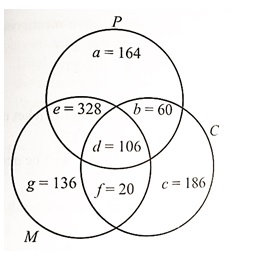
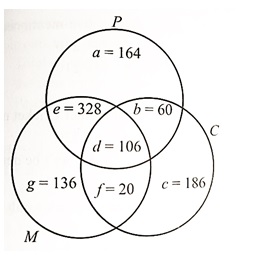
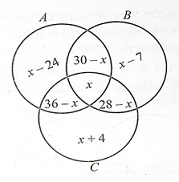
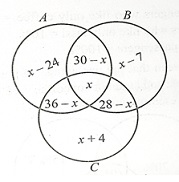
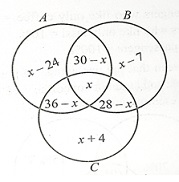
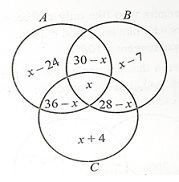
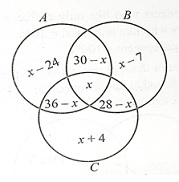
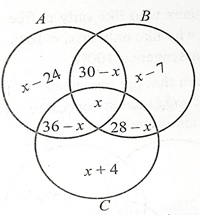
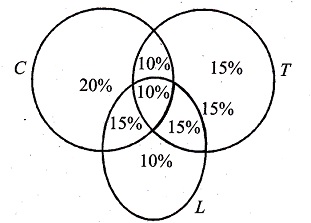
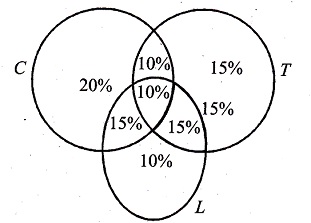
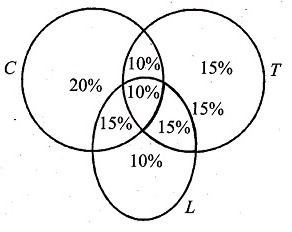
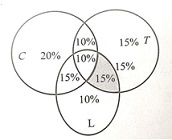
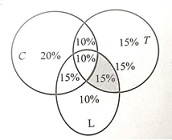
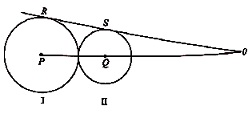


 The value of y
 is less than g. In bag B, number of yellow colored balls is
 more than that of bag A. If two balls are picked at random from bag B then the probability of getting both green color ball is
 . Total number of balls in bag B is 75.

 . Then find the value of x ?


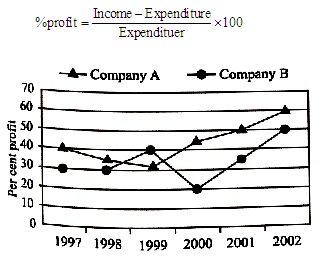
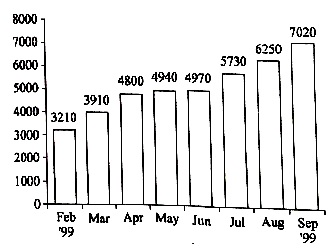
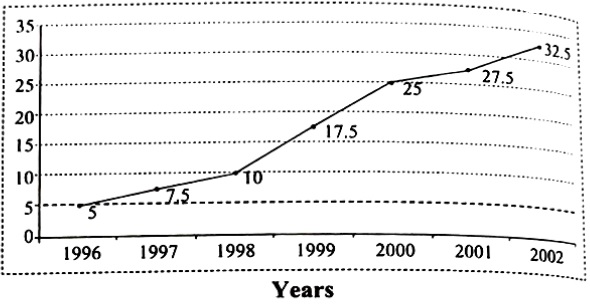


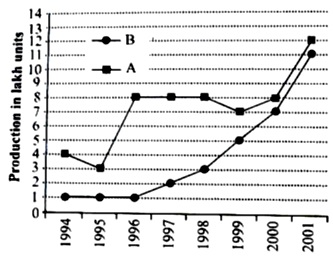
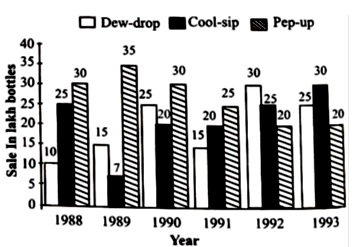
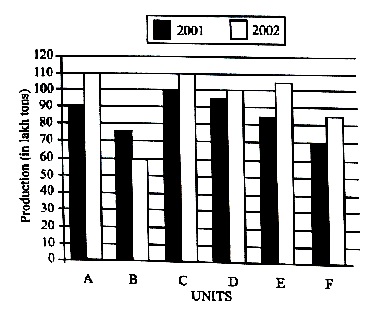
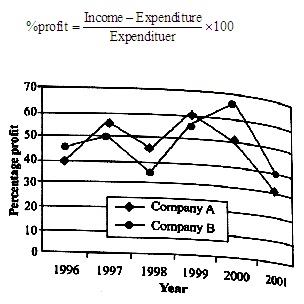
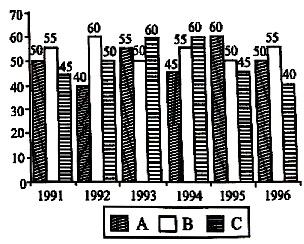
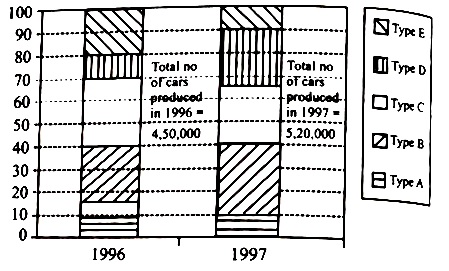
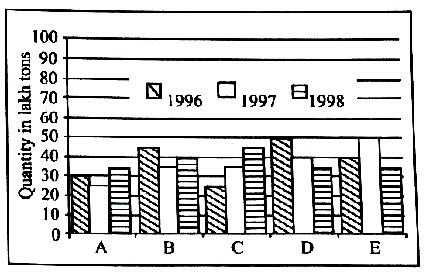

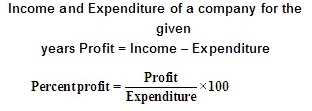
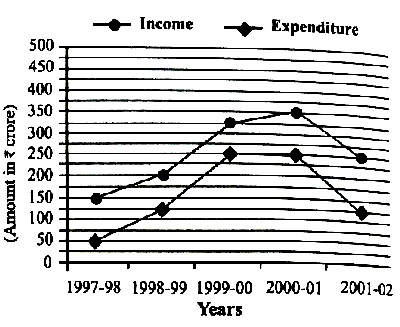
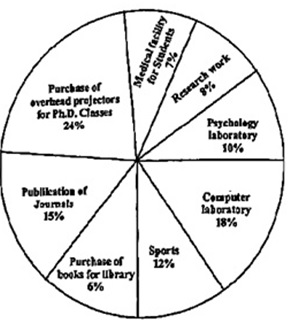
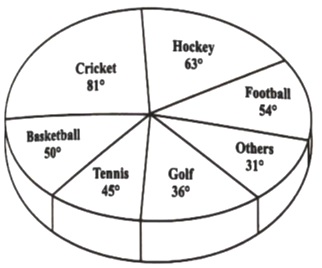
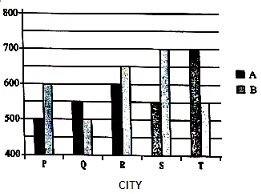
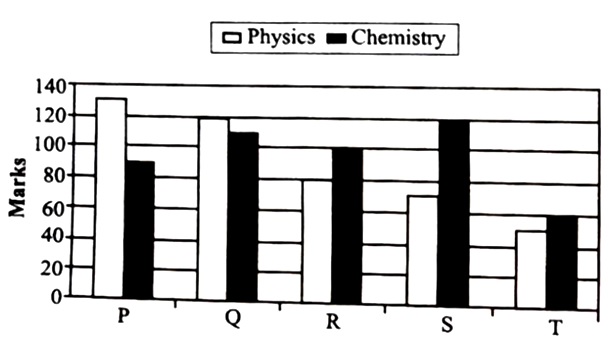
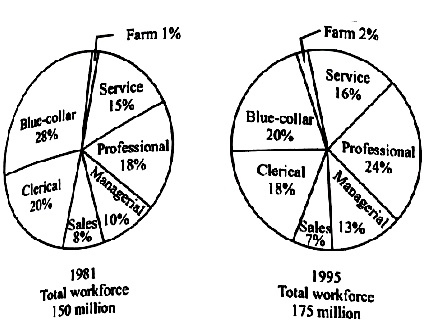
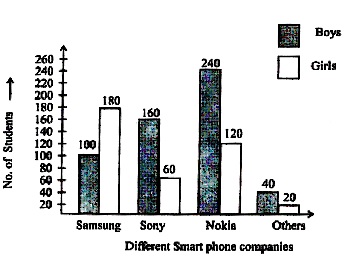
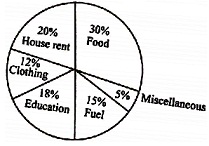


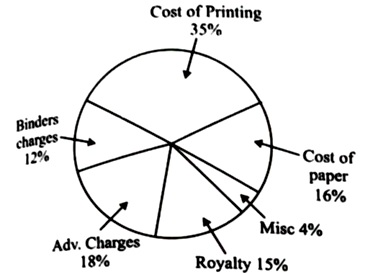
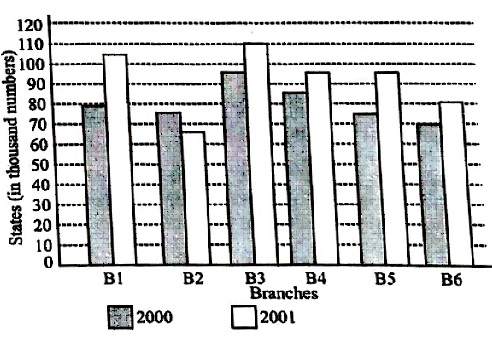
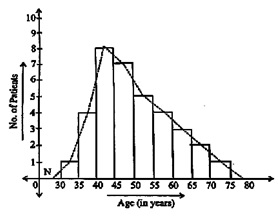
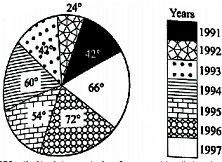


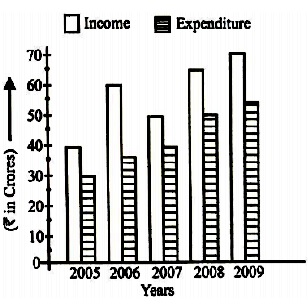
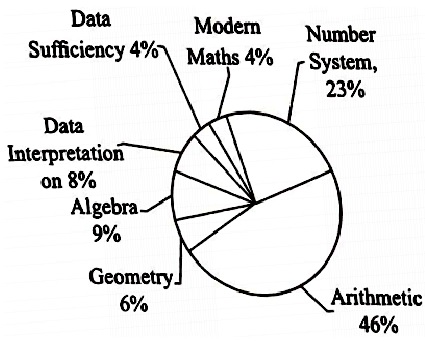
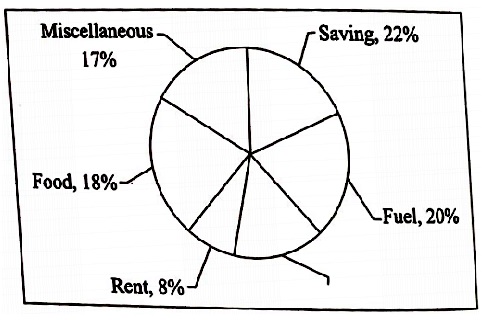
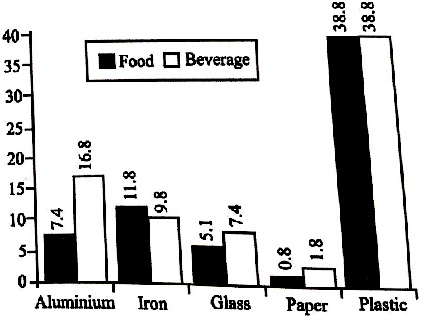
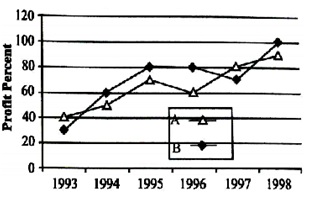
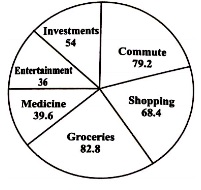
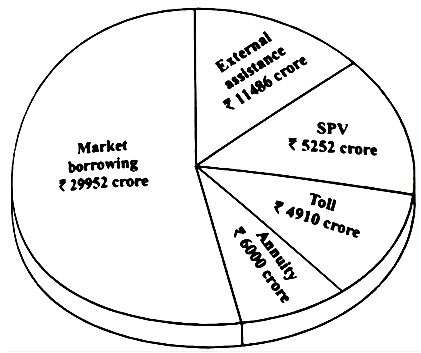
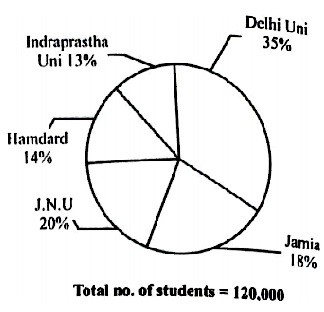

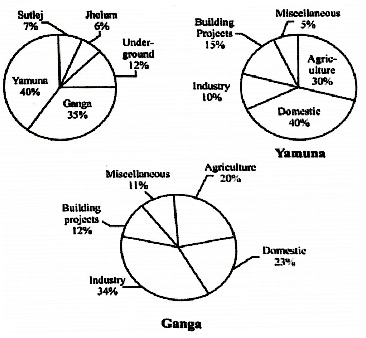
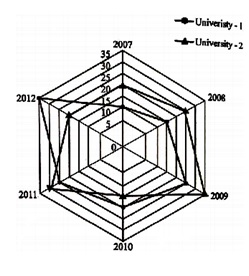
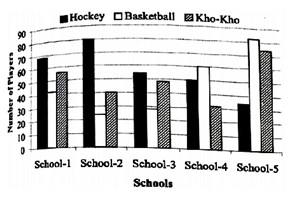
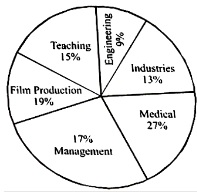
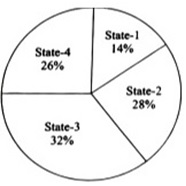
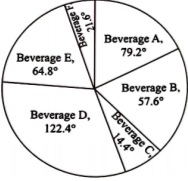
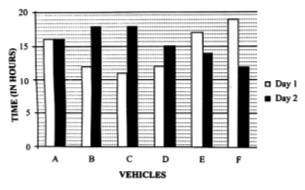
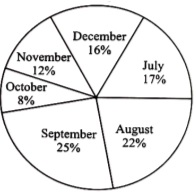
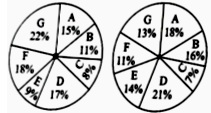
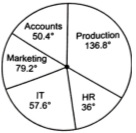
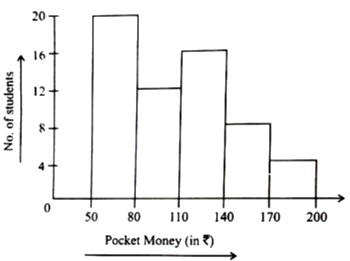

 = 11 ?
 of the number of columns
 of the total number of students.


 days.