Which of the following is also termed as multimedia education?
A
ICT supported education
B
ICT enabled education
C
ICT education
D
None of the above
Question 3Single Answer
Information and communication technology includes
A
Online learning
B
Learning through the use of EDUSAT
C
Web-based learning
D
All of the above
Question 4Single Answer
Which of the following is the appropriate definition of information Technology?
A
Information technology refers to the use of hardware and software for processing information
B
Information technology refers to the use of hardware and software for distribution of useful information
C
Information technology refers to the use of hardware and software for storage, retrieval, processing, and distributing information of many kinds
D
Information technology refers to the use of principles of physical sciences and social sciences for processing of information of many kinds.
Question 5Single Answer
CBT stands for
A
Central basic training
B
Computer-based training
C
Computer basic test
D
None of the above
Question 6Single Answer
The term ecosystem was coined by -
A
Arthur Tansley
B
Al Gore
C
Mobius
D
Mobius
Question 7Single Answer
Who first used and defined Ecology in 1866?
A
H. Reiter
B
Haeckel
C
Charles Elton
D
Odum
Question 8Single Answer
In the study of man-environment interaction, the statement of Miss Sample that 'the humans are slowly the product of their environment' is
A
An opinion
B
A prejudice
C
A fact
D
A widely accepted phenomenon
Question 9Single Answer
A habitat is
A
An area inhabited by a community
B
A small part of ecosystem
C
A particular area inhabited by plants and animals
D
The number of different organisms living in a specific area
Question 10Single Answer
Biome is a natural community of
A
Plants in a geographical area
B
Animals in a geographical area
C
Plants and animals in a geographical area
D
Plants in the Arctic region
Question 11Single Answer
The main governing body at the tertiary level of education in India is -
A
NCERT
B
CBSE
C
AICTE
D
UGC
Question 12Single Answer
Government established the University Grants Commission by an act of Parliament in the year
A
1980
B
1948
C
1950
D
1956
Question 13Single Answer
The tertiary education includes
A
Primary and secondary education
B
Higher education
C
Vocational education and training
D
(d) Both (b) and (c)
Question 14Single Answer
Which of the following is the regulator of higher education?
A
NCERT
B
AICTE
C
UGC
D
MHRD
Question 15Single Answer
The idea of Four Pillars of Education was suggested by
A
UNICEF
B
UGC
C
NCTE
D
UNESCO
Question 16Single Answer
Find the missing number in the following series.
8, 24, 12, ?, 18, 54
A
26
B
24
C
36
D
32
Question 17Single Answer
Find the missing number in the following series.
28, 33, 31, 36, ?, 39
A
30
B
32
C
33
D
34
Question 18Single Answer
Find the missing number in the following series.
1, 3, 4, 8, 15, 27, ?
A
45
B
50
C
55
D
60
Question 19Single Answer
Find the missing number in the following series.
2/3, 4/7, ?, 11/21, 16/31
A
10/8
B
6/10
C
5/10
D
7/10
Question 20Single Answer
Find the missing number in the following series.
4, 16, 8, 64, ?, 256
A
16
B
24
C
32
D
20
Question 21Single Answer
Research is -
A
A purposeful, systematic activity
B
Conducted for purely academic purposes.
C
Conducted to answer questions about practical issues.
D
A random, unplanned process of discovery
Question 22Single Answer
The research is always
A
Verifying the old knowledge
B
Exploring new knowledge
C
Filling the gaps between the knowledge
D
All of the above
Question 23Single Answer
All good research aims at
A
Betterment of the society
B
Developing generalizations, theories, and principles
C
Solving routine problem
D
None of the above
Question 24Single Answer
A grand theory
A
Explains interrelationships among concepts
B
Is highly abstract
C
Broad explanation of phenomenon in a discipline
D
All of the above
Question 25Single Answer
The idea that knowledge comes from experience is
A
Rationalism
B
Deductive reasoning
C
Logic
D
Empiricism
Question 26Single Answer
Which of the following is/are the basic paradigms in classroom teaching?
A
Learning paradigm
B
Instructional paradigm
C
Both (a) and (b)
D
None of the above
Question 27Single Answer
The prime requirement to become a good teacher is to have
A
Genuine interest in teaching
B
Knowledge about controlling students
C
Subject knowledge
D
Good expression
Question 28Single Answer
Which of the following statement/s is/are NOT true ?
A
Teaching is just an art
B
Teachers can be trained only
C
Teachers are born
D
All of the above
Question 29Single Answer
The most desirable skill of teacher is to
A
Make the students understand what the teacher says
B
Cover the prescribed course
C
Keep students relaxed while teaching
D
Keep higher authorities informed about the class activities
Question 30Single Answer
Match List I with List II
List I (Level of teaching) List II (Main Proponent)
A Memory Level I Herbart
B Understanding Level II Morrison
C Reflective Level III Hunt
Codes:
A
A-I, B-II, C-II
B
A-l, B-III, C-II
C
A-II, B-III, C-I
D
A-II, B-II, C-II
Question 31Single Answer
Which of the following statements is true?
A
Computer aided education can replace a teacher
B
Computer aided education can assist a teacher
C
On-line teaching and face-to-face teaching both are effective
D
Face-to-face teaching is less effective than online teaching
Question 32Single Answer
In order to solve the problem of aimlessness in education, we should develop -
A
democratic citizenship
B
centralized education
C
education
D
reform the administrative set-up
Question 33Single Answer
If a student misbehaves with other students in the class, the teacher should -
A
report the matter to the parents
B
punish him at the time of the morning assembly in the school
C
deal with him with sympathetic understanding
D
treat him with sympathy and understanding
Question 34Single Answer
How can a failed student be encouraged to study sincerely in the same class?
A
by teacher’s counseling
B
by psychological counseling
C
by guardian’s counseling
D
by Students’ Association
Question 35Single Answer
Our examination system is -
A
defective
B
without any defect
C
in the interest of the students
D
well-planned
Question 36Single Answer
Which is the main objective of research?
A
To review the literature
B
To summarize what is already known
C
To get an academic degree
D
To discover new facts or to make fresh interpretation of known facts
Question 37Single Answer
Sampling error decreases with the
A
decrease in sample size
B
increase in sample size
C
process of randomization
D
process of analysis
Question 38Single Answer
The principles of fundamental research are used in
A
action research
B
applied research
C
philosophical research
D
historical research
Question 39Single Answer
Users who use media for their own ends are indentified as
A
Passive audience
B
Active audience
C
Positive audience
D
Negative audience
Question 40Single Answer
Classroom communication can be described as
A
Exploration
B
Institutionalisation
C
Unsignified narration
D
Discourse
Question 41Single Answer
Passage :
The rapid advancement of technology has profoundly altered the way we communicate. Social media platforms connect billions across the globe, fostering instant interaction and the sharing of information. However, this interconnectedness also presents challenges. The spread of misinformation can occur at an unprecedented rate, impacting public opinion and even real-world events. Critical thinking and media literacy are now more essential than ever to navigate this complex digital landscape and discern credible sources from falsehoods.
What is the main idea of this passage?
A
The benefits of social media for global communication
B
The challenges posed by the rapid advancement of technology on communication
C
The importance of social media platforms in connecting people
D
The necessity of critical thinking and media literacy in the digital age
Question 42Single Answer
Passage :
The rapid advancement of technology has profoundly altered the way we communicate. Social media platforms connect billions across the globe, fostering instant interaction and the sharing of information. However, this interconnectedness also presents challenges. The spread of misinformation can occur at an unprecedented rate, impacting public opinion and even real-world events. Critical thinking and media literacy are now more essential than ever to navigate this complex digital landscape and discern credible sources from falsehoods.
According to the passage, what is a challenge of increased technological interconnectedness?
A
Slower rates of communication
B
Difficulty in sharing information
C
The rapid spread of misinformation
D
A decrease in global interaction
Question 43Single Answer
Passage :
The rapid advancement of technology has profoundly altered the way we communicate. Social media platforms connect billions across the globe, fostering instant interaction and the sharing of information. However, this interconnectedness also presents challenges. The spread of misinformation can occur at an unprecedented rate, impacting public opinion and even real-world events. Critical thinking and media literacy are now more essential than ever to navigate this complex digital landscape and discern credible sources from falsehoods.
The word "discern" in the passage most closely means:
A
Ignore
B
Understand
C
Distribute
D
Create
Question 44Single Answer
Passage :
The rapid advancement of technology has profoundly altered the way we communicate. Social media platforms connect billions across the globe, fostering instant interaction and the sharing of information. However, this interconnectedness also presents challenges. The spread of misinformation can occur at an unprecedented rate, impacting public opinion and even real-world events. Critical thinking and media literacy are now more essential than ever to navigate this complex digital landscape and discern credible sources from falsehoods.
What can be inferred about the impact of misinformation?
A
It has no effect on public opinion
B
Its impact is limited to online discussions
C
It can influence public opinion and real-world events
D
It is easily controlled by social media platforms
Question 45Single Answer
Passage :
The rapid advancement of technology has profoundly altered the way we communicate. Social media platforms connect billions across the globe, fostering instant interaction and the sharing of information. However, this interconnectedness also presents challenges. The spread of misinformation can occur at an unprecedented rate, impacting public opinion and even real-world events. Critical thinking and media literacy are now more essential than ever to navigate this complex digital landscape and discern credible sources from falsehoods.
The author's tone in this passage can be best described as:
A
Optimistic
B
Neutral and informative
C
Highly critical
D
Humorous
Question 46Single Answer
Teaching is best defined as?
A
Transmission of knowledge only
B
Memorization of facts
C
A process of facilitating learning
D
Examination process
Question 47Single Answer
The main objective of teaching is?
A
Controlling learners
B
Promoting learning
C
Increasing discipline only
D
Completing syllabus only
Question 48Single Answer
Memory level teaching mainly emphasizes?
A
Critical thinking
B
Evaluation
C
Creativity
D
Rote learning
Question 49Single Answer
Understanding level teaching focuses on?
A
Comprehension of ideas
B
Recall only
C
Guessing answers
D
Memorization only
Question 50Single Answer
Reflective level teaching promotes?
A
Copying answers
B
Higher order thinking
C
Simple recall
D
Dictation
Important Questions Package
Rajasthan SET Economics Exam Online Question Bank Package
Buy Rajasthan SET Economics Important Questions, MCQ, question answer in Hindi & English. It will help you to score high marks in Rajasthan SET Economics question bank 2026 in Online, PDF & Print study material.
+ Free Monthly Current Affairs, GK & more PDF Download
Sr.
Package Name
Amount
1.
Rajasthan SET (Economics) Exam - Hindi
Description : 1000 Question with Answer
₹101[₹500]
2.
Rajasthan SET (Economics) Exam - Hindi
Description : 2000 Question with Answer
₹151[₹500]
3.
Rajasthan SET (Economics) Exam - Hindi
Description : 3000 Question with Answer
₹171[₹500]
4.
Rajasthan SET (Economics) Exam - Hindi
Description : 4000 Question with Answer
₹191[₹500]
5.
Rajasthan SET (Economics) Exam - English
Description : 1000 Question with Answer
₹101[₹500]
6.
Rajasthan SET (Economics) Exam - English
Description : 2000 Question with Answer
₹151[₹500]
7.
Rajasthan SET (Economics) Exam - English
Description : 3000 Question with Answer
₹171[₹500]
8.
Rajasthan SET (Economics) Exam - English
Description : 4000 Question with Answer
₹191[₹500]
9.
Rajasthan SET (Economics) Exam - Hindi
Description : 1000 Question & Answer Download in PDF (Send by Email)
₹151[₹450]
10.
Rajasthan SET (Economics) Exam - English
Description : 1000 Question & Answer Download in PDF (Send by Email)
₹151[₹450]
11.
Rajasthan SET (Economics) Exam Question Bank Book - Hindi
Description : 1000 Question with Answer (Printed Material)
₹450[₹800]
12.
Rajasthan SET (Economics) Exam Question Bank Book - English
Description : 1000 Question with Answer (Printed Material)
₹390[₹600]
Economics
Question 51Single Answer
In case of indifference curve of two goods X and Y, as consumption of X increases :
A
MRSXY increases
B
MRSXY decreases
C
MRSXY remains the same
D
MRSXY increases but later on MRSXY decreases
Question 52Single Answer
General Economic equilibrium is NOT related to which one of the following problems ?
A
Uniqueness problem
B
Existence problem
C
Stability problem
D
Moral hazard problem
Question 53Single Answer
In the shoft-run production function, which on eof the following is CORRECT ?
A
Technology is assumed to change as labour input changes
B
Technology is assumed to change as capital stock changes
C
Technology is assumed to change positively until diminishing returns set in
D
Technology is assumedto be constant for a given production function relationship
Question 54Single Answer
As output expands, LAC curve falls. This is due to :
A
Law of variable proportions
B
Law of diminishing returns
C
Economies of scale
D
Diseconomies of scale
Question 55Single Answer
In a situtation of decision under uncertainty, if a consumer faces equal expected income from two alternatives, then she will take decision on the basis of :
A
Expected utility of both the alternatives
B
Probability of risk attached with each alternatives
C
Variation of risk attached with each alternatives
D
Mean of risk of each alternatives
Question 56Single Answer
What type of relationship the Phillips curve postulates between the rae of unemployment and the rate of increase of money wages ?
A
Inverse
B
Direct
C
Direct and proportional
D
Inverse and proportional
Question 57Single Answer
The concept of 'money illusion' was first given by whom ?
A
Milton Friedman
B
Irving Fisher
C
Robertson
D
J. M. Keynes
Question 58Single Answer
Which one of the following correctly describes the concept of 'Super Multiplier' ?
A
Investment multiplier
B
Money multiplier
C
Interaction between multiplier and accelerator
D
Employment multiplier
Question 59Single Answer
Given
I = 50 + 0.2Y
S = –150 + 0.4Y
G = 50
Where, I = Investment, S = Savings
G = Government Expenditure
Y = National Income
What is the equilibrium level of national income
A
2500
B
1250
C
250
D
1500
Question 60Single Answer
The independence of real variables from changes in money supply and nominal variables is called :
A
Keynesian dichotomy
B
Classical dichotomy
C
Money illusion
D
Money multiplier
Question 61Single Answer
Assuming the probability of a male birth as 0.5, find the chances that a family of 3 children will have two boys and one girl :
A
B
C
D
Question 62Single Answer
Which one of the following measures of central tendency will be the most appropriate to use if the data relates to rates, proportions and ratios ?
A
Arithmetic mean
B
M edian
C
Harmonic Mean
D
Geometric mean
Question 63Single Answer
The sampling distribution of mean based on a sample of 13 units selected without replacement shows a variance of 5 units. If the population consists of 49 units, estimate the variance of the population
A
80.67
B
84.87
C
86.67
D
86.87
Question 64Single Answer
In the classical linear regression model, Xi and Ui are assumed to be :
A
highly correlated
B
not correlated
C
positively correlated
D
negatively correlated
Question 65Single Answer
Identify which one of the following statements is INCORRECT ?
A
Intersection of two disjoint sets is a null set
B
Complement of a Universal set is a null set
C
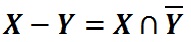
If X ∩ Y =ϕ, then X-Y ≠X
D
Question 66Single Answer
Given Y = X³ – 12X² + 36X + 8, identify which one of the following is CORRECT :
A
Y is maximum at X = 6, and minimum at X = 2
B
Y is minimum at X= 6, and maximum at X = 2
C
Y has two inflexion points at X = 2 and X = 6
D
Point of optimality is indeterminate
Question 67Single Answer
Identify which one of the following statements is CORRECT :
A
A–1 is equal to Adj (A) if the value of the determinant A is unity
B
If two columns of a determinant are interchanged, the sign of the determinant does not alter
C
The value of a determinant changes if the rows and columns are interchanged
D
Law of division is allowed in matrix operations
Question 68Single Answer
Identify which of the following statements with respect to Linear Programming Problem (LPP) is CORRECT ?
A
A solution is unbounded in an LPP if all the feasible solutions of the problem fall within the boundary created by its constraints
B
If A is primal problem and B its dual, then dual of B is Not A
C
The constraints of an LPP in standard form is always expressed in less than and equal to form
D
If an LPP has two optimum solutions, then it has also infinite number of optimum solutions
Question 69Single Answer
The Net Barter terms of trade refer to :
A
The excess of import expenditures over export earnings
B
Trade agreements
C
The ratio between export prices and import prices
D
The terms and conditions on which a country is offered a loan in the event of balance of payments difficulties
Question 70Single Answer
The items on the capital account of Balance of Payments are :
A
Flow variables
B
Stock variables
C
Changes in stock magnitudes
D
Both Stock and Flow variables
Question 71Single Answer
Utility maximization under budget constraint is achieved when?
A
MUx + MUy is maximum
B
Px + Py = Income
C
MUx/Px = MUy/Py
D
MUx × MUy = 0
Question 72Single Answer
Indifference curve is convex to origin because of?
A
Diminishing marginal rate of substitution
B
Increasing marginal utility
C
Law of demand
D
Perfect substitution
Question 73Single Answer
Marginal Rate of Substitution (MRS) is defined as?
A
Amount of Y sacrificed for one more unit of X
B
Slope of budget line
C
Ratio of prices
D
Total utility ratio
Question 74Single Answer
A Giffen good violates the?
A
Law of diminishing utility
B
Law of demand
C
Law of supply
D
Law of substitution
Question 75Single Answer
Budget line shifts outward when?
A
Price of goods increases
B
Demand decreases
C
Utility increases
D
Income increases
Question 76Single Answer
A consumer is in equilibrium when?
A
Total utility is zero
B
Marginal utility is maximum
C
Price is zero
D
Budget is exhausted with highest satisfaction
Question 77Single Answer
Law of diminishing marginal utility states that?
A
Total utility falls immediately
B
Marginal utility increases continuously
C
Marginal utility declines with consumption
D
Utility remains constant
Question 78Single Answer
Indifference curve cannot?
A
Be downward sloping
B
Be smooth
C
Be convex
D
Intersect each other
Question 79Single Answer
Perfect substitutes have indifference curves that are?
A
L-shaped
B
Straight lines
C
Convex
D
Circular
Question 80Single Answer
Perfect complements are represented by?
A
Straight lines
B
Parallel lines
C
Upward sloping curves
D
Right angle indifference curves
Question 81Single Answer
Consumer surplus is defined as?
A
Difference between income and expenditure
B
Total utility minus marginal utility
C
Difference between willingness to pay and actual price
D
Price minus cost
Question 82Single Answer
Engel curve shows relationship between?
A
Income and quantity demanded
B
Price and demand
C
Supply and price
D
Utility and cost
Question 83Single Answer
When income increases demand for inferior goods?
A
Increases
B
Decreases
C
Remains constant
D
Becomes zero
Question 84Single Answer
Substitution effect always leads to?
A
Decrease in demand
B
Fall in price only
C
Increase in demand
D
No change in demand
Question 85Single Answer
Income effect measures change in demand due to?
A
Price change only
B
Taste change
C
Income change only
D
Substitution effect
Question 86Single Answer
Slutsky equation decomposes price effect into?
A
Income and demand effect
B
Supply and demand effect
C
Income and substitution effect
D
Cost and revenue effect
Question 87Single Answer
A higher indifference curve indicates?
A
Lower utility
B
Same utility
C
Higher utility
D
Zero utility
Question 88Single Answer
The slope of budget line depends on?
A
Income only
B
Preferences
C
Utility
D
Price ratio
Question 89Single Answer
If price of X falls, budget line?
A
Shifts inward
B
Rotates outward
C
Becomes steeper
D
Disappears
Question 90Single Answer
Utility is best defined as?
A
Money value
B
Satisfaction from consumption
C
Cost of production
D
Market price
Question 91Single Answer
Cardinal utility approach assumes utility is?
A
Ordinal only
B
Constant
C
Non-comparable
D
Measurable numerically
Question 92Single Answer
Ordinal utility approach uses?
A
Ranking of preferences
B
Exact numbers
C
Money value
D
Cost values
Question 93Single Answer
Marginal utility becomes zero when?
A
Consumption starts
B
Demand falls
C
Price increases
D
Total utility is maximum
Question 94Single Answer
Demand curve derived from price consumption curve shows?
A
Price-demand relationship
B
Income effect
C
Supply relation
D
Cost relation
Question 95Single Answer
Inferior goods are those for which income elasticity is?
A
Positive
B
Zero
C
Infinite
D
Negative
Question 96Single Answer
A normal good has income elasticity?
A
Negative
B
Undefined
C
Zero
D
Positive
Question 97Single Answer
Consumer equilibrium under indifference curve theory requires?
A
MUx = MUy
B
MRS = price ratio
C
Income = cost
D
Demand = supply
Question 98Single Answer
Giffen goods are typically?
A
Luxury goods
B
Substitute goods
C
Normal goods
D
Inferior goods
Question 99Single Answer
Price effect is combination of?
A
Supply and cost
B
Income and substitution effects
C
Demand and utility
D
Revenue and profit
Question 100Single Answer
If two goods are independent, cross elasticity is?
A
Positive
B
Zero
C
Negative
D
Infinite
Question 101Single Answer
Complementary goods have cross elasticity?
A
Positive
B
Zero
C
Negative
D
One
Question 102Single Answer
Substitutes have cross elasticity?
A
Negative
B
Positive
C
Zero
D
Undefined
Question 103Single Answer
The point where indifference curve touches budget line is?
A
Inequality point
B
Maximum cost point
C
Disequilibrium
D
Equilibrium point
Question 104Single Answer
A higher income shifts budget line?
A
Leftward
B
Becomes steeper
C
Rightward parallel
D
Horizontal
Question 105Single Answer
Consumer prefers combinations on?
A
Higher IC
B
Lower IC
C
Budget line only
D
Origin
Question 106Single Answer
Total utility is sum of?
A
Income utilities
B
Average utilities
C
Price utilities
D
Marginal utilities
Question 107Single Answer
Marginal utility curve is typically?
A
Upward sloping
B
Vertical
C
Downward sloping
D
Horizontal
Question 108Single Answer
Indifference curve analysis assumes utility is?
A
Measurable
B
Ordinal
C
Observable
D
Fixed
Question 109Single Answer
Demand curve is derived from?
A
Supply curve
B
Cost curve
C
Utility maximization
D
Production function
Question 110Single Answer
Consumer equilibrium condition fails when?
A
MRS equals price ratio
B
MRS does not equal price ratio
C
Budget is fully spent
D
Utility is maximized
Question 111Single Answer
According to the completeness axiom of consumer preferences, a consumer must be able to?
A
Purchase every affordable bundle
B
Rank any two consumption bundles
C
Obtain positive utility from every good
D
Consume all available goods
Question 112Single Answer
Transitivity of preferences implies that if bundle X is preferred to Y and Y is preferred to Z, then?
A
Z must be preferred to X
B
X must be preferred to Z
C
X and Z must be indifferent
D
Y must be preferred to X
Question 113Single Answer
Strictly convex preferences imply that the consumer generally prefers?
A
Extreme bundles to averages
B
Goods in fixed proportions
C
Only corner solutions
D
Weighted averages to extreme bundles
Question 114Single Answer
If a utility function is subjected to a strictly increasing transformation, the consumer's?
A
Demand necessarily changes
B
Preference ordering remains unchanged
C
Budget constraint shifts
D
Marginal utility remains numerically unchanged
Question 115Single Answer
At an interior consumer equilibrium with differentiable preferences, which condition generally holds?
A
MRS = ratio of prices
B
MRS = income
C
MRS = total expenditure
D
Marginal utility equals zero
Question 116Single Answer
Hicksian demand minimizes?
A
Utility for given income
B
Expenditure for a given utility level
C
Income for given prices
D
Prices for a given consumption bundle
Question 117Single Answer
Marshallian demand is obtained from the problem of?
A
Expenditure minimization
B
Profit maximization
C
Utility maximization subject to a budget constraint
D
Cost minimization by firms
Question 118Single Answer
The expenditure function is homogeneous of degree one in?
A
Utility
B
Prices
C
Income
D
Quantities
Question 119Single Answer
The indirect utility function is homogeneous of degree zero in?
A
Prices alone
B
Income alone
C
Prices and income jointly
D
Quantities and utility jointly
Question 120Single Answer
Roy's identity derives Marshallian demand from the?
A
Production function
B
Social welfare function
C
Expenditure function
D
Indirect utility function
Question 121Single Answer
Shephard's lemma applied to the expenditure function yields?
A
Marshallian demand
B
Hicksian demand
C
Supply function
D
Indirect utility
Question 122Single Answer
The Slutsky equation decomposes the price effect into?
A
Scale and substitution effects
B
Wealth and production effects
C
Output and income effects
D
Income and substitution effects
Question 123Single Answer
For a normal good, a fall in its price causes the substitution and income effects to?
A
Work in opposite directions
B
Both equal zero
C
Work in the same direction
D
Become indeterminate
Question 124Single Answer
A Giffen good must necessarily be?
A
Normal
B
Inferior
C
A luxury
D
Perfectly complementary
Question 125Single Answer
For a Giffen good, when its own price rises, quantity demanded?
A
Falls
B
Remains constant
C
Rises
D
First falls and then becomes zero
Question 126Single Answer
The compensated law of demand states that compensated own-price demand generally has?
A
A positive slope
B
Infinite elasticity
C
Unit elasticity
D
A non-positive slope
Question 127Single Answer
Engel curves describe the relationship between demand and?
A
Own price
B
Income
C
Price of a substitute
D
Marginal cost
Question 128Single Answer
If the income elasticity of demand exceeds one, the good is generally classified as?
A
Inferior
B
Luxury
C
Necessity
D
Giffen good
Question 129Single Answer
Perfect substitutes are represented by indifference curves that are?
A
L-shaped
B
Vertical lines only
C
Strictly convex curves
D
Straight lines
Question 130Single Answer
Perfect complements generally have indifference curves that are?
A
L-shaped
B
Linear
C
Concave
D
Circular
Question 131Single Answer
Quasilinear preferences are important because the income effect for the non-numeraire good is often?
A
Positive and increasing
B
Always negative
C
Zero over an interior range
D
Infinite
Question 132Single Answer
The dual of the utility-maximization problem is the?
A
Revenue-maximization problem
B
Expenditure-minimization problem
C
Profit-maximization problem
D
Output-maximization problem
Question 133Single Answer
Compensating variation following a price increase measures the money required to?
A
Restore the original utility at new prices
B
Reach the new utility at old prices
C
Maximize producer surplus
D
Keep nominal expenditure unchanged
Question 134Single Answer
Equivalent variation for a price increase measures the amount of money that, at original prices, would cause?
A
The consumer to save all income
B
Zero substitution effect
C
An increase in utility
D
The same utility loss as the price increase
Question 135Single Answer
Consumer surplus is an exact welfare measure particularly when preferences are?
A
Leontief
B
Quasilinear
C
Lexicographic
D
Non-convex
Question 136Single Answer
The weak axiom of revealed preference rules out a situation in which?
A
Every good is normal
B
Income rises proportionately with prices
C
Prices remain constant
D
Direct revealed preference is contradicted by another choice
Question 137Single Answer
The strong axiom of revealed preference extends consistency requirements to?
A
Only two bundles
B
Production possibilities
C
Chains of revealed preferences
D
Market supply
Question 138Single Answer
Homothetic preferences imply that income expansion paths are generally?
A
Parallel to the budget line
B
Backward bending
C
Horizontal
D
Rays from the origin
Question 139Single Answer
Under homothetic preferences, income elasticities of demands are generally?
A
One
B
Zero
C
Negative
D
Infinite
Question 140Single Answer
A price-consumption curve traces optimal bundles as?
A
One price varies
B
Income varies
C
Utility remains zero
D
All prices vary proportionately
Question 141Single Answer
The income-consumption curve traces optimal bundles as?
A
Income changes with prices fixed
B
Own price changes with income fixed
C
Technology changes
D
Factor prices change
Question 142Single Answer
If preferences are locally nonsatiated, an optimizing consumer generally?
A
Leaves part of income unspent
B
Chooses zero consumption
C
Exhausts the budget
D
Has zero marginal utility
Question 143Single Answer
A corner solution occurs when?
A
Tangency is necessarily satisfied
B
Both goods are perfect complements only
C
Income equals zero
D
The optimum contains zero consumption of at least one good
Question 144Single Answer
The Slutsky substitution effect holds purchasing power constant so that?
A
Real income becomes zero
B
Original utility is necessarily maintained exactly
C
New bundle remains unaffordable
D
Original bundle remains affordable
Question 145Single Answer
Hicks substitution effect holds constant the consumer's?
A
Nominal income
B
Quantity of every good
C
Utility level
D
Marginal income
Question 146Single Answer
An inferior good has, over the relevant range, an income elasticity that is?
A
Negative
B
Positive
C
Exactly one
D
Infinite
Question 147Single Answer
The substitution matrix associated with compensated demand is generally?
A
Positive semidefinite
B
Asymmetric by necessity
C
Strictly positive
D
Negative semidefinite
Question 148Single Answer
Symmetry of the Slutsky matrix follows from?
A
Equality of mixed partial derivatives of the expenditure function
B
Increasing marginal utility
C
Constant returns to scale
D
Profit maximization
Question 149Single Answer
Walras' law for consumer demand implies that the value of excess demand is?
A
Always positive
B
Zero
C
Always negative
D
Equal to utility
Question 150Single Answer
A monotonic transformation of a utility function preserves?