தமிழ் இலக்கணத்தின் தந்தை என்று கருதப்படுபவர் யார்?
A
பாரதியார்
B
தொல்காப்பியர்
C
இளங்கோ அடிகள்
D
கம்பர்
Question 17Single Answer
தொல்காப்பியரின் புகழ்பெற்ற இலக்கணப் பணியின் பெயர் என்ன?
A
திருக்குறள்
B
சிலப்பதிகாரம்
C
தொல்காப்பியம்
D
மணிமேகலை
Question 18Single Answer
தமிழ் இலக்கணம் மற்றும் கவிதைக்கான முக்கிய இலக்கியப் படைப்பாக அறியப்படும் நூல் எது?
A
நன்னூல்
B
அகநானூறு
C
புறநானூறு
D
பத்துப்பாட்டு
Question 19Single Answer
நன்னூலின் ஆசிரியர் யார்?
A
இளங்கோ அடிகள்
B
பவணந்தி
C
திருவள்ளுவர்
D
கம்பர்
Question 20Single Answer
தமிழ் நிலத்தை ஐந்து பகுதிகளாக (திணை) பிரிப்பது பற்றி எந்தப் படைப்பு விவாதிக்கிறது?
A
தொல்காப்பியம்
B
மணிமேகலை
C
பத்துப்பாட்டு
D
சிலப்பதிகாரம்
Question 21Single Answer
திருக்குறளுக்கு பாராட்டும் கருத்தும் வழங்கிய பெருமை யார்?
A
பரிமேலழகர்
B
அவ்வையார்
C
கம்பர்
D
பாரதிதாசன்
Question 22Single Answer
"அகத்திணை" நூலின் கருப்பொருள் என்ன?
A
போர் கவிதை
B
காதல் மற்றும் உணர்ச்சிகள்
C
மதப் பாடல்கள்
D
விவசாயம்
Question 23Single Answer
சிலப்பதிகாரத்திற்கு விளக்கம் எழுதியவர் யார்?
A
இளங்கோ அடிகள்
B
அடியார்குநல்லார்
C
பரிமேலழகர்
D
நக்கீரர்
Question 24Single Answer
"புறநானூறு" என்பதன் முக்கிய பொருள் என்ன?
A
வீரச் செயல்கள்
B
இயற்கை மற்றும் பருவங்கள்
C
விவசாயம்
D
மத சடங்குகள்
Question 25Single Answer
"கம்ப ராமாயணம்" எழுதியவர் யார்?
A
கம்பர்
B
திருவள்ளுவர்
C
நக்கீரர்
D
இளங்கோ அடிகள்
Question 26Single Answer
எந்த தமிழ்ப் படைப்பு நெறிமுறை வழிகாட்டியாகக் கருதப்படுகிறது?
A
திருக்குறள்
B
பத்துப்பாட்டு
C
எட்டுத்தொகை
D
மணிமேகலை
Question 27Single Answer
தமிழ் பைபிள் என்று குறிப்பிடப்படும் புத்தகம் எது?
A
திருக்குறள்
B
சிலப்பதிகாரம்
C
நன்னூல்
D
தொல்காப்பியம்
Question 28Single Answer
"மணிமேகலை" என்ற தமிழ் காவியத்தை எழுதியவர் யார்?
A
சட்டனார்
B
இளங்கோ அடிகள்
C
கம்பர்
D
பரணர்
Question 29Single Answer
"பத்துப்பாட்டு" படத்தின் தீம் என்ன?
A
பத்து ஐதீகங்கள்
B
இருபது வசனங்கள்
C
விவசாய நடைமுறைகள்
D
போர் உத்திகள்
Question 30Single Answer
சங்க இலக்கியத்தின் புகழ்பெற்ற பெண் கவிஞர் யார்?
A
அவ்வையார்
B
பரணர்
C
கம்பர்
D
இளங்கோ அடிகள்
Concerned Subject (Physics)
Question 31Single Answer
In ruby laser, the stimulated emission is due to transition from
A
metastable state to any lower state
B
any higher state of lower state
C
metastable state to ground state
D
any higher state to ground state
Question 32Single Answer
A direct current I flows along the length of an infinitely long straight thin walled pipe, then the magnetic field is
A
uniform throughout the pipe not zero
B
zero only along the axis of the pipe
C
zero at any point inside the pipe
D
maximum at the centre and minimum at the edge
Question 33Single Answer
convex lens made of glass has focal length 0.15m in air. If the refractive index of glass is 3/2, and that of water is 4/3 the focal length of lens when immersed in water is
A
0.45 m
B
0.15 m
C
0.30 m
D
0.6 m
Question 34Single Answer
Two sources are said to be coherent if they produce waves
A
having a constant phase difference
B
of equal wavelength
C
of equal speed
D
having same shape of wavefront
Question 35Single Answer
Three resistors 1 Ω, 2 Ω, 3Ω resistor a 3 V battery is connected. The current through 3 Ω resistor is -
A
0.75 A
B
1 A
C
2 A
D
1.5 A
Question 36Single Answer
In a common emitter amplifier the input signal is applied across
A
anywhere
B
emitter-collector
C
collector-base
D
base-emitter
Question 37Single Answer
Adding detergents to water helps in removing dirty greasy stains. This is because
1. It increases greasy stains. This is because
2. It decreases the oil-water surface tension
3. It increases the viscosity of the solution
4. Dirt is held suspended surrounded by detergent molecules
A
2 and 4
B
1 only
C
3 and 4
D
4 only
Question 38Single Answer
Choose the correct statement (a) for a cricket ball that is spinning clockwise through air
S1 : Statemlines of air are symmetric around the ball.
S2 : The velocity of air above the ball relative to it is larger than that below the ball.
S3 : The velocity of air above the ball relative to it is smaller than that below the ball.
S4 : There is a net upward force on the ball.
A
S1,S2 and S4
B
S2 and S4
C
S4 only
D
S3 only
Question 39Single Answer
Ferromagnetic materials used in a transformer must have
A
low permeability and high hysterisis loss
B
high permeability and low hysterisis loss
C
high permeability and high hysterisis loss
D
low permeability and low hysterisis loss
Question 40Single Answer
According to Newton’s corpuscular theory, the speed of light is
A
same in all the medium
B
lesser in rarer medium
C
lesser in denser medium
D
independent of the medium
Question 41Single Answer
For the constructive interference the path difference between the two interfering waves must be equal to
A
(2𝜋 + 1)λ
B
2n𝜋
C
nλ
D
n
Question 42Single Answer
The accurate measurement of emf can be obtained using
A
multimeter
B
voltmeter
C
voltameter
D
potentiometer
Question 43Single Answer
A person, with outstretched arms, is spinning on a rotating stool. He suddenly brings his arms down to his sides. Which the following is true about his kinetic energy K and angular momentum L?
A
Both K and L increase
B
Both K and L remain unchanged
C
K remains constant, L increases
D
K increases but L remains constant
Question 44Single Answer
Which of the following is not a thermodynamic coordinate?
A
Gas constant (R)
B
Pressure (p)
C
Volume (V)
D
Temperature (T)
Question 45Single Answer
An antenna uses electromagnetic waves of frequency 5 MHz . For proper working, the size of the antenna should be
A
300 m
B
3 km
C
15 m
D
15 km
Question 46Single Answer
The amount of energy released when one microgram of matter is annihilated is
A
25 kWh
B
9 x 10¹⁰ kWh
C
3 x 10¹⁰ kWh
D
0.5 x 10⁵ kWh
Question 47Single Answer
The number of significant figures in the numbers 4.8000 x 10⁴ 48000.50 are respectively
A
5 and 6
B
5 and 7
C
2 and 7
D
2 and 6
Question 48Single Answer
β-decay means emission of electron from
A
innermost electron orbit
B
a stable nucleus
C
outermost electron orbit
D
radioactive nucleus
Question 49Single Answer
An electric heater rated 220 V and 550 W is connected to AC mains. The current drawn by it is
A
0.8 A
B
2.5 A
C
0.4 A
D
1.25 A
Question 50Single Answer
A string is wound round the rim of a mounted flywheel of mass 20 kg and radius 20 cm. A steady pull of 25 N is applied on the cord. Neglecting friction and mass of the string, the angular acceleration of the wheel is
A
50 s-2
B
25 s-2
C
12.5 s-2
D
6.25 s-2
Important Questions Package
TN TRB Graduate Teacher Physics Exam Online Question Bank Package
Buy TN TRB Graduate Teacher Physics Important Questions, MCQ, question answer in Hindi & English. It will help you to score high marks in TN TRB Graduate Teacher Physics question bank 2026 in Online, PDF & Print study material.
+ Free Monthly Current Affairs, GK & more PDF Download
Sr.
Package Name
Amount
1.
TN TRB Graduate Teacher Physics Exam - English
Description : 1000 Question with Answer
₹101[₹500]
2.
TN TRB Graduate Teacher Physics Exam - English
Description : 2000 Question with Answer
₹151[₹500]
3.
TN TRB Graduate Teacher Physics Exam - English
Description : 1000 Question & Answer Download in PDF (Send by Email)
₹151[₹450]
4.
TN TRB Graduate Teacher Physics Exam Question Bank Book - English
Description : 1000 Question with Answer (Printed Material)
₹390[₹600]
Concerned Subject (Physics)
Question 51Single Answer
A billiards player hits a stationary ball by an identical ball to pocker the target ball in a corner pocket that is at an angle of 35o with respect to the direction of motion of the first ball. Assuming the collision as elastic and that frictional and rotational motions are not important, the angle made by the target ball with respect to the imcoming ball is
A
35o
B
50o
C
55o
D
60o
Question 52Single Answer
A body of mass 0.05 kg is observed to fall with an acceleration of 9.5 ms-2. The opposing force of air on the body is (g = 9.8 ms-2)
A
0.015 N
B
0.15 N
C
0.030 N
D
zero
Question 53Single Answer
The colloidal solution in which both the dispersed phase and dispersion medium are liquids are called
A
emulsions
B
gels
C
foams
D
liquid crystals
Question 54Single Answer
In fog, photographs of the objects taken with infrared radiations are more clear than those obtained during visible light because
A
I-R radiation has lesser wavelength than visible radiation
B
scattering of I-R light is more the object is less
C
the intensity of I-R light is more the object is less
D
scattering of I–R light is less than visible light
Question 55Single Answer
Three concurrent co-planar forces 1 N, 2 N and 3 N acting along different directions on a body
A
can keep the body in equilibrium if 1 N and 3 N act at right angle
B
can keep the body in equilibrium if 1 N and 2 N act at right angle
C
cannot keep the body in equilibrium
D
can keep the body in equilibrium in 1 N and 3 N act at an acute angle
Question 56Single Answer
Sound waves transfer
A
only energy not momentum
B
energy
C
momentum
D
both (a) and (b)
Question 57Single Answer
G P Thomson experimentally confirmed the existence of matter waves by the phenomena
A
diffraction
B
refraction
C
polarisation
D
scattering
Question 58Single Answer
The resistance of a wire at 300 K is found to be 0.3 Ω. If the temperature coefficient of resistance of wire is 1.5 x 10⁻³ K-1, the temperature at which the resistance becomes 0.6 Ω is
A
720 K
B
345 K
C
993 K
D
690 K
Question 59Single Answer
Two luminous points sources separated by a certain distance are at 10 km from an observer. If the aperture of his eye is 2.5 x 10⁻³ m and the wavelength of light used is 500 nm the distance of separation between the point sources just seen to be resolved is
A
12.2 m
B
24.2 m
C
2.44 m
D
1.22 m
Question 60Single Answer
A door 1.6 m wide requires a force of N to be applied at the free end to open or close it. The force that is required at a point 0.4 m distance from the hinges for opening or closing the door is
A
1.2 N
B
3.6 N
C
2.4 N
D
4 N
Question 61Single Answer
Temperature can be expressed as derived quantity in terms of
A
length and mass
B
mass and time
C
length, mass and time
D
None of these
Question 62Single Answer
Electron volt is a unit of
A
potential difference
B
charge
C
energy
D
capacity
Question 63Single Answer
Dimensions of impulse are
A
[MLT –1]
B
[MLT²]
C
[MT–2]
D
[ML–1T–3]
Question 64Single Answer
Potential is measured in
A
joule/coulomb
B
watt/coulomb
C
newton–second
D
None of these
Question 65Single Answer
One Nanometer is equal to
A
10–9m
B
10–6m
C
10–10m
D
10–3m
Question 66Single Answer
Maxwell is the unit of
A
magnetic susceptibility
B
intensity of Magnetisation
C
magnetic Flux
D
magnetic Permeability
Question 67Single Answer
Which of the following is derived physical quantity ?
A
Mass
B
Velocity
C
Length
D
Time
Question 68Single Answer
What are the units of magnetic permeability ?
A
Wb A–1 m–1
B
Wb–1 Am
C
Wb A m–1
D
Wb A–1 m
Question 69Single Answer
The dimensions of pressure gradient are
A
[ML–2 T–2]
B
[ML–2 T–1]
C
[ML–1 T–1]
D
[ML–1 T–2]
Question 70Single Answer
The dimensions of Rydberg's constant are
A
[M0L–1T]
B
[MLT–1]
C
[M0 L–1T0]
D
[ML0 T2]
Question 71Single Answer
'Farad' is the unit of
A
resistance
B
conductance
C
capacitance
D
inductance
Question 72Single Answer
S.I. unit of surface tension is
A
degree/cm
B
N/m
C
N/m²
D
Nm
Question 73Single Answer
Which one of the following pairs does not have the same dimension ?
A
Potential energy and Kinetic energy
B
Density and specific gravity
C
Focal length and height
D
Gravitational force and frictional force
Question 74Single Answer
Which one of the following physical quantity has the same unit as that of pressure ?
A
Angular momentum
B
Stress
C
Strain
D
Work
Question 75Single Answer
The symbol of SI unit of inductance is H. It stands for
A
Holm
B
Halogen
C
Henry
D
Hertz
Question 76Single Answer
Light year is a measure of
A
time
B
distance
C
total amount of light falling on the Earth in a year
D
average intensity of light falling on the Earth in a year
Question 77Single Answer
Which one of the following is not a dimension less quantity ?
A
Strain
B
Relative density
C
Frequency
D
Angle
Question 78Single Answer
The dimensions of universal gas constant are
A
[L² M¹ T–2 K–1]
B
[L¹ M² T–2 K–1]
C
[L¹ M¹ T–2 K–1]
D
[L² M² T–2 K–1]
Question 79Single Answer
The dimensions of magnetic moment are
A
[L²A¹]
B
[L²A–1]
C
[L²/A³]
D
[LA²]
Question 80Single Answer
The dimensions of Wien's constant are
A
[ML0TK]
B
[M0LT0K]
C
[M0L0TK]
D
[MLTK]
Question 81Single Answer
The dimensional formula of wave number is
A
[M0L0T–1]
B
[M0L–1T0]
C
[M–1 L–1 T0]
D
[M0 L0 T0]
Question 82Single Answer
The dimensional of Hubble ‘s wave number is
A
[T–1]
B
[M0L0T–2]
C
[MLT4]
D
[MT–1]
Question 83Single Answer
The dimensions of solar constant is
A
[M0L0T0]
B
[MLT–2]
C
[ML²T–2]
D
MT–3
Question 84Single Answer
The dimensional formula for entropy is
A
[MLT–2K¹]
B
[ML2 T-2]
C
[ML²T–2K–1]
D
[ML²T–2K]
Question 85Single Answer
Dimension of specific heat are
A
[ML² T–2 K]
B
[ML² T–2 K–1]
C
[ML²T²K–1]
D
[L²T–2K–2]
Question 86Single Answer
The physical quantity which has the dimensional formula [M¹T–3] is
A
surface tension
B
solar constant
C
density
D
compressibility
Question 87Single Answer
Which one of the following elements is used as a timekeeper in atomic clocks ?
A
Potassium
B
Caesium
C
Calcium
D
Magnesium
Question 88Single Answer
Which one of the following is the value of one nanometer ?
A
10–7 cm
B
10–6 cm
C
10–4 cm
D
10–3 cm
Question 89Single Answer
What is the unit of pressure ?
A
Newton/sq. meter
B
Newton–meter
C
Newton
D
Newton/meter
Question 90Single Answer
The unit of pressure is
A
kg/cm²
B
kg/cm
C
kg/mm
D
kg/cm3
Question 91Single Answer
Which one of the following quantities doe not have unit ?
A
Stress
B
Force
C
Strain
D
Pressure
Question 92Single Answer
Dimensional formula for thermal conductivity is here K denotes the temperature:
A
MLT–2K
B
MLT–2K–2
C
MLT–3K
D
MLT–3K–1
Question 93Single Answer
Which of the following is the unit of molar gas constant ?
A
JK–1 mol–1
B
Joule
C
JK–1
D
J mol–1
Question 94Single Answer
Density of liquid is 16.8 g cm–3. Its value in the International System of Units is
A
16.8 kgm–3
B
168 kgm–3
C
1680 kgm–3
D
16800 kgm–3
Question 95Single Answer
The dimensional formula of couple is
A
[ML² T–2]
B
[MLT²]
C
[ML–1T–3]
D
[ML–2T–2]
Question 96Single Answer
Subtract 0.2 J from 7.26 J and express the result with correct number of significant figures.
A
7.1 J
B
7.06 J
C
7.0 J
D
7 J
Question 97Single Answer
Multiply 107.88 by 0610 and express the result with correct number of significant figures.
A
65.8068
B
65.807
C
65.81
D
65.8
Question 98Single Answer
When 97.52 is divided by 2.54, the correct result is
A
38.3937
B
38.394
C
38.39
D
38.4
Question 99Single Answer
Which of the following is the most accurate ?
A
200.0m
B
20 × 10¹ m
C
2×10²m
D
data is inadequate
Question 100Single Answer
The area of a square is 5.29 cm². The area of 7 such square taking into account the significant figures is:
A
37cm²
B
37.030 cm²
C
37.03 cm²
D
37.0 cm²
Question 101Single Answer
The SI unit of coeffient of mutual inductance of a coil is
A
henry
B
volt
C
farad
D
weber
Question 102Single Answer
The S.I. unit of pole strength is
A
Am²
B
Am
C
Am–1
D
Am–2
Question 103Single Answer
Which is dimensionless ?
A
Force/acceleration
B
Velocity/accerleration
C
Volume/area
D
Energy/work
Question 104Single Answer
The expression [ML–1T–2] does not represent
A
pressure
B
power
C
Stress
D
Young's modulus
Question 105Single Answer
The dimensional formul of current density is
A
[M0L–2T–1Q]
B
[M0L2T1Q–1]
C
[MLT–1Q]
D
[ML–2T–1Q²]
Question 106Single Answer
Match the List – I with List – II
List - I List - II
(Units) (Physical quantity)
A. Watt 1. Electric charge
B. Tesla 2. Power
C. Coulomb 3. Luminous intensity
D. Candela 4. Magnetic field
Select the correct answer from the codes given below :
A
A B C D
1 4 1 3
B
1 2 3 4
C
1 2 4 3
D
2 4 3 1
Question 107Single Answer
Match the List – I with List – II
List - I List - II
(Physical quantity) (Units)
A. Power 1. kg ms–1
B. Energy 2. kg m²s–1
C. Momentum 3. Nm–2
D. Pressure 4. kW
5. kWh
Select the correct answer from the codes given below :
A
A B C D
4 5 1 3
B
4 5 1 2
C
5 4 1 2
D
5 4 2 3
Question 108Single Answer
What is the correct sequence in which the lengths of the following units increase ?
(1) Angstrom
(2) Micron
(3) Nanometer
Select the correct answer from the codes given below :
A
1, 2, 3
B
3, 1, 2
C
1, 3, 2
D
2, 3, 1
Question 109Single Answer
Match the List – I with List – II
List - I List - II
(Physical quantitiy) (Units)
A. Density 1. [MLT–2]
B. Force 2. [ML–3]
C. Energy 3. [MLT–1]
D. Momentum 4. [ML2T–2]
Select the correct answer from the codes given below :
A
A B C D
3 2 4 1
B
1 2 3 4
C
2 1 4 3
D
3 2 1 4
Question 110Single Answer
Match the List – I with List – II
List - I List - II
(Physical quanitity) (Units)
A. Solid angle 1. pascal
B. Impulse 2. Steradian
C. Viscosity 3. Newton–second
D. Pressure 4. Pascal–second
Select the correct answer from the codes given below :
A
A B C D
2 4 3 1
B
2 3 4 1
C
1 4 3 2
D
1 3 4 2
Question 111Single Answer
Which of the following is most accurate ?
A
A screw gauge of least count 0.001 mm
B
A screw gauge having pitch 1 mm and 50 divisions on circular scale
C
A vernier callipers of least count 0.01 mm
D
Vernier callipers having 20 divisions on the sliding scale (vernier scale) coinciding 19 divisions on the main millimetre scale
Question 112Single Answer
Which of the following quantities has a unit but dimensionless ?
A
Strain
B
Reynolds number
C
Angular displacemet
D
Poisson's ratio
Question 113Single Answer
The displacement of a body at a particular second n is given by the expression The dimensional formula of Snth in this equation is
A
[M¹L0T¹]
B
[M0L1T0]
C
[M0L¹T–1]
D
[M0L0T0]
Question 114Single Answer
The division of energy by time is X. The dimensional formula ofX is same as that of
A
momentum
B
power
C
torque
D
electric field
Question 115Single Answer
The dimensions of electromotive force in terms of correntA are
A
[MT-2 A-2]
B
[ML2T-2 A2]
C
[ML2T-2 A -2]
D
[ML2T3 A-1]
Question 116Single Answer
[MLT-1] + [MLT-1] = ………………
A
[M0L0T0]
B
[MLT-1]
C
2[MLT-1]
D
None of these
Question 117Single Answer
Which physical quantities have same dimensions ?
A
Moment of couple and work
B
Force and power
C
Latent heat and specific heat
D
Work in power
Question 118Single Answer
life is charge, V the potential difference, T the temperature, then the units of are the same as that of
A
planck’s constant
B
stefan’s constant
C
Boltzmann constant
D
gravitational constant
Question 119Single Answer
in the eqn. (V - b) = constant, the unit of a is
A
dyne × cm5
B
dyne × cm4
C
dyne × cm3
D
dyne × cm2
Question 120Single Answer
The least count of an instrument is 0.01 cm. Which of the following reding denotes the one, measured by this instrument ?
A
1.04 cm
B
2.001 cm
C
3.1 cm
D
None of these
Question 121Single Answer
Match the List – I and List – II
List – I List – II
A. Wavelength 1. Herze
B. Energy 2. Angstrom
C. Intensity of sound 3. Joule
D. Frequency 4. Decibel
Select the correct answer from the codes given below :
A
A B C D
2 3 4 1
B
1 2 3 4
C
2 3 1 4
D
2 1 3 4
Question 122Single Answer
Match the List – I and List – II
List – I List – II
A. Temperature 1. Kelvin
B.Power 2. Watt
C.Pressure 3. Pascal
D.Force 4. Newton
Select the correct answer from the codes given below :
A
A B C D
2 1 3 4
B
1 2 4 3
C
1 2 3 4
D
2 1 4 3
Question 123Single Answer
Match the List – I and List – II
List – I List – II
Acceleration 1. Joule
Electric current 2. Newton second
Work done 3. Ampere
Impulse 4. Metre per sec2
Select the correct answer from the codes given below :
A
A B C D
1 2 3 4
B
2 3 4 1
C
4 3 1 2
D
3 4 1 2
Question 124Single Answer
Which one of the following statements is correct ?
A
The measurement of mass taken by a spring weighing balance is correct at the place where the spring balance is calibrated for
B
The mesurment of mass taken by a spring weighing balance is correct at the all places
C
The measurement of mass taken by a spring weighing balance is correct at the place where the acceleration due to gravity is same with the place where the spring balance is calibrated for
D
A sping balance cannot be used to mesure mass at any place
Question 125Single Answer
Which one of the following statements is not correct ?
A
The SI unit charge is ampere – second
B
Debye is the unit of dipole moment
C
Resistvity of a wire of length / and area of crosssection a depends upon both / and a
D
The kinetic energy of an length of mass in kg and charge / coulomb when accelerated through a potential difference of V volt, is joule
Question 126Single Answer
If a body is moving at constant speed in a circular path, its
A
velocity is constant and its acceleration is zero
B
velocity and acceleration are both changing direction only
C
velocity and accleration are both increaing
D
velocity is constant and acceleration is changing direction
Question 127Single Answer
A graph is plotted showing the velocity of a car as a function of time. If the graph is a straight line, it means that
A
the car started at rest
B
acceleration was constant
C
acceleration was increasing
D
velocity was constant
Question 128Single Answer
If a car is traveling north on a straight road and its brakes are applied, it will
A
have no acceleration
B
accelerate to the south
C
accelerate to the north
D
accelerate either east or west
Question 129Single Answer
An object moves with a uniform velocity when
A
the forces acting on the object are balanced
B
there is no external force on it
C
Both of (a) and (b)
D
Either (a) or (b)
Question 130Single Answer
The acceleration of a car that speeds up from 12 meters per second to 30 meters per second in 15 seconds
A
2.4 m/s²
B
1.2 m/s²
C
2 m/s²
D
5.2 m/s²
Question 131Single Answer
A particle experiences constant acceleration for 20 seconds after starting from rest. If it travels a distances s1 in the first 10 seconds and distances s2 in the next 10 seconds, then
A
s2 = s1
B
s2 = 2s1
C
s2 = 3s1
D
s2 = 4s1
Question 132Single Answer
Motion of an object is the change in position with respect to a reference point known as
A
Origin
B
initial position
C
final position
D
distance
Question 133Single Answer
Displacement is the
A
shortest distance between initial and final position
B
the actual distance between initial and final positions
C
the distance travelled by the object
D
distance traveled by the object in a unit time
Question 134Single Answer
An object has traveled 10 km is 15 minutes, its displacement will be
A
10 km
B
Can be zero
C
More than 10 km
D
All of the Above
Question 135Single Answer
If an object covers equal distances in equal intervals of time, it is said to be in
A
Circular Motion
B
Uniform Motion
C
Oscillatory Motion
D
Non– uniform Motion
Question 136Single Answer
Average velocity of an object is obtained by.
A
Dividing the total distance traveled b the total time taken
B
Half of the sum of the initial velocity and the final velocity
C
Both (a) and (b)
D
None of the above
Question 137Single Answer
Negative value of acceleration signifies.
A
The velocity is increasing
B
The velocity is decreasing
C
The velocity remains the same
D
The object comes to rest
Question 138Single Answer
In distance–time graphs.
A
Distance is taken along the X–axis
B
Time is taken along the Y–axis
C
Straight line indicates uniform motion
D
Straight line indicates non–uniform motion
Question 139Single Answer
In velocity – time graphs.
A
Velocity is taken along the Y–axis and Time is taken along the X–axis
B
Straight line indicates uniform acceleration
C
Straight line parallel to x–axis indicates uniform motion
D
All of the above
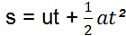
Question 140Single Answer
The equation (s) of motion can be represented as.
A
V = u + at
B
C
2as = v² – u²
D
All of these
Question 141Single Answer
A train travels 40 km at a uniform speed of 30 km h–1. Its average speed after traveling another 40 km is 45 km h–1 for the whole journey. Its speed in the second half of the journey is.
A
45 km h–1
B
90 km h–1
C
60 km h–1
D
None of these
Question 142Single Answer
A man walks on a straight road from his home to market 2.5km. away with a speed of 5 km/h. Finding the market closed, he instantly turns and walks back home with a speed of 7.5 km/h. The average speed of the man over the interval of time 0 to 40 min. is equal to –
A
5 km/h
B
25/4 km/h
C
30/4 km/h
D
45/km/h
Question 143Single Answer
A ball is dropped from a window 24 meters high. How long will it take to reach the ground ?
A
2.2 s
B
1.2 s
C
4.5 s
D
0.2s
Question 144Single Answer
Mohan takes 20 minutes to cover a distance of 3.2 kilometers due north on a bicycle, his velocity in kilometer/hour-
A
8.1
B
9.6
C
1.2
D
7.2
Question 145Single Answer
A Pitcher throws his fastball horizontally at 42.1 meters per second. How far does it drop before crossing the plate, 18.3 meters away ?
A
0.8 m
B
1.2m
C
2.2m
D
0.93 m
Question 146Single Answer
Two balls A and B of same masses are thrown from the top of the building. A, thrown upward with velocity V and B, thrown downward with velocity V, then–
A
Velocity of A is more than B at the ground
B
Velocity of B is more than A at the ground
C
Both A and B strike the ground with same velocity
D
None of these
Question 147Single Answer
A ball is released from the top of a tower of height h meters. It takes T seconds to reach the ground. What is the position of the ball in T/3 seconds–
A
h/9 meters from the ground
B
7h/9 meters from the ground
C
8h/9 meters from the ground
D
17h/18 meters from the ground
Question 148Single Answer
When a bus suddenly takes a turn, the passengers are thrown outwards because of-
A
inertia of motion
B
acceleration of motion
C
speed of motion
D
Both (b) and (c)
Question 149Single Answer
A thief snatches a purse and runs due west, going 6.0 meter per second. A policeman, 15 meters to the east, sees the event and gives chase. If the officer is a good sprinter, going at 8.5 meters per second, how far does he have to run to catch the thief.
A
12 m
B
51 m
C
61 m
D
55 m
Question 150Single Answer
A car going at 24 meters per second passes a motorcycle at rest. As it passes, the motorcycle start up, accelerating at 3.2 meters per second squared. If the motorcycle can keep up that acceleration, how long will take for it to catch the car.
A
12 s
B
14s
C
20s
D
18s
Question 151Single Answer
The initial velocity of a body is 15 m/s. If it having an acceleration of 10 m/s², then the velocity of body after 10 seconds from start-
A
110 m/s
B
105 m/s
C
120 m/s
D
115 m/s
Question 152Single Answer
Which of the following can be zero, when a particle is in motion for some time ?
A
Distance
B
Displacement
C
Speed
D
None of these
Question 153Single Answer
The numerical ratio of average velocity to average speed is.
A
always less than one
B
always equal to one
C
always more than one
D
equal to or less than one
Question 154Single Answer
A passenger in a moving train tosses a coin. If the coin falls behind him, the train must be moving with.
A
an acceleration
B
a deceleration
C
a uniform speed
D
any of the above
Question 155Single Answer
A body is imparted motion from rest to move in a straigh line. If it is then obstructed, by an opposite force, then.
A
the body may necessarily change direction
B
the body is sure to slow down
C
the body will necessarily continue to move in the same direction at the same speed
D
None of these
Question 156Single Answer
Which of the following decreases in motion along a straight line with constant retardation while the body is moving away from the origin ?
A
Speed
B
Acceleration
C
Displacement
D
None of these
Question 157Single Answer
Which of the following is not an example of linear motion ?
A
An aeroplane moving on a straight track with increasing speed
B
A body in uniform circular motion
C
Wheel rotating at uniform speed on road
D
A body rolling down an inclines plane
Question 158Single Answer
Which of the following changes when a particle is moving with uniform velocity ?
A
Speed
B
Velocity
C
Acceleration
D
Position vector
Question 159Single Answer
Which one out of the following statement is false ?
A
A body can have zero velocity and still be accelerated
B
A body can have a constant velocity and still have a varying speed
C
A body can have a constant speed and still have a varying velocity
D
The direction of the velocity of a body can change when its acceleration is constant
Question 160Single Answer
What determines the nature of the path followed by the particle.
A
speed
B
velocity
C
acceleration
D
both (b) and (c)
Question 161Single Answer
A body is thrown upwards and reaches its maximum height. At that position.
A
its acceleration is minimum
B
its velocity is zero and its acceleration is also zero
C
its velocity is zero but its acceleration is maximum
D
its velocity is zero and its acceleration is the acceleration due to gravity
Question 162Single Answer
A train is moving towards east and a car is along north, both with same speed. The observed direction of car to the passanger in the train is-
A
east–north direction
B
west–north dircection
C
south–east direction
D
None of these
Question 163Single Answer
The displacement–time graphs of two particles A and B are straight lines making angles of respectively 30° and 60° with the time axis. If the velocity of A is vA and that of B is vB the value of vA/vB is.
A
1/2
B
C
D
1/3
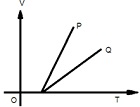
Question 164Single Answer
Figure shows the v–t graph for two particles P and Q. Which of the following statements regarding their relative motion is true ? Their relative velocity is
A
is zero
B
is non–zero but constant
C
continuously decreases
D
continuously increases
Question 165Single Answer
Sound velocity is usually larger in solids than in liquids and gases because :
A
solids are more elastic than liquids and gases
B
solids are less elastic than liquids and gases
C
volumetric expansion coefficients of liquids and gases are higher than solids
D
frequency of sound waves decreases in solids due to Doppler shift
Question 166Single Answer
In which of the following cases, the object does not possess an acceleration or retardation when it moves in.
A
upward direction with decreasing speed
B
downward direction with increasing speed
C
with constant speed along circular path
D
with constant speed along horizontal direction
Question 167Single Answer
The speed of a falling body increases continuously, this is because.
A
no force acts on it
B
it is very light
C
the air exert the frictional force
D
the earth attract it
Question 168Single Answer
If a Candle is make to burn in Zero Gravity__ :
A
The Candle will burn for a very long time compared to normal gravity
B
The flame of the candle will become round
C
There is no impact of gravity on the burning of candle
D
The Candle will not burn in zero gravity
Question 169Single Answer
A jet engine works on the principle of conservation of
A
Linear momentum
B
Angular momentum
C
Energy Mass
D
Mass Velocity
Question 170Single Answer
What is the scale used for measuring the intensity of the earthquake ?
A
Metric Scale
B
Quake Scale
C
Richter Scale
D
Epicentre Scale
Question 171Single Answer
When a motorcar makes a sharp turn at a high speed, we tend to get thrown to one side because.
A
we tend to continue in our straight line motion
B
un unbalanced force is applied by the engine of the motorcar changes the direction of motion of the motorcar
C
we slip to one side of the seat due to the inertia of our body
D
All of these
Question 172Single Answer
Nuclear Reactors are based on which of the following phenomenon ?
A
Magnetic confinement of Plasma
B
Nuclear Fusion
C
Controlled Nuclear Fission
D
None of the above
Question 173Single Answer
Optical Fibre technology works on which of these principles of Physics ?
A
Bernoulli’s Principle
B
Newton’s law of Motion
C
Total internal reflection of Light
D
Photoelectric effect
Question 174Single Answer
If an object experience a net zero unbalanced force, then the body.
A
can be accelerated
B
moves with constant velocity
C
cannot remain at rest
D
None of these
Question 175Single Answer
A cardboard is placed on a glass of water, and a ten paise coin is placed on the cardboard. If the cardboard is flicked suddenly in the direction parallel to its surface, then the cardboard flies away, but the coin falls in the glass .
The behaviour of the coin can be explained by which among the following properties ?
A
Momentum
B
Acceleratio
C
Inertia
D
Friction
Question 176Single Answer
The physical quantity which is the product of mass and velocity of a body is known as.
A
inertia
B
momentum
C
force
D
change in momentum
Question 177Single Answer
Rate of change of momentum of an object is proportion to the.
A
blanced force applied
B
applied unbalanced force in the dirction of the force
C
time during which the force is applied
D
All of these
Question 178Single Answer
A moving object can come to rest only if it.
A
has a frictional force acting only if it
B
has no net force acting on it
C
is completely isolated
D
applies an impulse to something else
Question 179Single Answer
When a body is stationery-
A
There is no forece acting it
B
The force acting on it not in contact with it
C
The combination of forces acting on it balances each other
D
None of above
Question 180Single Answer
A rider on horse falls back when horse starts running , all of a sudden because.
A
rider is taken back
B
rider is suddenly afraid of falling
C
inertia of rest keeps the upper part of body at rest while lower part of the body moves forward with the horse


 are the same as that of
 (V - b) = constant, the unit of a is