On-line teaching and face-to-face teaching both are effective
D
Face-to-face teaching is less effective than online teaching
Question 2Single Answer
In order to solve the problem of aimlessness in education, we should develop -
A
democratic citizenship
B
centralized education
C
education
D
reform the administrative set-up
Question 3Single Answer
If a student misbehaves with other students in the class, the teacher should -
A
report the matter to the parents
B
punish him at the time of the morning assembly in the school
C
deal with him with sympathetic understanding
D
treat him with sympathy and understanding
Question 4Single Answer
How can a failed student be encouraged to study sincerely in the same class?
A
by teacher’s counseling
B
by psychological counseling
C
by guardian’s counseling
D
by Students’ Association
Question 5Single Answer
Our examination system is -
A
defective
B
without any defect
C
in the interest of the students
D
well-planned
Question 6Single Answer
Which Article in the Constitution deals with elementary education ?
A
Article 45
B
Article 370
C
Article 19
D
Article 226
Question 7Single Answer
For physically handicapped student of the school, there should be
A
proper facility for entering the class-room and toilet
B
proper arrangement for his food and lodging
C
arrangement for his free education
D
an arrangement for necessary equipments
Question 8Single Answer
A naughty student in the class is
A
foolish and dull
B
active and intelligent
C
unadjusted and unappreciated
D
rich and careless
Question 9Single Answer
Why is syllabus necessary in school ?
A
It helps in the proper functioning of the school
B
It makes the classroom education under control
C
A teacher can rule every work outside the class in a proper manner
D
All of the above are possible
Question 10Single Answer
If a seminar or conference is being conducted in your city concerning education, what will you do ?
A
I will take part in it without the permission of the Principal
B
I shall seek the permission of the Principal
C
I shall take leave from the school
D
I shall take no interest in it
Question 11Single Answer
How will you evaluate a student on the basis of the question paper type ?
A
On the basis of objective type questions
B
Essay type questions
C
Short answer type questions
D
All of the above
Question 12Single Answer
In order to make teaching more effective in the class, what would be done?
A
After the teaching, same type of questions should be given to the students for practice
B
Home-work should be given frequently
C
Home-work should be given now and them
D
After school hours, same type of questions should be got solved from the students
Question 13Single Answer
Which of the following is/are the basic paradigms in classroom teaching?
A
Learning paradigm
B
Instructional paradigm
C
Both (a) and (b)
D
None of the above
Question 14Single Answer
Research is -
A
A purposeful, systematic activity
B
Conducted for purely academic purposes.
C
Conducted to answer questions about practical issues.
D
A random, unplanned process of discovery
Question 15Single Answer
When we say that communication is intentional, it means that -
A
Sender consciously intends to affect the behaviour of receiver of the message
B
Effective communication is a process of acting on information
C
Through speech communication, people make sense of the world
D
None of the above
Question 16Single Answer
Find the missing number in the following series.
8, 24, 12, ?, 18, 54
A
26
B
24
C
36
D
32
Question 17Single Answer
The main governing body at the tertiary level of education in India is -
A
NCERT
B
CBSE
C
AICTE
D
UGC
Question 18Single Answer
The term ecosystem was coined by -
A
Arthur Tansley
B
Al Gore
C
Mobius
D
Mobius
Question 19Single Answer
ICT stands for -
A
Information and communication technology
B
Information controlled technology
C
Information capable technology
D
None of the above
Question 20Single Answer
Passage :
Direction: Study the table given below and answer question (The table consists of marks obtained by candidates in different subject) Marks obtained in different subjects by various candidates
Subjects (maximum marks)
Students
Maths
Chemistry
Physics
Geography
History
Computer Science
(150)
(130)
(120)
(100)
(100)
(100)
Ayush
90
50
90
60
70
80
Aman
100
80
80
40
80
70
Sajal
90
60
70
70
90
70
Rohit
80
65
80
80
60
60
Muskan
80
65
85
95
50
90
Tanvi
70
75
65
85
40
60
Tarun
65
35
50
77
80
80
What is the average of marks obtained by Aman for all subjects?
A
72
B
75
C
80
D
85
Question 21Single Answer
Which is the main objective of research?
A
To review the literature
B
To summarize what is already known
C
To get an academic degree
D
To discover new facts or to make fresh interpretation of known facts
Question 22Single Answer
Sampling error decreases with the
A
decrease in sample size
B
increase in sample size
C
process of randomization
D
process of analysis
Question 23Single Answer
The principles of fundamental research are used in
A
action research
B
applied research
C
philosophical research
D
historical research
Question 24Single Answer
Users who use media for their own ends are indentified as
A
Passive audience
B
Active audience
C
Positive audience
D
Negative audience
Question 25Single Answer
Classroom communication can be described as
A
Exploration
B
Institutionalisation
C
Unsignified narration
D
Discourse
Question 26Single Answer
Ideological codes shape our collective
A
Productions
B
Perceptions
C
Consumptions
D
Creations
Question 27Single Answer
In communication, myths have power, but are
A
Uncultural.
B
Insignificant.
C
imprecise.
D
Unpreferred.
Question 28Single Answer
The first multi-lingual news agency of India was
A
Samachar
B
API
C
Hindustan Samachar
D
Samachar Bharati
Question 29Single Answer
Organisational communication can also be equated with
A
intra-personal communication
B
inter-personal communication
C
group communication
D
mass communication
Question 30Single Answer
If two propositions having the same subject and predicate terms are such that one is the denial of the other, the relationship between them is called
A
Contradictory
B
Contrary
C
Sub-contrary
D
Sub-alternation
Question 31Single Answer
Passage :
The rapid advancement of technology has profoundly altered the way we communicate. Social media platforms connect billions across the globe, fostering instant interaction and the sharing of information. However, this interconnectedness also presents challenges. The spread of misinformation can occur at an unprecedented rate, impacting public opinion and even real-world events. Critical thinking and media literacy are now more essential than ever to navigate this complex digital landscape and discern credible sources from falsehoods.
What is the main idea of this passage?
A
The benefits of social media for global communication
B
The challenges posed by the rapid advancement of technology on communication
C
The importance of social media platforms in connecting people
D
The necessity of critical thinking and media literacy in the digital age
Question 32Single Answer
Passage :
The rapid advancement of technology has profoundly altered the way we communicate. Social media platforms connect billions across the globe, fostering instant interaction and the sharing of information. However, this interconnectedness also presents challenges. The spread of misinformation can occur at an unprecedented rate, impacting public opinion and even real-world events. Critical thinking and media literacy are now more essential than ever to navigate this complex digital landscape and discern credible sources from falsehoods.
According to the passage, what is a challenge of increased technological interconnectedness?
A
Slower rates of communication
B
Difficulty in sharing information
C
The rapid spread of misinformation
D
A decrease in global interaction
Question 33Single Answer
Passage :
The rapid advancement of technology has profoundly altered the way we communicate. Social media platforms connect billions across the globe, fostering instant interaction and the sharing of information. However, this interconnectedness also presents challenges. The spread of misinformation can occur at an unprecedented rate, impacting public opinion and even real-world events. Critical thinking and media literacy are now more essential than ever to navigate this complex digital landscape and discern credible sources from falsehoods.
The word "discern" in the passage most closely means:
A
Ignore
B
Understand
C
Distribute
D
Create
Question 34Single Answer
Passage :
The rapid advancement of technology has profoundly altered the way we communicate. Social media platforms connect billions across the globe, fostering instant interaction and the sharing of information. However, this interconnectedness also presents challenges. The spread of misinformation can occur at an unprecedented rate, impacting public opinion and even real-world events. Critical thinking and media literacy are now more essential than ever to navigate this complex digital landscape and discern credible sources from falsehoods.
What can be inferred about the impact of misinformation?
A
It has no effect on public opinion
B
Its impact is limited to online discussions
C
It can influence public opinion and real-world events
D
It is easily controlled by social media platforms
Question 35Single Answer
Passage :
The rapid advancement of technology has profoundly altered the way we communicate. Social media platforms connect billions across the globe, fostering instant interaction and the sharing of information. However, this interconnectedness also presents challenges. The spread of misinformation can occur at an unprecedented rate, impacting public opinion and even real-world events. Critical thinking and media literacy are now more essential than ever to navigate this complex digital landscape and discern credible sources from falsehoods.
The author's tone in this passage can be best described as:
A
Optimistic
B
Neutral and informative
C
Highly critical
D
Humorous
Question 36Single Answer
Identify the fallacy in the following argument: "Alan is tall, dark and handsome and has blue eyes. Bill is also tall, dark and handsome".
A
Inconsistency
B
Weak analogy
C
Slippery slope
D
Hasty generalisation
Question 37Single Answer
Identify the number that occurs in the series 2, 10, 30, 68, 130, ....
(A)738
(B) 349
(C) 520
(D) 222
Choose the correct answer from the options given below:
A
A, B and C only
B
B, C and D only
C
A, C and D only
D
A, B and D only
Question 38Single Answer
Which of the following are essential requirements for the formation of photochemical SMOG?
(A) Carbon monooxide (CO)
(B) Nitrogen dioxide (NO2)
(C) Carbon dioxide (CO2)
(D) Volatile Organic Compounds (VOCs)
(E) Sunlight
Choose the most appropriate answer from the options given below:
A
A, B and D only
B
A, C and E only
C
B, C, D and E only
D
B, D and E only
Question 39Single Answer
Which of the following Indian universities were modelled on the lines of University of London?
(A) Calcutta
(B) Bombay
(C) Madras
(D) Andhra
(E) Mysore
Choose the correct answer from the options given below:
A
A, B & C only
B
B, C & D only
C
C, D & E only
D
A, B & D only
Question 40Single Answer
Given below are two statements:
Statement I: Internet is commonly used service on the World Wide Web
Statement II: HTTP is the protocol that web browsers and web servers use to communicate with each other over the Internet
In the light of the above statements, choose the correct answer from the options given below:
A
Both Statement I and Statement II are true
B
Both Statement I and Statement II are false
C
Statement I is true but Statement II is false
D
Statement I is false but Statement II is true
Question 41Single Answer
Given below are two statements, one is labelled as Assertion A and the other is labelled as Reason R
Assertion (A): Teachers must encourage students to ask questions.
Reason (R): Asking questions can create curiosity and develop passion for learning
In light of the above statements, choose the most appropriate answer from the options given below
Choose the correct answer from below:
A
Both (A) and (R) are correct, and (R) is the correct explanation of (A)
B
Both (A) and (R) are correct, but (R) is not the correct explanation of (A)
C
(A) is correct but (R) is not correct
D
(A) is not correct but (R) is correct
Question 42Single Answer
Given below are two statements:
Statement I: Exploration is particularly useful when researchers lack a clear idea of the problems they will meet during the study
Statement II: Through exploration, researchers develop concepts more clearly, establish priorities, develop operational definitions, and improve the final research design
In light of the above statements, choose the correct answer from the options given below:
A
Both Statement I and Statement II are false
B
Both Statement I and Statement II are true
C
Statement I is false but Statement II is true
D
Statement I is true but Statement II is false
Question 43Single Answer
Which of the given learner characteristics are associated with field dependent (holistic/visual) learning style?
(i) Focusing on facts and principles
(ii) Relating concepts to personal experience
(iii) Formal interaction with teacher related to tasks at hand
(iv) Preferring to compete rather than cooperate
(v) Preferring to cooperate rather than compete
(vi) Perceiving global aspects of concepts and materials
Choose the correct answer from the options given below:
A
(i), (ii) and (iii)
B
(ii), (iii) and (v)
C
(ii), (v) and (vi)
D
(iv), (v) and (vi)
Question 44Single Answer
Teaching is best defined as?
A
Transmission of knowledge only
B
Memorization of facts
C
A process of facilitating learning
D
Examination process
Question 45Single Answer
The main objective of teaching is?
A
Controlling learners
B
Promoting learning
C
Increasing discipline only
D
Completing syllabus only
Question 46Single Answer
Memory level teaching mainly emphasizes?
A
Critical thinking
B
Evaluation
C
Creativity
D
Rote learning
Question 47Single Answer
Understanding level teaching focuses on?
A
Comprehension of ideas
B
Recall only
C
Guessing answers
D
Memorization only
Question 48Single Answer
Reflective level teaching promotes?
A
Copying answers
B
Higher order thinking
C
Simple recall
D
Dictation
Question 49Single Answer
Teaching is a?
A
Static process
B
Dynamic process
C
Mechanical process
D
Random process
Question 50Single Answer
Effective teaching requires?
A
Subject mastery and pedagogy
B
Only discipline
C
Only textbook knowledge
D
Only exams
Important Questions Package
UGC NET Electronic Science Exam Online Question Bank Package
Buy UGC NET Electronic Science Important Questions, MCQ, question answer in Hindi & English. It will help you to score high marks in UGC NET Electronic Science question bank 2026 in Online, PDF & Print study material.
+ Free Monthly Current Affairs, GK & more PDF Download
Sr.
Package Name
Amount
1.
UGC NET Electronic Science Exam - Hindi
Description : 1000 Question with Answer
₹101[₹500]
2.
UGC NET Electronic Science Exam - Hindi
Description : 2000 Question with Answer
₹151[₹500]
3.
UGC NET Electronic Science Exam - Hindi
Description : 3000 Question with Answer
₹181[₹500]
4.
UGC NET Electronic Science Exam - Hindi
Description : 4000 Question with Answer
₹201[₹500]
5.
UGC NET Electronic Science Exam - Hindi
Description : 5000 Question with Answer
₹221[₹500]
6.
UGC NET Electronic Science Exam - English
Description : 1000 Question with Answer
₹101[₹500]
7.
UGC NET Electronic Science Exam - English
Description : 2000 Question with Answer
₹151[₹500]
8.
UGC NET Electronic Science Exam - English
Description : 3000 Question with Answer
₹181[₹500]
9.
UGC NET Electronic Science Exam - English
Description : 4000 Question with Answer
₹201[₹500]
10.
UGC NET Electronic Science Exam - English
Description : 5000 Question with Answer
₹221[₹500]
11.
UGC NET Electronic Science Exam - Hindi
Description : 1000 Question & Answer Download in PDF (Send by Email)
₹151[₹450]
12.
UGC NET Electronic Science Exam - English
Description : 1000 Question & Answer Download in PDF (Send by Email)
₹151[₹450]
13.
UGC NET Electronic Science Exam Question Bank Book - Hindi
Description : 1000 Question with Answer (Printed Material)
₹450[₹800]
14.
UGC NET Electronic Science Exam Question Bank Book - English
Description : 1000 Question with Answer (Printed Material)
₹390[₹600]
15.
UGC NET Electronic Science Exam - English (Old)
Description : 2000 Question With Answer
₹151[₹500]
Domain knowledge (Electronic Science)
Question 51Single Answer
In case of varactor diode with hyper-abrupt junction the sensitivity (S) value for is :
A
2
B
3
C
1
D
Question 52Single Answer
For an ideal MS contact between a metal and a P-type semi-conductor. The relation between barrier height is given by :
A
B
C
D
Question 53Single Answer
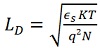
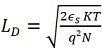
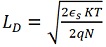
The Debye Length LD is a characteristic lengh for semi-conductor and is defined as. Where, K is Boltzmann constant, T is temperature in Kelvin, q is unit electronic charge, N is impurity concentration of the substrate in per M³. ϵs is dielectric permittivity of silicon.
A
B
C
D
Question 54Single Answer
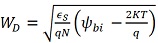
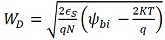
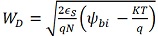
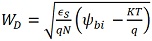
The depletion layer width at thermal equilibrium for a one-sided abrupt junction is :
A
B
C
D
Question 55Single Answer
Number of ways in which a Schottky defect an occur in silicon is given by : Where N = total number of atoms in a crystal of unit volume n5 = number of Schottky defects per unit volume.
A
B
C
D
Question 56Single Answer
What would be system pressure of Si – MBE system in order to achieve 5 × 107 cm mean free path (L) of atoms ?
A
10-7 torr
B
10-8 torr
C
10-9 torr
D
10-10 torr
Question 57Single Answer
Which Plasma Analytical technique involves placement of conducting probe smaller than particle mean free path directly in the plasma ?
A
Actinometry
B
Lesser Induced Fluorescence
C
Retarding Grid
D
Langmuir technique
Question 58Single Answer
Which gas is used in reactive plasma for etching all three i.e, silicides, silicon and silicon dioxide ?
A
F2
B
SF6
C
CF4 + O2
D
NF3
Question 59Single Answer
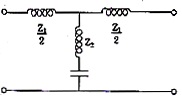
Consider a circuit as shown in figure :
The circuit is :
A
Constant K low-pass filter
B
Constsnt K high-pass filter
C
The m-derived high-pass filter
D
The m-derived high-pass filter
Question 60Single Answer
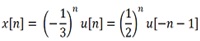
The region of convergence of the sequence is :
A
B
C
D
Question 61Single Answer
Energy bands in solids are formed due to?
A
Nuclear interaction
B
Gravitational force
C
Overlap of atomic orbitals in periodic lattice
D
Magnetic field only
Question 62Single Answer
The concept of effective mass is used to describe?
A
Proton motion
B
Electron motion in crystal lattice
C
Electron motion in vacuum
D
Neutron decay
Question 63Single Answer
Fermi level at absolute zero temperature lies?
A
In conduction band
B
At highest occupied energy level
C
In valence band
D
In forbidden band always
Question 64Single Answer
In an intrinsic semiconductor, the Fermi level is located?
A
Near conduction band
B
At mid-gap
C
Near valence band
D
Outside band gap
Question 65Single Answer
PN junction is formed by joining?
A
P-type and N-type semiconductors
B
Two metals
C
Two insulators
D
Metal and vacuum
Question 66Single Answer
The depletion region in a PN junction contains?
A
Free electrons only
B
Free holes only
C
Neutral atoms only
D
Fixed ions only
Question 67Single Answer
Diode current equation is also called?
A
Ohm’s law equation
B
Shockley equation
C
Newton’s equation
D
Planck equation
Question 68Single Answer
Reverse breakdown in a diode occurs due to?
A
Low voltage
B
High reverse voltage
C
Low temperature
D
Forward bias
Question 69Single Answer
Zener diode is mainly used for?
A
Voltage regulation
B
Oscillation
C
Amplification
D
Rectification only
Question 70Single Answer
Tunnel diode works on the principle of?
A
Thermal emission
B
Diffusion
C
Quantum tunneling
D
Induction
Question 71Single Answer
Ohmic contact is characterized by?
A
Non-linear I-V curve
B
Linear I-V curve
C
Rectifying behavior
D
Negative resistance
Question 72Single Answer
Schottky contact is formed between?
A
Metal and semiconductor
B
Two semiconductors
C
Two metals
D
Two insulators
Question 73Single Answer
JFET is a device controlled by?
A
Current at gate
B
Temperature
C
Light
D
Voltage at gate
Question 74Single Answer
MOSFET gate is insulated by?
A
Silicon dioxide
B
Copper layer
C
Aluminum foil
D
Vacuum
Question 75Single Answer
In enhancement MOSFET, channel exists?
A
Always
B
Only when voltage is applied
C
Never
D
Only in reverse bias
Question 76Single Answer
Depletion region width increases in PN junction when?
A
Reverse biased
B
Forward biased
C
No bias
D
High temperature only
Question 77Single Answer
Band gap of a semiconductor is typically?
A
> 10 eV
B
0 eV
C
Infinite
D
0.1–3 eV
Question 78Single Answer
Intrinsic carrier concentration increases with?
A
Decreasing temperature
B
Magnetic field
C
Constant pressure
D
Increasing temperature
Question 79Single Answer
Effective mass of electron depends on?
A
Vacuum permittivity
B
Light speed
C
Gravity
D
Crystal lattice structure
Question 80Single Answer
In PN junction forward bias, barrier potential?
A
Increases
B
Decreases
C
Becomes infinite
D
Remains constant
Question 81Single Answer
LED works on the principle of?
A
Thermal emission
B
Induction
C
Electroluminescence
D
Reflection
Question 82Single Answer
LCD operates based on?
A
Liquid crystal alignment with electric field
B
Electron emission
C
Nuclear reaction
D
Magnetic flux
Question 83Single Answer
Solar cell converts?
A
Heat to electricity
B
Chemical to mechanical
C
Sound to electricity
D
Light to electrical energy
Question 84Single Answer
Fill factor of solar cell is defined as?
A
Ratio of max power to (Voc × Is
B
Ratio of current to voltage
Question 85Single Answer
Graphene is a form of?
A
Carbon
B
Silicon
C
Germanium
D
Gallium
Question 86Single Answer
Carbon nanotubes are rolled structure of?
A
Metal sheet
B
Silicon sheet
C
Graphene sheet
D
Oxide layer
Question 87Single Answer
ZnO is widely used in?
A
Optoelectronic devices
B
RF shielding only
C
Mechanical gears
D
Fuel cells only
Question 88Single Answer
SiC is preferred for high power devices due to?
A
Low band gap
B
High resistance only
C
Low stability
D
High thermal conductivity and wide band gap
Question 89Single Answer
Density of states represents?
A
Number of atoms
B
Number of available energy states per unit energy
C
Charge density
D
Mass density
Question 90Single Answer
In metals, Fermi level lies in?
A
Valence band
B
Vacuum level
C
Forbidden band
D
Conduction band
Question 91Single Answer
PN junction under equilibrium has?
A
Net current flow
B
No net current flow
C
Maximum current
D
Infinite resistance
Question 92Single Answer
Reverse saturation current in diode is due to?
A
Majority carriers
B
Phonons
C
Ions
D
Minority carriers
Question 93Single Answer
Zener breakdown occurs due to?
A
Strong electric field causing tunneling
B
Avalanche multiplication only
C
Thermal heating only
D
Mechanical stress
Question 94Single Answer
Avalanche breakdown is caused by?
A
Recombination only
B
Quantum tunneling
C
Diffusion
D
Impact ionization
Question 95Single Answer
MOSFET is a?
A
Current controlled device
B
Thermal device
C
Optical device
D
Voltage controlled device
Question 96Single Answer
JFET channel is controlled by?
A
Drain voltage
B
Gate voltage
C
Source resistance
D
Body temperature
Question 97Single Answer
In depletion MOSFET, channel exists at zero gate voltage?
A
Yes
B
No
C
Only at high temperature
D
Only under light
Question 98Single Answer
Metal semiconductor contact behaves as Schottky when?
A
Ohmic contact forms
B
Infinite resistance
C
No current flows
D
Rectifying barrier forms
Question 99Single Answer
Quantum dots are also called?
A
3D bulk
B
1D structures
C
2D structures
D
0D structures
Question 100Single Answer
Quantum wires are?
A
0D systems
B
1D systems
C
2D systems
D
3D systems
Question 101Single Answer
Quantum wells are?
A
0D
B
1D
C
3D
D
2D
Question 102Single Answer
Band gap in semiconductors decreases with temperature because of?
A
Decreased carrier density
B
Increased collisions
C
Lattice expansion
D
Magnetic effects
Question 103Single Answer
Fermi-Dirac distribution gives?
A
Current density
B
Charge density
C
Energy loss
D
Probability of electron occupancy
Question 104Single Answer
At room temperature intrinsic semiconductor behaves like?
A
Perfect conductor
B
Poor conductor
C
Insulator
D
Superconductor
Question 105Single Answer
In PN junction, diffusion current is due to?
A
Electric field
B
Radiation
C
Magnetic field
D
Concentration gradient
Question 106Single Answer
Drift current is caused by?
A
Temperature gradient
B
Light
C
Pressure
D
Electric field
Question 107Single Answer
Metal semiconductor junction is used in?
A
Inductors
B
Capacitors only
C
Rectifiers and contacts
D
Batteries
Question 108Single Answer
LED emission wavelength depends on?
A
Band gap energy
B
Current only
C
Resistance
D
Magnetic field
Question 109Single Answer
Solar cell efficiency depends on?
A
Fill factor and band gap
B
Only resistance
C
Only temperature
D
Only light intensity
Question 110Single Answer
HEMT stands for?
A
High Energy Magnetic Transistor
B
High Electron Mobility Transistor
C
Heat Emission MOSFET Type
D
Hybrid Electron Movement Tool
Question 111Single Answer
The effective mass of an electron in a crystal is defined using the relation between?
A
Force and velocity
B
Energy and momentum in periodic potential
C
Force and acceleration
D
Charge and field
Question 112Single Answer
In a semiconductor, the density of states near band edges is proportional to?
A
1/√E
B
√E
C
E²
D
constant
Question 113Single Answer
The Fermi level in n-type semiconductor lies closer to?
A
Valence band
B
Mid-gap
C
Vacuum level
D
Conduction band
Question 114Single Answer
In p-type semiconductor, majority carriers are?
A
Electrons
B
Photons
C
Ions
D
Holes
Question 115Single Answer
The built-in potential of a PN junction depends on?
A
Only temperature
B
Only voltage applied
C
Doping concentrations
D
Light intensity
Question 116Single Answer
At thermal equilibrium, PN junction current is?
A
Zero
B
Maximum
C
Constant non-zero
D
Infinite
Question 117Single Answer
Forward biasing a PN junction results in?
A
Reduced depletion width
B
Increased barrier height
C
No change in depletion region
D
Infinite resistance
Question 118Single Answer
Reverse bias in a diode causes?
A
Widening of depletion region
B
Increase in majority carriers
C
Elimination of barrier
D
Zero potential
Question 119Single Answer
Zener breakdown occurs typically at?
A
Very high reverse voltage
B
High forward voltage
C
Low reverse voltage
D
Zero bias
Question 120Single Answer
Avalanche breakdown is dominant in?
A
Heavily doped junctions
B
Insulators
C
Metals
D
Lightly doped junctions
Question 121Single Answer
The Shockley diode equation describes?
A
Current-voltage relation of PN junction
B
Inductance
C
Capacitance
D
Magnetic flux
Question 122Single Answer
Reverse saturation current in a diode is highly sensitive to?
A
Magnetic field
B
Pressure
C
Temperature
D
Light polarization
Question 123Single Answer
A Schottky diode has?
A
Low forward voltage drop
B
Low switching speed
C
High forward voltage drop
D
No current conduction
Question 124Single Answer
MOS capacitor consists of?
A
Metal-only structure
B
Metal-oxide-superconductor
C
Magnetic-oxide-semiconductor
D
Metal-oxide-semiconductor
Question 125Single Answer
Threshold voltage in MOSFET is the voltage at which?
A
Channel just begins to form
B
Current becomes zero
C
Breakdown occurs
D
Resistance becomes infinite
Question 126Single Answer
In JFET, gate current is approximately?
A
Zero
B
Very high
C
Equal to drain current
D
Constant non-zero
Question 127Single Answer
HEMT devices are based on?
A
Homojunction only
B
Heterojunction structure
C
Metal-insulator junction
D
Vacuum tubes
Question 128Single Answer
Quantum confinement effect increases when dimension becomes?
A
Large
B
Infinite
C
Comparable to de Broglie wavelength
D
Macroscopic
Question 129Single Answer
A quantum well confines carriers in?
A
All three dimensions
B
One dimension
C
No dimension
D
Two dimensions
Question 130Single Answer
Quantum wires confine carriers in?
A
No confinement
B
Two dimensions
C
Three dimensions
D
One dimension
Question 131Single Answer
Quantum dots confine carriers in?
A
One dimension
B
Two dimensions
C
None
D
All three dimensions
Question 132Single Answer
Graphene has which type of band structure?
A
Wide band gap
B
Indirect band gap semiconductor
C
Zero band gap
D
Superconducting gap
Question 133Single Answer
Carbon nanotubes exhibit properties depending on?
A
Only length
B
Temperature only
C
Only diameter
D
Chirality
Question 134Single Answer
ZnO is commonly used as?
A
Insulator only
B
Magnetic material
C
Transparent conducting oxide
D
Superconductor
Question 135Single Answer
SiC devices are preferred for?
A
High power and high temperature applications
B
Low frequency only
C
Optical storage only
D
Memory chips
Question 136Single Answer
In intrinsic semiconductor, electron concentration equals?
A
Zero
B
Hole concentration
C
Doping level
D
Ion concentration
Question 137Single Answer
Fermi-Dirac distribution at absolute zero becomes?
A
Gaussian function
B
Step function
C
Linear function
D
Exponential decay
Question 138Single Answer
The band gap energy is the energy between?
A
Two conduction bands
B
Valence band and conduction band
C
Two valence bands
D
Vacuum and core level
Question 139Single Answer
Drift velocity is proportional to?
A
Magnetic field
B
Electric field
C
Temperature only
D
Pressure
Question 140Single Answer
Mobility of charge carriers is defined as ratio of?
A
Current to voltage
B
Velocity to electric field
C
Charge to mass
D
Force to acceleration
Question 141Single Answer
Conductivity of semiconductor increases with?
A
Decrease in temperature
B
Increase in temperature
C
Constant pressure
D
Zero field
Question 142Single Answer
In PN junction, depletion capacitance increases with?


 is :

 is given by :







 is :


